 Back
Disorders Associated with the Immune System: Hypersensitivity, Autoimmunity, Transplantation, Cancer, and Immunodeficiencies
Study Guide - Smart Notes
 Tailored notes based on your materials, expanded with key definitions, examples, and context.
Disorders Associated with the Immune System
Hypersensitivity
Hypersensitivity refers to an antigenic response that results in undesirable effects, occurring when an individual is sensitized by previous exposure to an antigen (allergen). There are four types of hypersensitivity reactions, each with distinct mechanisms and clinical manifestations.
Type I (Anaphylactic) Reactions: - Occur within minutes after re-exposure to an antigen. - IgE antibodies bind to mast cells and basophils, leading to degranulation and release of mediators such as histamine, leukotrienes, and prostaglandins. - Systemic anaphylaxis can cause shock and death; treated with epinephrine. - Localized anaphylaxis affects specific regions (e.g., hay fever, asthma, food allergies). - Allergy skin tests and desensitization (producing IgG blocking antibodies) are used for diagnosis and prevention.
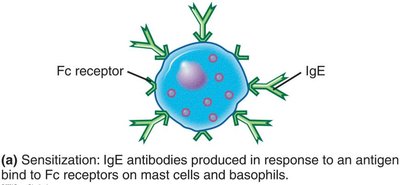
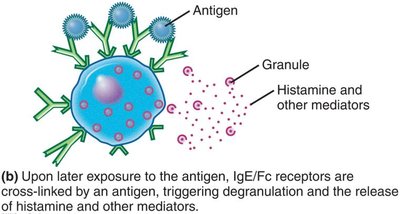
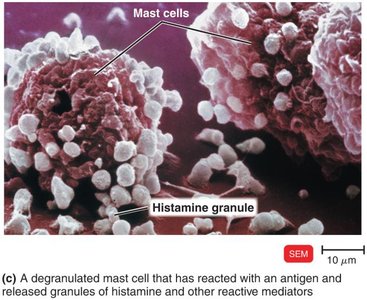
Type II (Cytotoxic) Reactions: - Involve activation of complement by IgG or IgM antibodies bound to antigenic cells, causing cell lysis or damage. - ABO and Rh blood group systems are classic examples. - Hemolytic disease of the newborn (HDNB) occurs when an Rh-negative mother produces anti-Rh antibodies against an Rh-positive fetus. - Drug-induced cytotoxic reactions include immune thrombocytopenic purpura, agranulocytosis, and hemolytic anemia.
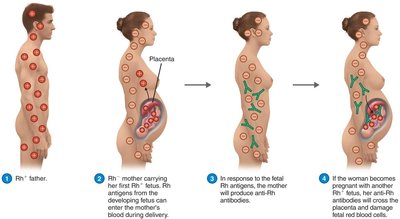
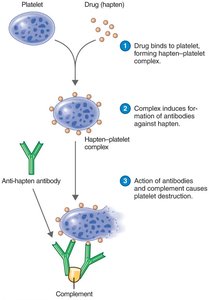
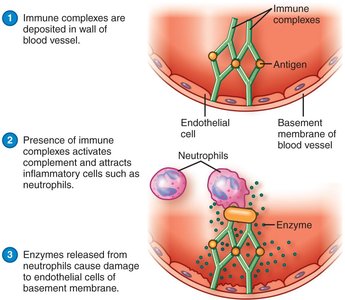
Type III (Immune Complex) Reactions: - Antibodies react with soluble antigens, forming immune complexes that lodge in basement membranes and activate complement, causing inflammation. - Examples include Arthus reaction and serum sickness.
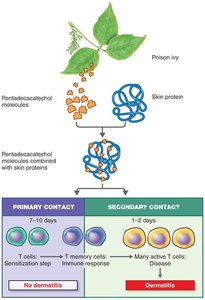
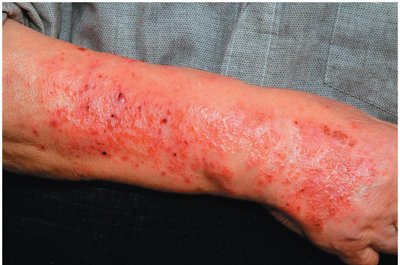
Type IV (Delayed Cell-Mediated) Reactions: - Mediated by T cells; delayed hypersensitivity develops after a day or more. - Examples include tuberculosis skin test and allergic contact dermatitis (e.g., poison ivy, cosmetics, metals, latex).
The Hygiene Hypothesis
The hygiene hypothesis suggests that limiting exposure to pathogens may lower immune tolerance and the ability to cope with harmless antigens. Dysbiosis, or imbalance of microbiota, can lead to adverse effects such as inflammatory bowel diseases (IBDs) and allergies. Treatments include fecal transplants and whipworm therapy for Crohn's disease.
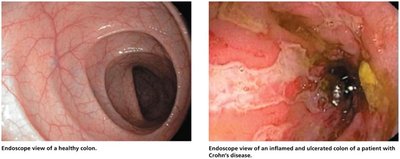
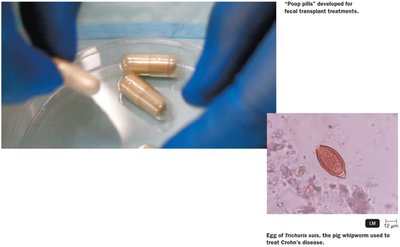
Autoimmune Diseases
Autoimmune diseases occur when the immune system responds to self-antigens, causing organ damage. Self-tolerance is normally maintained by clonal deletion of self-reactive T cells in the thymus. Loss of self-tolerance leads to autoimmunity, which can be cytotoxic, immune complex, or cell-mediated.
Cytotoxic Autoimmune Reactions: - Multiple sclerosis: Autoantibodies, T cells, and macrophages attack myelin sheath of nerves.
Immune Complex Autoimmune Reactions: - Systemic lupus erythematosus: Autoantibodies against DNA form immune complexes in kidneys. - Rheumatoid arthritis: Immune complexes deposit in joints, causing chronic inflammation.
Cell-Mediated Autoimmune Reactions: - Type 1 diabetes: T cell destruction of insulin-secreting cells. - Psoriasis: T cells induce keratinocyte growth.
Reactions to Transplantation
Transplant rejection is mediated by T cells, macrophages, and complement-fixing antibodies. The HLA complex (human MHC) is crucial for tissue matching. Privileged sites (e.g., cornea) and privileged tissues (e.g., decellularized pig heart valves) do not provoke immune responses. Stem cells, both embryonic and adult, are used for tissue regeneration.
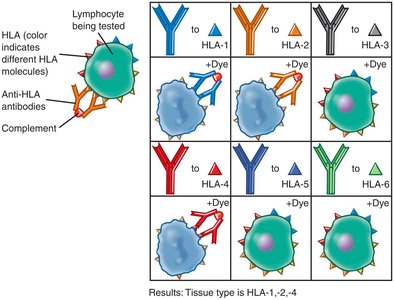
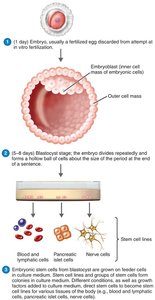
Types of Grafts: - Autograft: One's own tissue - Isograft: Identical twin's tissue - Allograft: Tissue from another person - Xenotransplantation: Nonhuman tissue (e.g., "GalSafe" pigs)
Immunosuppression: - Drugs such as cyclosporine, tacrolimus, sirolimus, mycophenolate, and basiliximab suppress immune responses to prevent rejection.
The Immune System and Cancer
Cancer cells express tumor-associated antigens and are targeted by cytotoxic T lymphocytes (CTLs), activated macrophages, and natural killer (NK) cells. However, cancer cells may evade immune detection by lacking antigenic epitopes, reproducing rapidly, or becoming invisible to the immune system. Immunotherapy includes bacterial endotoxins, vaccines (e.g., HPV, hepatitis B), and monoclonal antibodies.
Immunodeficiencies
Immunodeficiencies are characterized by insufficient immune responses. They may be congenital (genetic defects, e.g., DiGeorge syndrome, SCID) or acquired (e.g., AIDS, caused by HIV infection). AIDS is diagnosed by antibody tests and nucleic acid amplification tests (NAATs), and treated with antiretroviral drugs targeting reverse transcriptase, integrase, and protease enzymes.
Acquired Immunodeficiency Syndrome (AIDS)
HIV infects CD4+ T cells, leading to progressive immune failure. The virus attaches via gp120 to CD4 and CCR5/CXCR4 coreceptors, enters the cell, and integrates its DNA into the host genome. HIV evades immunity by latency, cell-cell fusion, and rapid mutation. The disease progresses through three phases: asymptomatic, symptomatic, and AIDS (CD4+ T cell count < 200/μL). Transmission occurs via blood, semen, breast milk, and other routes. Prevention and treatment include behavioral, biomedical, and structural interventions, as well as antiretroviral therapy.
Summary Table: Types of Hypersensitivity
Type of Reaction | Time Before Clinical Signs | Characteristics | Examples |
|---|---|---|---|
Type I (Anaphylactic) | < 30 min | IgE binds to mast cells/basophils; allergen binding causes degranulation and release of mediators | Anaphylactic shock, hay fever, asthma |
Type II (Cytotoxic) | 5-12 hours | IgM/IgG bind to target cell; complement destroys cell | Transfusion reactions, Rh incompatibility |
Type III (Immune Complex) | 3-8 hours | Antibody-antigen complexes cause inflammation | Arthus reaction, serum sickness, rheumatoid arthritis |
Type IV (Delayed Cell-Mediated) | 24-48 hours | Antigens activate CTLs that kill target cell | Transplant rejection, contact dermatitis, tuberculosis |
Summary Table: Selected Autoimmune Disorders
Autoimmune Disease | Possible Cause |
|---|---|
Chronic fatigue syndrome | Antibodies attach to acetylcholine receptors |
Rheumatoid arthritis | Immune complexes accumulate in joints |
Systemic lupus erythematosus | Immune complexes against DNA |
Multiple sclerosis | T cells/macrophages attack myelin sheath |
Type 1 diabetes | T cells destroy insulin-secreting cells |
Guillain-Barré syndrome | T cells cause destruction of myelin sheath |
Psoriasis | T cells induce keratinocyte growth |
Graves' disease | Antibodies stimulate thyroid hormone production |
Myasthenia gravis | Antibodies block acetylcholine receptors |
Crohn's disease | Antibacterial antibodies react with intestinal mucosa |
Inflammatory bowel disease | Antibacterial antibodies react with intestinal mucosa |
Summary Table: Selected Immunodeficiencies
Disease | Cells Affected | Comments |
|---|---|---|
AIDS | CD4+ T cells | Allows opportunistic infections; caused by HIV |
Selective IgA immunodeficiency | B, T cells | Frequent mucosal infections |
Common variable hypogammaglobulinemia | B, T cells | Frequent viral/bacterial infections |
Reticular dysgenesis | B, T, stem cells | Usually fatal in infancy |
SCID | B, T, stem cells | Severe infections; treated with bone marrow transplant |
Thymic aplasia (DiGeorge syndrome) | T cells | Absence of cell-mediated immunity; fatal in infancy |
Wiskott-Aldrich syndrome | B, T cells | Frequent infections; inherited on X chromosome |
X-linked infantile (Bruton’s) agammaglobulinemia | B cells | Frequent bacterial infections; inherited on X chromosome |
Summary Table: HIV Life Cycle Drug Targets
Drug Class | Target | Examples |
|---|---|---|
Fusion/Entry Inhibitors | gp41, CCR5 | Enfuvirtide, Maraviroc |
Reverse Transcriptase Inhibitors | Reverse transcriptase | Tenofovir, Emtricitabine |
Integrase Inhibitors | Integrase | Raltegravir, Dolutegravir, Elvitegravir |
Protease Inhibitors | Protease | Atazanavir, Indinavir, Saquinavir |
Summary Table: Diseases Associated with AIDS
Pathogen/Disease | Disease Description |
|---|---|
Cryptosporidium hominis | Persistent diarrhea |
Toxoplasma gondii | Encephalitis |
Cytomegalovirus (HHV-5) | Fever, encephalitis, blindness |
Mycobacterium tuberculosis | Tuberculosis |
Pneumocystis jirovecii | Life-threatening pneumonia |
Kaposi’s sarcoma | Cancer of skin and blood vessels |
Key Terms and Concepts
Hypersensitivity: Immune response causing undesirable effects.
Autoimmunity: Loss of self-tolerance; immune response to self-antigens.
Immunodeficiency: Insufficient immune response; congenital or acquired.
HLA/MHC: Self-antigens important for tissue matching.
Antiretroviral Therapy: Drugs targeting HIV enzymes to prevent replication.
Important Equations
CD4+ T cell count diagnostic for AIDS: *Normal range: 500–1500/μL*
Additional info:
Stem cell therapy and tissue engineering are emerging fields for transplantation and regenerative medicine.
Hygiene hypothesis is supported by epidemiological studies comparing urban and rural populations.
