 Back
BackEarly Discoveries and Disproving Spontaneous Generation in Microbiology
Study Guide - Smart Notes
 Tailored notes based on your materials, expanded with key definitions, examples, and context.
Introduction to Microbiology
Overview of Microbiology
Microbiology is the study of microscopic organisms, including bacteria, viruses, fungi, and protozoa. The field has evolved through key discoveries that have shaped our understanding of life and disease.
Microorganisms are organisms too small to be seen with the naked eye.
Microbiology explores their structure, function, and role in health and disease.
Early scientists debated the origins of these organisms and their relationship to disease.
Early Discoveries in Microbiology
The Idea of Spontaneous Generation
Spontaneous generation was the belief that living organisms could arise from non-living matter. This idea was widely accepted until scientific experiments challenged its validity.
Aristotle (384–322 BC) proposed that life could spontaneously arise from non-living material.
Examples included maggots appearing on decaying meat and mice emerging from grain.
Development of the Microscope
The invention and improvement of the microscope enabled scientists to observe microorganisms for the first time, revolutionizing the study of biology.
Zacharias Janssen invented the first microscope in 1590.
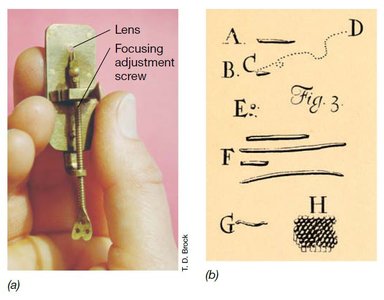
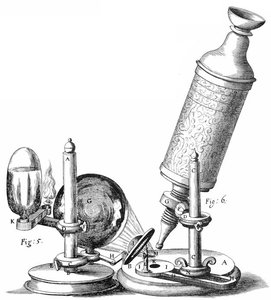
Robert Hooke and Antonie van Leeuwenhoek made significant contributions by describing and illustrating microorganisms.
Leeuwenhoek's simple microscope allowed him to observe bacteria and protozoa, which he called "animalcules."
Microbial Cultivation and Aseptic Technique
The development of aseptic techniques enabled scientists to grow pure cultures of microorganisms, which was essential for studying their properties and roles in disease.
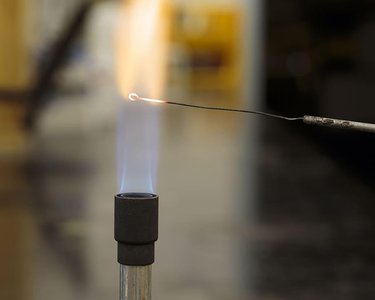
Aseptic technique involves procedures to prevent contamination by unwanted microorganisms.
Preparation and maintenance of sterility are crucial for accurate experiments.
These techniques helped answer questions about spontaneous generation and infectious disease.
Disproving Spontaneous Generation
Early Attempts to Challenge Spontaneous Generation
Experiments by Francesco Redi and Lazzaro Spallanzani provided evidence against spontaneous generation, particularly in the context of maggots and broth contamination.
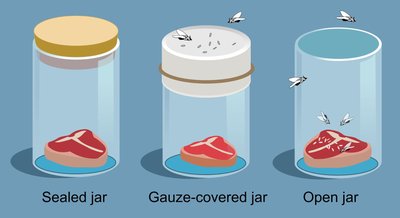
Francesco Redi (1668): Demonstrated that maggots only appeared on meat when flies could lay eggs on it.
Lazzaro Spallanzani (1768): Showed that boiled broth remained free of microorganisms unless exposed to air.
These experiments weakened support for spontaneous generation.
Louis Pasteur and the Swan Neck Experiment
Louis Pasteur's experiments definitively disproved spontaneous generation and advanced sterilization techniques.
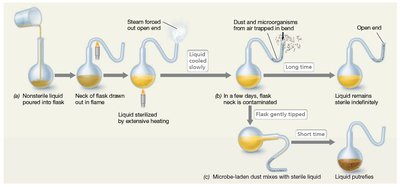
Louis Pasteur (1861): Used swan neck flasks to show that microorganisms are carried by air and do not spontaneously arise.
His experiments involved heating meat broth and leaving it exposed to air through a curved neck, preventing contamination.
When the flask was tipped, trapped microorganisms entered and contaminated the broth, proving contamination was due to external microbes.
Pasteur also developed pasteurization to preserve food by mild heating, eliminating bacteria and preventing spoilage.
Pasteurization
Pasteurization is a process used to treat food products, such as milk and fruit juices, to eliminate harmful bacteria and enzymes.
Involves heating food to approximately 100°C.
Prevents food spoilage and the spread of diseases like tuberculosis.
Does not kill all microorganisms; some bacteria and fungi may survive.

Sterilization Techniques
Sterilization is the process of eliminating all forms of microbial life, including spores and viruses, using various methods.
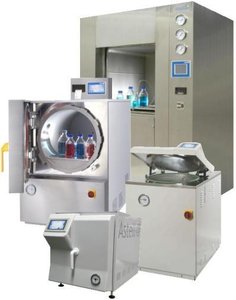
Autoclave: Uses high temperature and pressure to kill microbes, spores, and viruses.
UV irradiation and filtration: Alternative methods for sterilizing materials.
Essential for laboratory work and medical procedures to prevent contamination and infection.
Summary Table: Spontaneous Generation Experiments
Scientist | Experiment | Conclusion |
|---|---|---|
Francesco Redi | Meat in sealed, gauze-covered, and open jars | Maggots only appeared when flies could access meat |
Lazzaro Spallanzani | Boiled broth sealed from air | No microbial growth unless exposed to air |
Louis Pasteur | Swan neck flask with nutrient broth | Microorganisms are carried by air; no spontaneous generation |
Further Reading
OpenStax Microbiology Textbook: 3.1 Spontaneous Generation
