 Back
Epidemiology and Host-Microbe Relationships: Study Guide
Study Guide - Smart Notes
 Tailored notes based on your materials, expanded with key definitions, examples, and context.
Epidemiology of Infectious Diseases
Frequency of Disease
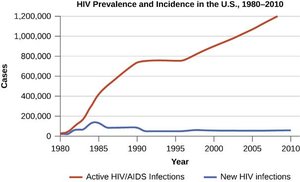
Epidemiology tracks the occurrence of diseases in populations using two primary measures: incidence and prevalence. Incidence refers to the number of new cases of a disease in a specific period, while prevalence is the total number of cases (new and existing) at a given time.
Incidence: Useful for understanding the spread of new infections.
Prevalence: Indicates the overall burden of disease in a population.
Rates and Proportions: Both measures can be expressed as rates or proportions relative to the population size.
Example: Tracking HIV/AIDS in the U.S. shows a steady increase in prevalence, while incidence remains relatively stable.
Epidemiological Reporting
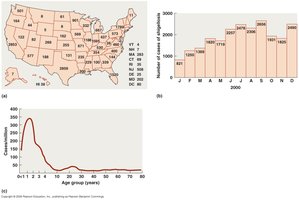
Epidemiologists report disease data in various formats, such as maps, monthly case counts, and age-group distributions. This helps identify patterns and risk factors.
Geographic Distribution: Mapping cases by state or region.
Temporal Distribution: Cases reported by month or season.
Demographic Distribution: Cases per million by age group.
Tracking Disease Outbreaks
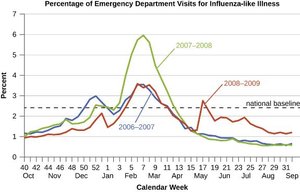
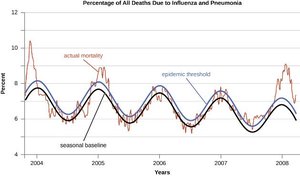
Monitoring emergency department visits and mortality rates helps identify outbreaks and epidemics. For example, influenza-like illness and deaths due to influenza and pneumonia are tracked against national baselines and epidemic thresholds.
Outbreak Detection: Sudden increases above baseline indicate potential epidemics.
Seasonal Patterns: Many infectious diseases show seasonal variation.
Occurrence and Geographic Distribution
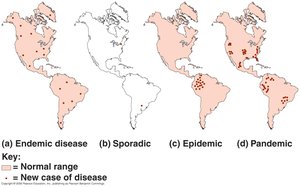
Diseases are classified based on their frequency and geographic spread:
Endemic: Occurs at a stable frequency in a given area.
Sporadic: Occurs in scattered cases.
Epidemic: Occurs at a higher than normal frequency, often as a local outbreak.
Pandemic: Epidemic occurring on multiple continents simultaneously.
Emerging Diseases
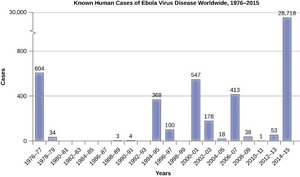
Emerging diseases are those whose incidence has increased in recent years or threatens to increase. Ebola virus is an example, with several outbreaks culminating in a major epidemic in 2014–15.
Nationally Notifiable Infectious Diseases
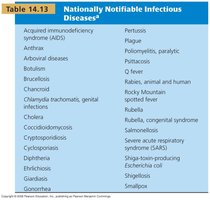
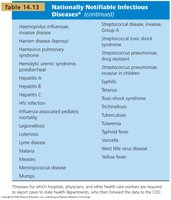
Certain infectious diseases must be reported to public health authorities at local, state, and national levels. The CDC maintains a list of nationally notifiable diseases.
Disease | Disease |
|---|---|
Acquired immunodeficiency syndrome (AIDS) | Pertussis |
Anthrax | Plague |
Arboviral diseases | Poliomyelitis, paralytic |
Botulism | Q fever |
Brucellosis | Rabies, animal and human |
Chancroid | Rocky Mountain spotted fever |
Chlamydia trachomatis, genital infections | Rubella |
Cholera | Rubella, congenital syndrome |
Coccidioidomycosis | Salmonellosis |
Cryptosporidiosis | Severe acute respiratory syndrome (SARS) |
Cyclosporiasis | Shiga-toxin-producing Escherichia coli |
Diphtheria | Shigellosis |
Ehrlichiosis | Smallpox |
Giardiasis |
Disease | Disease |
|---|---|
Haemophilus influenzae, invasive disease | Streptococcal disease, invasive, Group A |
Hansen disease (leprosy) | Streptococcal toxic shock syndrome |
Hantavirus pulmonary syndrome | Streptococcus pneumoniae, invasive disease |
Hemolytic uremic syndrome, postdiarrheal | Syphilis |
Hepatitis A, B, C | Tetanus |
HIV infection | Toxic-shock syndrome |
Influenza-associated pediatric deaths | Tuberculosis |
Legionellosis | Typhoid fever |
Lyme disease | Varicella |
Malaria | West Nile virus disease |
Meningococcal disease | |
Mumps |
Descriptive Epidemiology
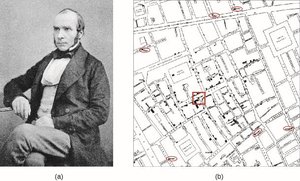
Descriptive epidemiology involves identifying the index case and mapping disease incidence to determine the source and spread of outbreaks. John Snow's investigation of cholera in London is a classic example.
Index Case: The first documented patient in an outbreak.
Mapping: Helps identify sources and transmission routes.
Analytical and Experimental Epidemiology
Analytical epidemiology investigates disease causes and risk factors, often retrospectively. Experimental epidemiology tests hypotheses, sometimes using Koch’s postulates to confirm causative agents.
Analytical Epidemiology: Retrospective studies to identify risk factors.
Experimental Epidemiology: Controlled experiments to test hypotheses about disease causation.
Nosocomial Infections (Hospital-Acquired)
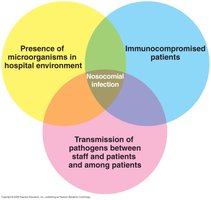
Nosocomial infections are acquired in healthcare settings. They can be exogenous (from external sources), endogenous (from the patient’s own flora), or iatrogenic (resulting from medical procedures).
Exogenous: Pathogens from the hospital environment.
Endogenous: Patient’s own microbes cause infection.
Iatrogenic: Caused by medical interventions.
Factors Influencing Nosocomial Infections
Depressed host defenses (disease, malnutrition, age)
Breached anatomic barriers (IVs, catheters, vents)
Exposure to virulent, often antibiotic-resistant pathogens
Public Health and Epidemiology
Public health agencies at local, national, and global levels coordinate disease surveillance and response. The Department of Health and Human Services (U.S.) and the World Health Organization (WHO) are key agencies.
Host-Microbe Relationships
Symbiosis
Host-microbe relationships can be mutualistic, commensal, or parasitic. Pathogenicity refers to a microbe’s ability to cause disease, while virulence is the degree of pathogenicity.
Pathogenicity: Ability to cause disease.
Virulence: Severity of disease caused.
Normal Microflora
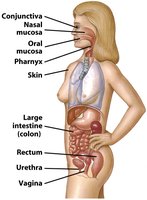
Normal microflora are organisms that live on or in the body without causing disease. They are classified as resident (always present) or transient (temporarily present).
Resident Microflora: Stable populations in specific body sites.
Transient Microflora: Temporary, often removed by host defenses.
Body Site | Genera | Notes |
|---|---|---|
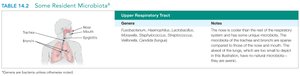
Upper Respiratory Tract | Fusobacterium, Haemophilus, Lactobacillus, Neisseria, Staphylococcus, Streptococcus, Candida | Similar to oral cavity; lungs are usually microbe-free. |
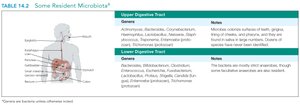
Upper Digestive Tract | Actinomyces, Bacteroides, Haemophilus, Lactobacillus, etc. | Microbes colonize surfaces of teeth, gums, tongue, and cheeks. |
Lower Digestive Tract | Bacteroides, Clostridium, Enterococcus, etc. | Lower tract has many strict anaerobes. |
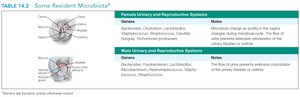
Female Urinary/Reproductive | Bacteroides, Clostridium, Lactobacillus, Staphylococcus, Candida | Microbial populations change with activity and hormones. |
Male Urinary/Reproductive | Bacteroides, Pseudomonas, Staphylococcus, etc. | Urine is sterile until it exits the urethra. |
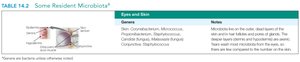
Eye and Skin | Staphylococcus, Micrococcus, Propionibacterium, etc. | Microbes live on the outer skin and conjunctiva. |
Microbe-Free Areas
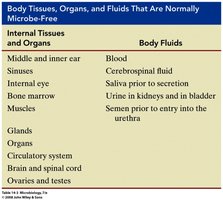
Certain body sites are normally microbe-free (axenic) due to physical barriers, unsuitable conditions, or host defenses.
Internal Tissues and Organs | Body Fluids |
|---|---|
Middle and inner ear, sinuses, internal eye, bone marrow, muscles, glands, organs, circulatory system, brain and spinal cord, ovaries and testes | Blood, cerebrospinal fluid, saliva prior to secretion, urine in kidneys/bladder, semen prior to urethra |
Reservoirs of Infectious Disease
Animal Reservoirs
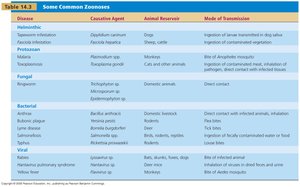
Animal reservoirs are sources of zoonotic diseases, which are transmitted from animals to humans. Examples include rabies, malaria, and ringworm.
Disease | Causative Agent | Animal Reservoir | Mode of Transmission |
|---|---|---|---|
Tapeworm infection | Dipylidium caninum | Dogs | Ingestion of contaminated food |
Malaria | Plasmodium spp. | Monkeys | Bite of Anopheles mosquito |
Ringworm | Trichophyton spp. | Domestic animals | Direct contact |
Rabies | Rabies virus | Domestic and wild animals | Bite of infected animal |
Human and Nonliving Reservoirs
Human Reservoirs: Carriers may transmit disease without symptoms.
Nonliving Reservoirs: Soil, water, and food can harbor pathogens.
Contamination, Infection, and Disease
Process of Infection
Infection begins with contamination, followed by invasion and multiplication of pathogens, leading to disease if host defenses are overcome.
Portals of Entry
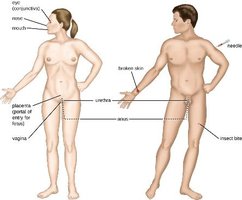
Pathogens enter the body through specific portals, including skin, mucous membranes, placenta, and parenteral routes (e.g., injections, wounds).
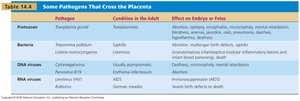
Pathogen | Condition in Adult | Effect on Embryo or Fetus |
|---|---|---|
Toxoplasma gondii | Toxoplasmosis | Abortion, epilepsy, mental retardation, etc. |
Treponema pallidum | Syphilis | Abortion, mental retardation, etc. |
Listeria monocytogenes | Listeriosis | Abortion, neonatal death, etc. |
Cytomegalovirus | Usually asymptomatic | Deafness, microcephaly, mental retardation |
HIV | AIDS | Immunosuppression, death |
Rubella virus | German measles | Severe birth defects, death |
Nature of Infectious Disease
Signs, Symptoms, and Syndromes
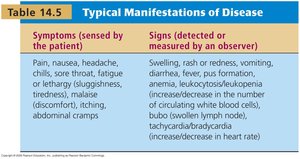
Diseases are characterized by signs (observable/measurable), symptoms (felt by the patient), and syndromes (groups of signs and symptoms).
Symptoms (patient) | Signs (observer) |
|---|---|
Pain, nausea, headache, chills, sore throat, fatigue, malaise, discomfort, itching, abdominal cramps | Swelling, rash, vomiting, diarrhea, fever, pus, anemia, leukocytosis/leukopenia, bubo, tachycardia/bradycardia |
Etiology: Cause of Disease
Infectious vs Noninfectious: Infectious diseases are caused by pathogens; noninfectious by other factors.
Communicable vs Noncommunicable: Communicable diseases spread from person to person; noncommunicable do not.
Koch's Postulates
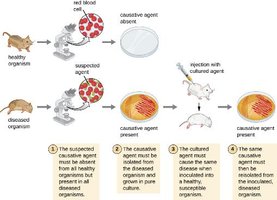
Koch’s postulates are criteria used to prove that a specific pathogen causes a particular disease:
The suspected agent must be present in every case of the disease.
The agent must be isolated and grown in pure culture.
The cultured agent must cause the disease when inoculated into a healthy host.
The same agent must be reisolated from the experimental host.
How Microbes Cause Disease
Virulence Factors
Virulence factors are traits that enable pathogens to cause disease, including adhesion, invasion, and toxin production.
Adhesion
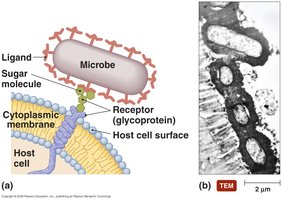
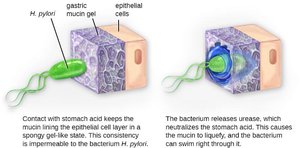
Pathogens use adhesins (ligands) to attach to host cell receptors, a critical step in infection.
Invasion and Exoenzymes
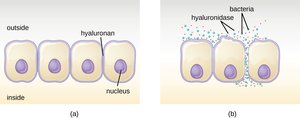
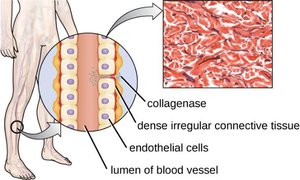
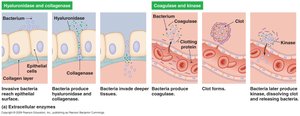
Pathogens invade tissues using exoenzymes such as hyaluronidase and collagenase, which break down host barriers.
Toxins
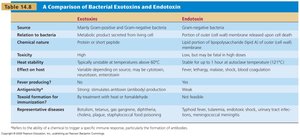
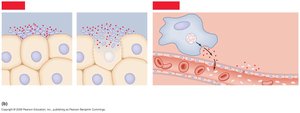
Bacterial toxins are classified as endotoxins (lipopolysaccharide, LPS, from Gram-negative bacteria) and exotoxins (secreted proteins from Gram-positive and some Gram-negative bacteria).

Feature | Exotoxin | Endotoxin |
|---|---|---|
Source | Gram-positive and Gram-negative bacteria | Gram-negative bacteria |
Relation to bacteria | Secreted | Part of cell wall, released upon cell death |
Chemistry | Protein | Lipid A of LPS |
Toxicity | High | Low |
Heat stability | Unstable | Stable |
Effect on host | Variable | Fever, inflammation, shock |
Fever producing? | No | Yes |
Antigenicity | Strong | Weak |
Diseases | Diphtheria, tetanus, cholera | Typhoid fever, meningitis |
Immune Evasion
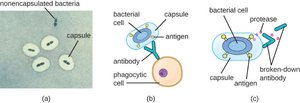
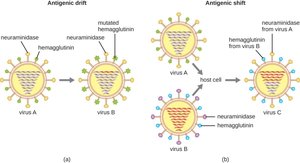
Pathogens evade host immunity using antiphagocytic factors (capsules, slime layers), proteases, coagulase, kinase, and antigenic variation.
Antigenic Variation
Some pathogens alter their surface proteins to avoid immune detection. Examples include Neisseria gonorrhoeae, Borrelia burgdorferi, and Trypanosoma species.
Eukaryotic Pathogen Virulence
Fungi: Adhesins, exoenzymes, mycotoxins, capsule production (e.g., Candida).
Protozoa: Adhesive disks (Giardia intestinalis), capsule production, antigenic variation (Trypanosoma brucei, Plasmodium falciparum).
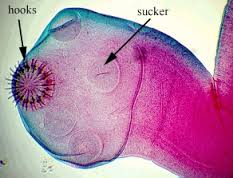
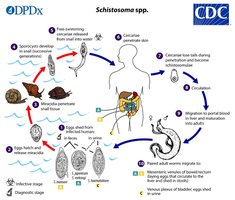
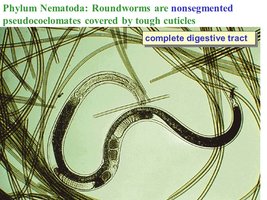
Helminths: Adhesion (hooks, suckers), invasion (Schistosoma mansoni), immune evasion (size, cuticle protection).
Stages of Infectious Disease
Progression of Disease
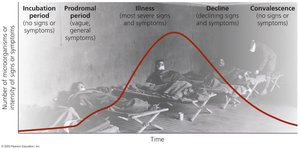
The course of an infectious disease is divided into five periods: incubation, prodromal, illness, decline, and convalescence. The number of pathogens and severity of symptoms vary throughout these stages.
Incubation: No signs or symptoms.
Prodromal: Mild, vague symptoms.
Illness: Most severe signs and symptoms.
Decline: Symptoms and pathogen numbers decrease.
Convalescence: Recovery, no symptoms.
Portals of Exit
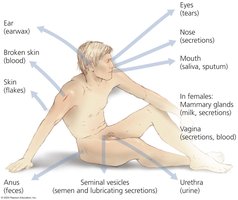
Pathogens exit the host through various portals, including skin, respiratory tract, gastrointestinal tract, and genitourinary tract, to infect new hosts.
Modes of Infectious Disease Transmission
Contact Transmission
Direct: Physical contact between individuals.
Indirect: Transmission via fomites (objects).
Droplet: Transmission via respiratory droplets.
Vehicle Transmission
Pathogens transmitted via air, water, or food.
Vector Transmission
Biological Vector: Pathogen develops in vector (e.g., mosquito).
Mechanical Vector: Pathogen carried on vector’s body (e.g., fly).
