 Back
BackEukaryotic Cell Structure and Function: A Microbiology Study Guide
Study Guide - Smart Notes
 Tailored notes based on your materials, expanded with key definitions, examples, and context.
Cell Structure and Function
Overview of Eukaryotic Cells
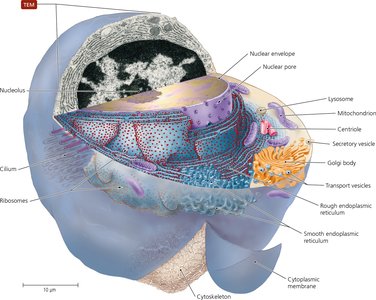
Eukaryotic cells are distinguished by their complexity and the presence of membrane-bound organelles. They are generally larger and more structurally advanced than prokaryotic cells, with a true nucleus and specialized compartments for various cellular processes.
Nucleus: Contains the cell's genetic material (DNA) and is surrounded by a nuclear envelope.
Membrane-bound organelles: Includes mitochondria, endoplasmic reticulum, Golgi apparatus, lysosomes, and more.
Cell division: Eukaryotes divide by mitosis, ensuring equal distribution of chromosomes.
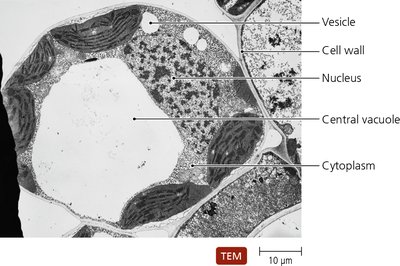
Cell wall: Most eukaryotes lack a cell wall, but fungi, algae, plants, and some protozoa possess one.
Comparison: Prokaryotes vs. Eukaryotes
The following table summarizes the key differences between prokaryotic and eukaryotic cells:
Feature | Prokaryote | Eukaryote |
|---|---|---|
Nucleus | Absent | Present |
Chromosomes | One or two circular in nucleoid | Paired linear in nucleus |
Organelles | Absent | Present |
Cell Wall | Peptidoglycan (bacteria) | Polysaccharide (when present) |
Division | Binary fission | Mitosis |
Histones | Absent | Present |
Size & Complexity | Smaller, less complex | Larger, more complex |
Eukaryotic Cell External Structures
Glycocalyces
Glycocalyces are sticky, viscous layers found on the exterior of some eukaryotic cells, particularly animal cells and some protists. They are less organized than prokaryotic capsules and serve several important functions:
Anchor cells to each other
Protect against dehydration
Facilitate cell-to-cell recognition and communication
Cell Wall
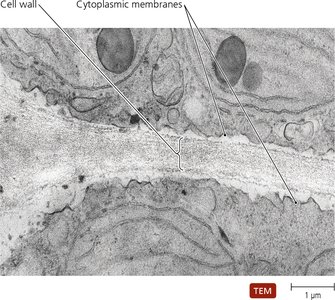
Some eukaryotes, such as fungi, algae, plants, and certain protozoa, possess a cell wall composed primarily of polysaccharides. The composition and function of the cell wall vary among groups:
Fungal cell walls: Made of cellulose, chitin, and/or glucomannan
Functions: Provide shape, structural support, prevent osmotic lysis, anchor cells, and protect against environmental stress
Cytoplasmic Membrane
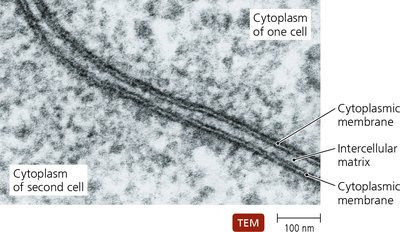
The cytoplasmic membrane is present in all eukaryotes and is composed of a fluid mosaic of phospholipids and proteins. Key features include:
Proteins act as recognition molecules, enzymes, receptors, carriers, and channels
Contains steroid lipids (e.g., cholesterol) to maintain membrane fluidity
May contain membrane rafts for organizing signaling molecules
Controls movement of molecules via passive and active transport
Eukaryotic Cell Transport Mechanisms
Active Transport: Endocytosis and Exocytosis
Eukaryotic cells utilize specialized mechanisms for transporting large molecules and particles across the membrane:
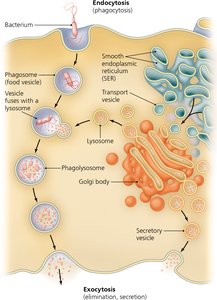
Endocytosis: The process by which cells engulf external substances using pseudopods. Includes:
Phagocytosis: Uptake of solid particles (e.g., bacteria, dead cells)
Pinocytosis: Uptake of liquid substances
Exocytosis: Vesicles fuse with the cytoplasmic membrane to release contents outside the cell (e.g., waste, secretions)
Eukaryotic Cell Motility Structures
Flagella
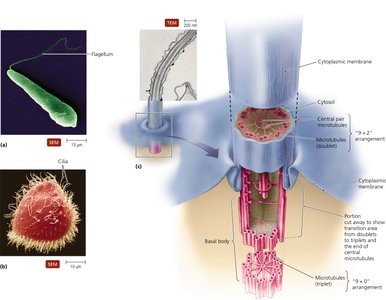
Flagella are long, whip-like structures that extend from the cell membrane and are responsible for cell movement. Eukaryotic flagella are composed of microtubules (tubulin) and are anchored by a basal body. They may be single or multiple and are generally polar.
Cilia
Cilia are short, numerous, motile projections found only in eukaryotic cells. They are composed of microtubules and beat rhythmically to propel single-celled organisms or move substances along the surface of multicellular organisms.
Eukaryotic Cytoplasm and Organelles
Nonmembranous Organelles
Ribosomes: Sites of protein synthesis; eukaryotic ribosomes are 80S (composed of 60S and 40S subunits), larger than prokaryotic 70S ribosomes.
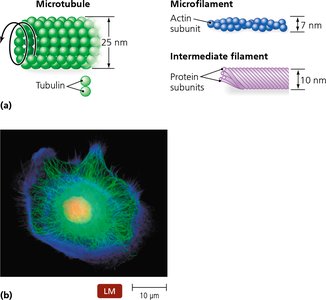
Cytoskeleton: A network of fibers (microtubules, actin microfilaments, intermediate filaments) that provides structural support, anchors organelles, and enables cell movement.
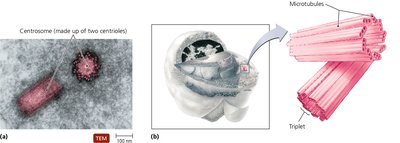
Centrioles and Centrosome: Found in animal cells and some fungi; centrioles play a role in mitosis, cytokinesis, and the formation of flagella and cilia.
Membrane-Bound Organelles
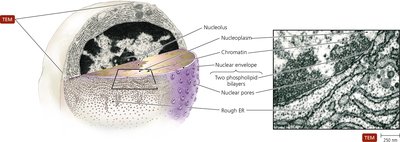
Nucleus: The largest organelle, containing DNA and the nucleolus (site of rRNA synthesis). Surrounded by a double membrane (nuclear envelope) with pores for molecular transport.
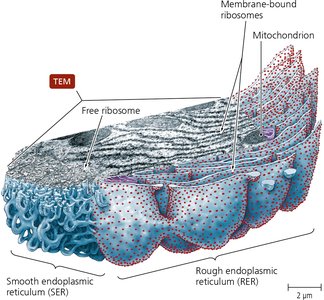
Endoplasmic Reticulum (ER): A network of membranes involved in protein and lipid synthesis. Two types:
Rough ER (RER): Studded with ribosomes; synthesizes proteins.
Smooth ER (SER): Lacks ribosomes; synthesizes lipids and detoxifies chemicals.
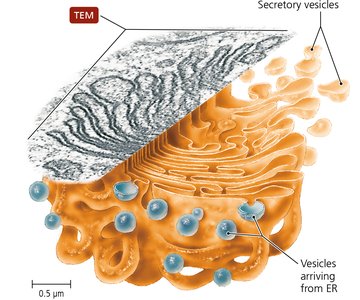
Golgi Body: Processes, sorts, and packages proteins and lipids for export or delivery to other organelles.
Lysosomes: Contain digestive enzymes for breaking down macromolecules and cellular debris.
Peroxisomes: Contain enzymes that degrade toxic substances, such as hydrogen peroxide.
Vacuoles and Vesicles: Store and transport substances within the cell; vacuoles are especially prominent in plant cells.
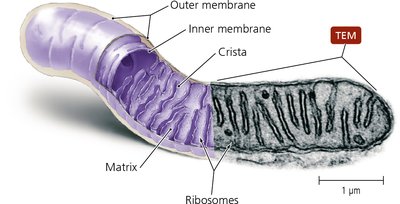
Mitochondria: The site of most ATP production; contain their own DNA and 70S ribosomes, supporting the endosymbiotic theory.
Key Concepts and Review Questions
What is the Svedberg value for eukaryotic ribosomes? Answer: 80S (prokaryotes have 70S ribosomes).
Where does protein synthesis occur? Answer: On ribosomes.
What are short, hair-like projections used by eukaryotic cells for movement? Answer: Cilia.
Is chromatin composed of DNA and hopanoids? Answer: False. Chromatin is composed of DNA and histone proteins.
Additional info: The presence of 70S ribosomes and circular DNA in mitochondria supports the endosymbiotic theory, which proposes that mitochondria originated from ancestral prokaryotic cells engulfed by early eukaryotes.
