 Back
BackEukaryotic Cells and Eukaryotic Microorganisms: Structure, Function, and Diversity
Study Guide - Smart Notes
 Tailored notes based on your materials, expanded with key definitions, examples, and context.
Introduction to Eukaryotic Cells
Overview of Eukaryotic Cell Structure
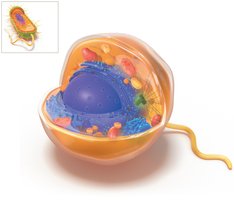
Eukaryotic cells are complex, membrane-bound cells that form the basis of all multicellular organisms and many unicellular microorganisms. They are distinguished from prokaryotic cells by the presence of a true nucleus and various membrane-bound organelles.
Nucleus: Contains genetic material (DNA) and controls cellular activities.
Membrane-bound organelles: Includes mitochondria, endoplasmic reticulum, Golgi apparatus, and others.
Cell membrane: A selectively permeable phospholipid bilayer with embedded proteins and sterols.
Cytoskeleton: Provides structural support and facilitates movement.
Origin of Eukaryotic Cells: The Endosymbiotic Theory
Endosymbiotic Theory
The endosymbiotic theory explains the evolutionary origin of mitochondria and chloroplasts in eukaryotic cells. It proposes that these organelles originated from free-living prokaryotes that were engulfed by ancestral eukaryotic cells.
Mitochondria: Evolved from engulfed nonphotosynthetic prokaryotes.
Chloroplasts: Evolved from engulfed photosynthetic prokaryotes (e.g., cyanobacteria).
Supporting evidence:
Both organelles have their own circular DNA.
Contain 70S ribosomes (similar to bacteria).
Similar size to bacteria.
Replicate by binary fission.
Genes resemble those of certain bacteria.
Comparison of Eukaryotic and Prokaryotic Cells
Key Differences
Eukaryotic and prokaryotic cells differ in several fundamental ways, including the presence of a nucleus, organelles, and complexity of internal structures.
Feature | Eukaryotic Cells | Prokaryotic Cells |
|---|---|---|
Nucleus | Present | Absent |
Organelles | Membrane-bound | None |
Ribosomes | 80S (cytoplasm), 70S (mitochondria/chloroplasts) | 70S |
Cell division | Mitosis/Meiosis | Binary fission |
Cell wall | Present in some (composition varies) | Usually present (peptidoglycan) |
Kingdoms of Eukaryotes
Classification Systems
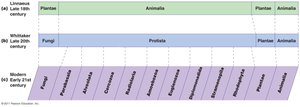
Eukaryotes are classified into several kingdoms. The five-kingdom system includes Animalia, Plantae, Fungi, and Protista (which includes protozoans and algae).
Features of Eukaryotic Cells
External Structures
Cytoplasmic membrane: Selectively permeable, contains sterols for stability.
Glycocalyx: Polysaccharide layer for protection, adherence, and communication.
Cell wall: Found in fungi (chitin/cellulose) and algae (cellulose); provides structural support.
Flagella and cilia: Motility structures; eukaryotic flagella are more complex than bacterial flagella.
Internal Structures
Ribosomes: 80S in cytoplasm, 70S in mitochondria/chloroplasts; protein synthesis.
Cytoskeleton: Actin filaments, intermediate filaments, microtubules; support and movement.
Nucleus: Contains DNA, nucleolus (site of rRNA synthesis).
Endoplasmic reticulum (ER): Rough ER (protein synthesis), smooth ER (lipid synthesis).
Golgi apparatus: Protein modification, packaging, and transport.
Vesicles: Lysosomes (digestion), vacuoles (storage).
Mitochondria: Energy production (ATP), contain their own DNA and ribosomes.
Chloroplasts: Photosynthesis in plants and algae.
Eukaryotic Cell Transport: Endocytosis and Exocytosis
Mechanisms of Transport
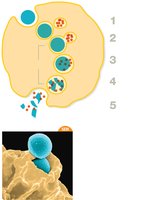
Eukaryotic cells use endocytosis to import substances and exocytosis to export them. These processes are essential for nutrient uptake, waste removal, and cell signaling.
Endocytosis: Import of substances via vesicle formation.
Types of endocytosis:
Pinocytosis: Uptake of dissolved substances.
Phagocytosis: Uptake of large particles (e.g., pathogens).
Receptor-mediated endocytosis: Specific uptake via receptor-ligand binding.
Exocytosis: Export of substances via vesicle fusion with the plasma membrane.
Types of Eukaryotic Microorganisms
Overview
Eukaryotic microorganisms include fungi, algae, and protozoa. Each group has unique structural and functional characteristics.
Fungi
General Features and Nutrition
Fungi are absorptive chemoheterotrophs that play essential roles in decomposition and nutrient cycling. They can be saprobes (decomposers) or parasites (living on hosts).
Macroscopic fungi: Mushrooms, puffballs.
Microscopic fungi: Molds, yeasts.
Nutrition: Absorptive, excrete enzymes to digest substrates externally.
Microscopic Morphology
Yeasts: Unicellular, reproduce by budding, may form pseudohyphae.
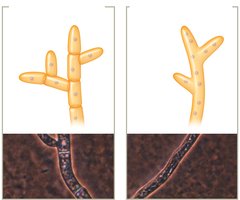
Molds: Multicellular, composed of hyphae (septate or nonseptate), form mycelium.
Dimorphic Fungi
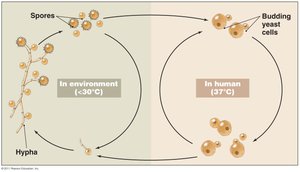
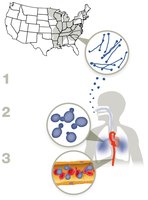
Some fungi can exist as both yeast and mold forms, depending on environmental conditions (temperature, nutrients). These are called thermal dimorphic fungi and are often pathogenic.
Yeast form at 37°C (in host), mold form at <30°C (in environment).
Fungal Spores
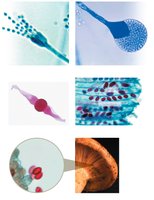
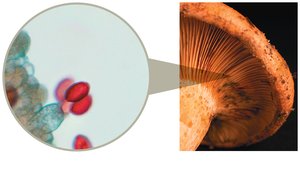
Asexual spores: Produced by mitosis (e.g., conidiospores, sporangiospores).
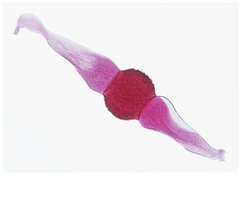
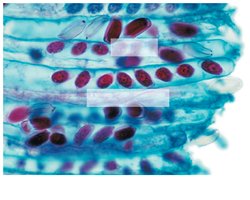
Sexual spores: Produced by meiosis (e.g., zygospores, ascospores, basidiospores).
Fungal Diseases (Mycoses)
Fungi can cause a range of diseases, especially in immunocompromised individuals. True fungal pathogens are often dimorphic and cause respiratory diseases.
Histoplasma capsulatum: Causes histoplasmosis; found in soil with bird/bat droppings; survives in macrophages.
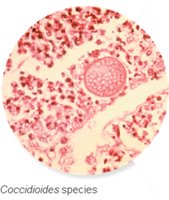
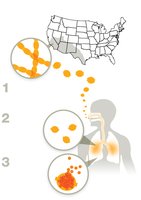
Coccidioides immitis: Causes coccidioidomycosis (Valley Fever); found in arid soils; forms spherules in lungs.
Blastomyces dermatitidis: Causes blastomycosis; found in soil rich in organic matter; has adhesins and deactivates macrophages.
Pneumocystis jirovecii: Causes PCP pneumonia in immunocompromised patients; treated with trimethoprim/sulfamethoxazole.
Protists: Algae
General Characteristics
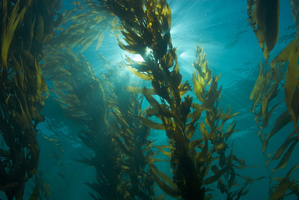
Algae are photosynthetic protists that can be unicellular, colonial, or multicellular. They are important primary producers in aquatic environments.
Cell wall: Usually cellulose or silica.
Nutrition: Photoautotrophic.
Reproduction: Sexual and/or asexual.
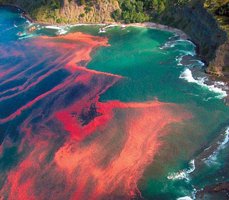
Dinoflagellates and Red Tides
Dinoflagellates are a group of algae that can cause harmful algal blooms known as "red tides." Some species produce neurotoxins that can affect marine life and humans.
Uses of Algae
Major food source for aquatic animals (plankton).
Produce about 80% of Earth's oxygen.
Industrial uses: agar, carrageenan, diatomaceous earth, fossil fuels.
Protists: Protozoa
General Characteristics
Protozoa are unicellular, eukaryotic microorganisms that lack cell walls and are mostly chemoheterotrophic. They inhabit a wide range of moist environments.
Some have two nuclei (macronucleus and micronucleus).
Some possess contractile vacuoles for osmoregulation.
Classification by Motility
Amoeboid: Move by pseudopodia.
Flagellated: Move by flagella.
Ciliated: Move by cilia.
Spore-forming: Non-motile in mature form.
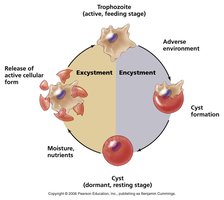
Life Cycle: Trophozoite and Cyst Stages
Protozoa typically have two main stages: the active, feeding trophozoite and the dormant, resistant cyst. The cyst stage is important for survival in harsh conditions and transmission of disease.
Reproduction in Protozoa
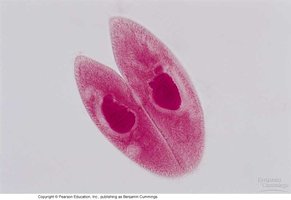
Sexual reproduction: Conjugation or production of gametes and zygotes.
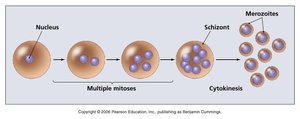
Asexual reproduction: Binary fission or schizogony (multiple fission).
Summary Table: Differences between Protozoa, Fungi, and Algae
Feature | Protozoa | Fungi | Algae |
|---|---|---|---|
Cellularity | Unicellular | Unicellular or multicellular | Unicellular, colonial, or multicellular |
Cell wall | Absent | Present (chitin/cellulose) | Present (cellulose/silica) |
Nutrition | Chemoheterotrophic | Chemoheterotrophic | Photoautotrophic |
Motility | Flagella, cilia, pseudopodia | Non-motile (except some spores) | Some motile (flagella) |
Reproduction | Asexual/sexual | Asexual/sexual | Asexual/sexual |
