 Back
Backlec 16
Study Guide - Smart Notes
 Tailored notes based on your materials, expanded with key definitions, examples, and context.
Eukaryotic Fungal Pathogens
Overview of Fungi in Microbiology
Fungi are eukaryotic organisms that play diverse roles in human health, industry, and ecology. Systemic fungal infections are particularly challenging to treat due to the metabolic similarities between fungi and humans, which limit the safety and efficacy of antifungal drugs. Fungi are classified into several groups, including Ascomycetes and Basidiomycetes, each with distinct morphological and clinical characteristics.
Ascomycetes: Molds and Yeasts
Penicillium Species: Structure and Medical Importance
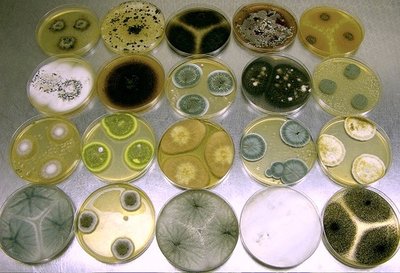
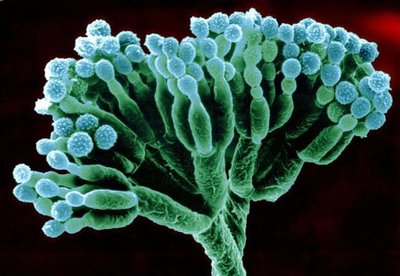
Penicillium species are rapidly growing molds characterized by a highly branched network of multinucleated, septated hyphae. They produce chains of conidia from conidiophores and are known for their ability to generate diverse metabolites, including antibiotics and antifungal agents.
Hyphae: Filamentous structures forming the main body of the mold.
Conidiophores: Specialized stalks that bear conidia (asexual spores).
Conidia: Spores responsible for reproduction and dispersal.
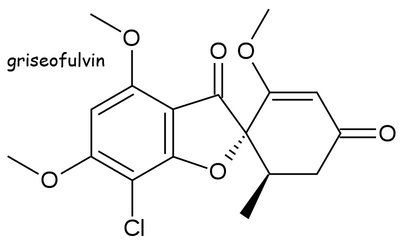
Medical significance: Penicillium chrysogenum produces penicillin, a groundbreaking antibiotic; P. griseofulvum produces griseofulvin, an antifungal and chemotherapeutic drug.
Aspergillus Species: Pathogenicity and Toxins
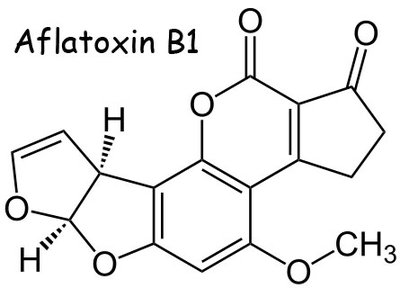
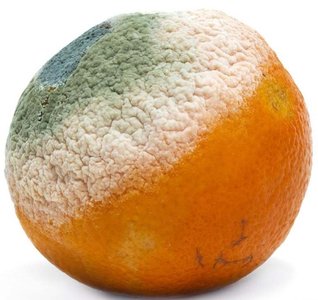
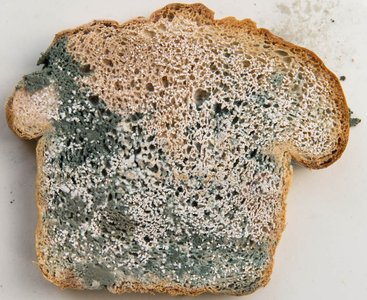
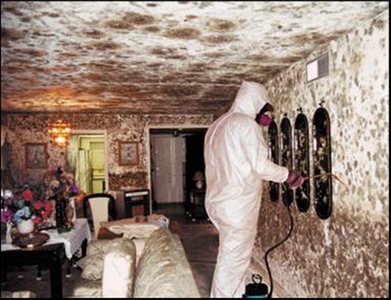
Aspergillus species are aerobic molds with branching septate hyphae and characteristic conidia. Over 60 species are medically relevant, producing mycotoxins such as aflatoxins and ergot alkaloids, which are potent carcinogens and neurotoxins.
Aflatoxins: Hepatotoxins causing liver cirrhosis and cancer.
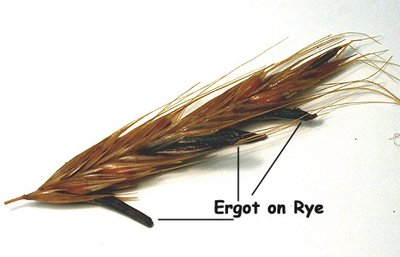
Ergot alkaloids: Cause convulsive CNS symptoms and psychosis (e.g., LSD).
Clinical relevance: Aspergillus fumigatus and A. clavatus are major allergens and cause respiratory diseases, especially in immunocompromised individuals.
Candida Species: Yeast Pathogens and Dimorphism
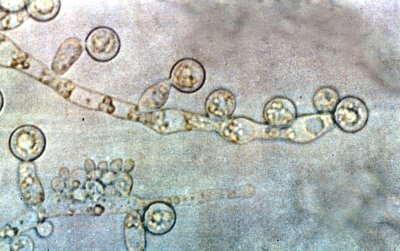
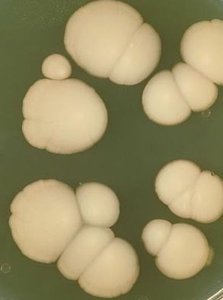
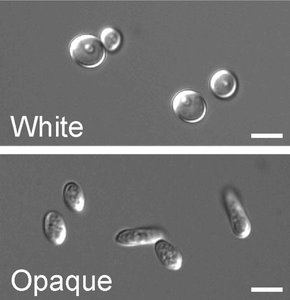
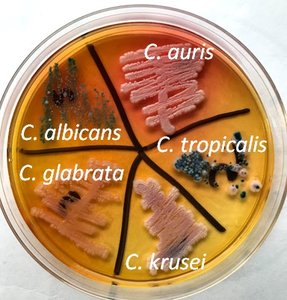
Candida species are diploid fungi capable of growing as both yeast and filamentous forms. Candida albicans undergoes phenotypic switching, allowing it to adapt to various environments and cause opportunistic infections such as oral thrush, genital vaginitis, and systemic candidiasis.
Normal microbiota: Present in 40-80% of healthy individuals.
Opportunistic infections: Occur in immunocompromised patients.
Candida auris: An emerging multidrug-resistant pathogen.
Blastomyces dermatidis: Dimorphic Fungal Pathogen
Blastomyces dermatidis is a dimorphic fungus endemic in the Midwest USA. It exists as a filamentous form in soil and transitions to a yeast form in the lungs at 37°C. Systemic infections manifest as skin and bone lesions, and acute respiratory distress syndrome (ARDS).
Transmission: Inhalation of spores or entry through skin abrasions.
Clinical manifestations: Skin blisters, bone pain, chronic pneumonia.
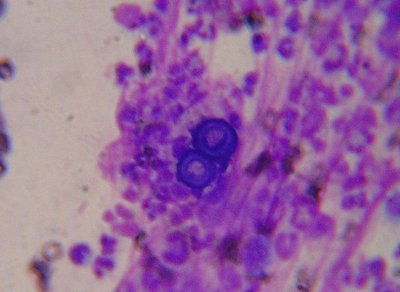
Histoplasma capsulatum: Thermal Dimorphism and Disease
Histoplasma capsulatum is a thermally dimorphic fungus found in dry, dusty soil and bird/bat droppings. It grows as mycelium externally and as yeast in the body. Most infections are asymptomatic, but immunocompromised patients may develop fatal disseminated disease.
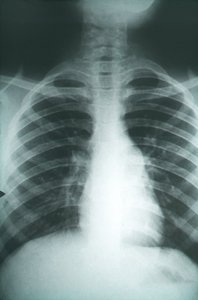
Chronic histoplasmosis: Resembles tuberculosis, with lung lesions visible on X-ray.
Transmission: Inhalation of spores.
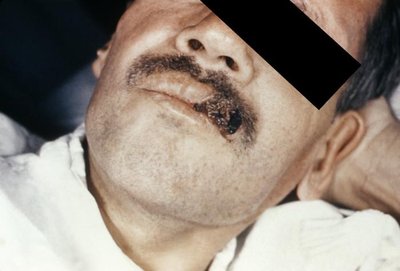
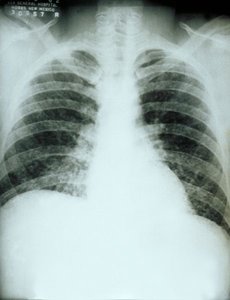
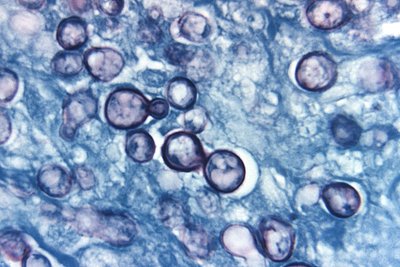
Pneumocystis jiroveci: Opportunistic Pneumonia
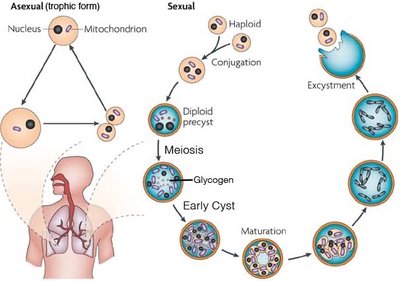
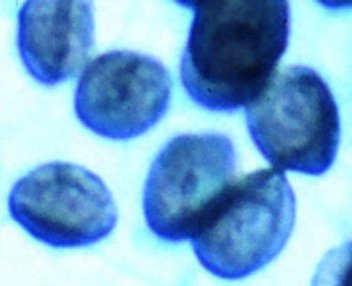
Pneumocystis jiroveci causes lethal pneumonia in immunocompromised patients. It has a complex life cycle within the alveoli, involving trophozoite, cyst, and sporozoite stages. Transmission occurs via airborne droplets.
Life cycle: Trophozoite → precyst → cyst → sporozoite.
Clinical relevance: Cannot be cultured ex vivo; major cause of pneumonia in AIDS patients.
Coccidioides immitis: Unique Life Cycle and Disease
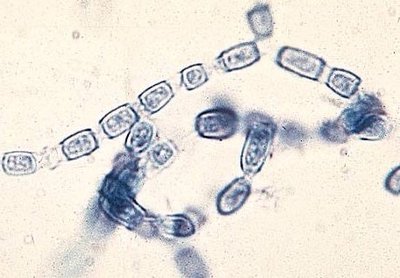
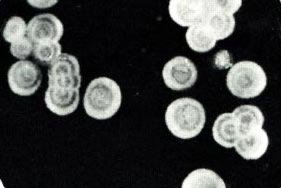
Coccidioides immitis is a dimorphic fungus endemic in desert areas of Southwest USA. It exists as septate mycelium outside the body, producing arthrospores that are inhaled. In the lungs, spores swell into spherules that fragment into endospores, causing coccidioidomycosis (San Joaquin Valley fever).
Clinical manifestations: Fever, cough, pleuritic pain, meningitis, pneumonia, ARDS.
Transmission: Inhalation of arthrospores.
Trichophyton rubrum: Dermatophyte Infections
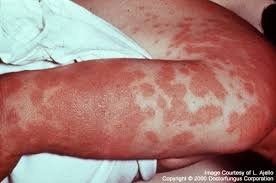
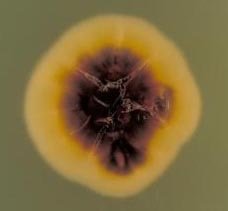
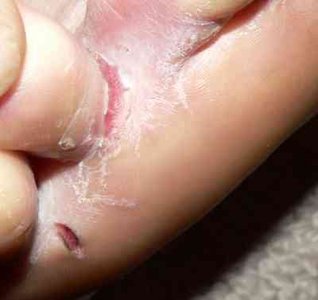
Trichophyton rubrum is a dimorphic fungus causing athlete’s foot, jock itch, and ringworm. It exists as filamentous hyphae in soil and moist environments, producing conidia directly on hyphae.
Clinical manifestations: Itchy, ring-shaped rash, burning sensation, skin lesions.
Transmission: Direct contact with contaminated surfaces.
Basidiomycetes: Yeast Pathogens
Cryptococcus neoformans: Encapsulated Yeast and Pathogenesis
Cryptococcus neoformans is an encapsulated yeast found in urban soil and pigeon droppings. It is associated with invasive lung and brain infections in immunocompromised patients, leading to meningitis and severe neurological symptoms.
Capsular polysaccharide: Anti-phagocytic, rich in glycoproteins, glucuronic acid, and mannose.
Life cycle: Yeast form replicates asexually by budding; filamentous forms (hyphae) are produced during mating, generating basidiospores.
Clinical manifestations: Meningitis, brain infection, paralysis.
Summary Table: Medically Important Fungi
Genus/Species | Type | Clinical Significance | Key Features |
|---|---|---|---|
Penicillium | Mold (Ascomycete) | Antibiotics, cheese production, systemic infections | Septate hyphae, conidiophores, conidia |
Aspergillus | Mold (Ascomycete) | Allergens, mycotoxins, respiratory disease | Aflatoxins, ergot alkaloids, septate hyphae |
Candida albicans | Yeast (Ascomycete) | Oral thrush, vaginitis, systemic candidiasis | Dimorphism, phenotypic switching |
Blastomyces dermatidis | Yeast (Ascomycete) | Skin/bone lesions, ARDS | Dimorphic, endemic in Midwest USA |
Histoplasma capsulatum | Yeast (Ascomycete) | Chronic pneumonia, TB-like lung lesions | Thermal dimorphism, bird/bat droppings |
Pneumocystis jiroveci | Yeast-like (Ascomycete) | Lethal pneumonia in AIDS | Complex alveolar life cycle |
Coccidioides immitis | Yeast (Ascomycete) | San Joaquin Valley fever, meningitis | Dimorphic, spherule/endospore cycle |
Trichophyton rubrum | Yeast (Ascomycete) | Athlete's foot, jock itch, ringworm | Dimorphic, conidia on hyphae |
Cryptococcus neoformans | Yeast (Basidiomycete) | Meningitis, brain infection | Encapsulated, anti-phagocytic capsule |
Key Terms and Concepts
Dimorphism: Ability of fungi to switch between yeast and filamentous forms depending on environmental conditions.
Opportunistic pathogens: Fungi that cause disease primarily in immunocompromised hosts.
Mycotoxins: Toxic secondary metabolites produced by fungi, such as aflatoxins and ergot alkaloids.
Antifungal drugs: Examples include griseofulvin, which inhibits fungal cell division.
Important Formulas and Structures
Griseofulvin (antifungal):
Aflatoxin B1 (mycotoxin):
LSD (ergot alkaloid):
Summary
Fungal pathogens are a major concern in clinical microbiology, especially for immunocompromised patients. Understanding their structure, life cycles, and pathogenic mechanisms is essential for diagnosis and treatment. Fungi also contribute to industry and medicine through the production of antibiotics, antifungals, and other bioactive compounds.
