 Back
BackEukaryotic Microorganisms: Fungi, Algae, Protozoa, and Helminths
Study Guide - Smart Notes
 Tailored notes based on your materials, expanded with key definitions, examples, and context.
Fungi
Introduction to Fungi
Fungi are a diverse group of eukaryotic organisms studied in the field of mycology. They are primarily chemoheterotrophs, meaning they obtain energy by decomposing organic matter. Fungi can be aerobic or facultative anaerobes and are generally non-motile.
Chemoheterotrophs: Require organic compounds for both energy and carbon.
Decomposers: Play a crucial role in nutrient cycling by breaking down dead organic material.
Aerobic or Facultative Anaerobic: Most molds are strictly aerobic, while most yeasts can grow with or without oxygen.
Non-motile: Fungi do not possess structures for active movement.
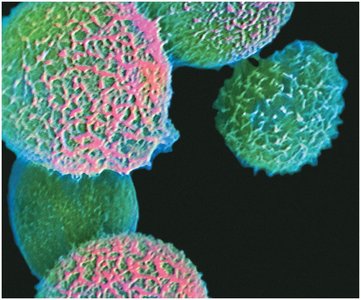
Fungal Structures
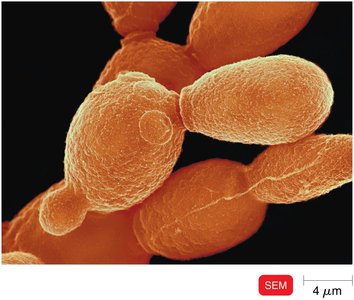
Fungi exhibit a variety of structural forms, including unicellular yeasts and multicellular molds. Yeasts are nonfilamentous and reproduce by budding or fission, while molds form filamentous structures called hyphae.
Yeasts: Unicellular fungi that reproduce by budding (uneven division) or fission (even division).
Molds: Multicellular fungi composed of hyphae, which may form a mycelium.
Dimorphic Fungi: Can exist as either yeast-like or mold-like forms depending on environmental conditions.
Fungal Reproduction: Asexual Spores
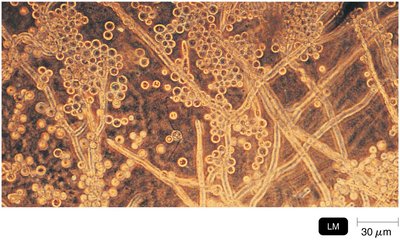
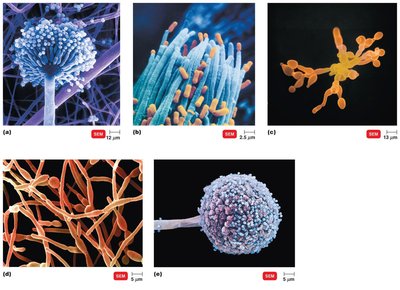
Fungi reproduce asexually by forming spores. The main types of asexual spores include conidia, arthroconidia, blastoconidia, chlamydoconidia, and sporangiospores.
Conidia: Spores formed at the end of specialized hyphae called conidiophores.
Arthroconidia: Formed by fragmentation of hyphae.
Blastoconidia: Produced by budding from a parent cell.
Chlamydoconidia: Thick-walled spores formed within hyphae.
Sporangiospores: Produced within a sac called a sporangium.
Fungal Nutritional Adaptations
Fungi are adapted to a wide range of environmental conditions and can metabolize complex carbohydrates. They grow best at acidic pH, tolerate high osmotic pressure, and require less nitrogen than bacteria.
Optimal pH: Around 5, more acidic than most bacteria prefer.
Osmotolerance: Can grow in high sugar and salt concentrations.
Low Moisture: Capable of growth in environments with low water availability.
Complex Carbohydrate Metabolism: Can degrade substances like cellulose and lignin.
Medically Important Fungi
Several fungal groups are of medical importance, including Zygomycota, Microsporidia, Ascomycota, and Basidiomycota. Some are pathogens, while others are used in biotechnology.
Zygomycota: Includes Rhizopus stolonifer (black bread mold).
Microsporidia: Obligate intracellular parasites lacking mitochondria.
Ascomycota: Includes Saccharomyces cerevisiae (baker's yeast) and Claviceps purpurea (ergot fungus).
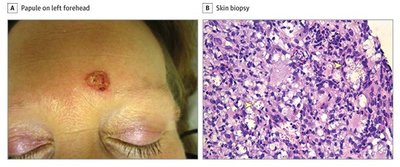
Basidiomycota: Includes Cryptococcus neoformans, a pathogen causing cryptococcosis.
Fungal Diseases (Mycoses)
Fungal infections, or mycoses, are classified based on the site of infection and the pathogenic potential of the fungus.
Systemic Mycoses: Deep infections affecting multiple organs.
Subcutaneous Mycoses: Infections beneath the skin.
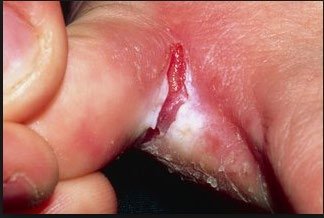
Cutaneous Mycoses: Affect hair, skin, and nails (e.g., athlete's foot).
Superficial Mycoses: Localized to hair shafts or surface skin cells.
Opportunistic Mycoses: Cause disease in immunocompromised hosts.
Economic Uses of Fungi
Fungi are important in industry and biotechnology for the production of food, pharmaceuticals, and enzymes.
Aspergillus niger: Production of citric acid.
Aspergillus terreus: Source of statins (cholesterol-lowering drugs).
Saccharomyces cerevisiae: Used in baking, brewing, and vaccine production.
Trichoderma: Produces cellulase for biofuel production.
Taxomyces: Produces taxol, an anticancer drug.
Tolypocladium inflatum: Source of cyclosporine, an immunosuppressant.
Coniothyrium minitans: Biocontrol agent against crop fungi.
Paecilomyces: Used for termite control.

Algae
Characteristics of Algae
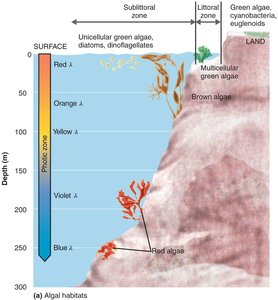
Algae are a diverse group of mostly aquatic, photosynthetic organisms. They are not a formal taxonomic group but are important primary producers in aquatic ecosystems.
Unicellular or Filamentous: Can exist as single cells or long chains.
Photoautotrophs: Use light energy to fix CO2 into organic molecules.
Lack True Roots, Stems, and Leaves: Differentiates them from plants.
Reproduction: All reproduce asexually; multicellular forms may also reproduce sexually.
Diatoms
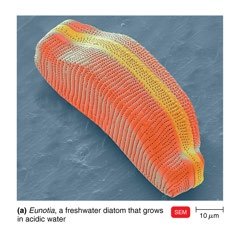
Diatoms are a major group of algae with unique cell walls made of pectin and silica. They are important for aquatic food webs and can produce toxins.
Cell Walls: Composed of pectin and silica, forming intricate patterns.
Energy Storage: Store energy as oil.
Toxins: Some produce domoic acid, which can cause neurological disease in humans and animals.
Dinoflagellates
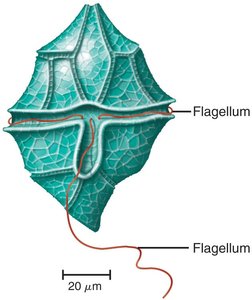
Dinoflagellates are unicellular algae with cellulose plates and two flagella. Some species produce neurotoxins responsible for paralytic shellfish poisoning.
Cellulose Plates: Provide structural support.
Flagella: Two flagella for movement.
Neurotoxins: Saxitoxins can accumulate in shellfish and cause poisoning in humans.
Oomycota (Water Molds)
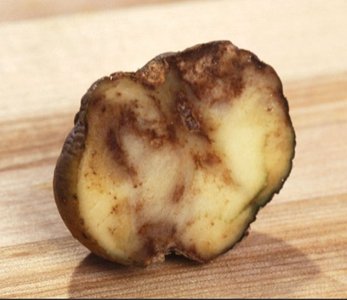
Oomycetes are fungus-like organisms with cellulose cell walls. They are important decomposers and plant pathogens.
Cell Walls: Made of cellulose (unlike true fungi, which have chitin).
Chemoheterotrophic: Obtain nutrients by decomposing organic matter.
Plant Pathogens: Includes Phytophthora infestans, which caused the Irish potato blight.
Roles of Algae in Nature
Algae play essential roles in ecosystems as primary producers and oxygen generators.
CO2 Fixation: Convert carbon dioxide into organic molecules via photosynthesis.
Oxygen Production: Responsible for about 80% of Earth's oxygen.
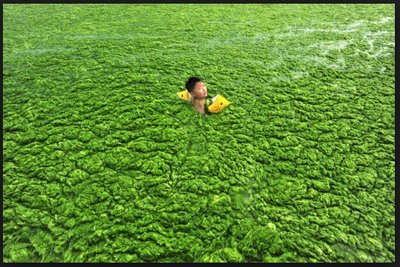
Algal Blooms: Rapid increases in planktonic algae can release toxins or deplete oxygen.
Oil Production: Some algae are sources of biofuels.
Symbiosis: Form mutualistic relationships with animals (e.g., corals, sloths).

Protozoa
Characteristics of Protozoa
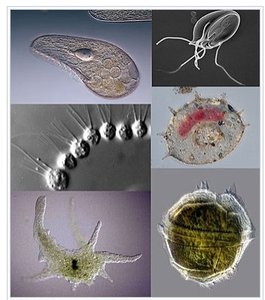
Protozoa are unicellular eukaryotes found in aquatic and soil environments. They exhibit animal-like nutrition and complex life cycles, including both asexual and sexual reproduction.
Trophozoite: The active, feeding, and growing stage.
Asexual Reproduction: By fission, budding, or schizogony (multiple fission).
Sexual Reproduction: Occurs via conjugation in some species.
Cysts: Dormant, resistant forms for survival in harsh conditions.
Feeding and Locomotion
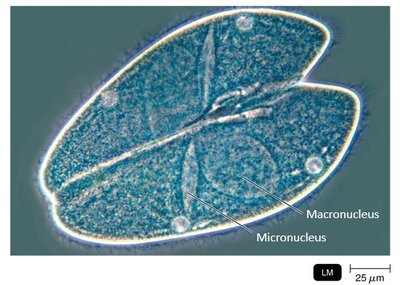
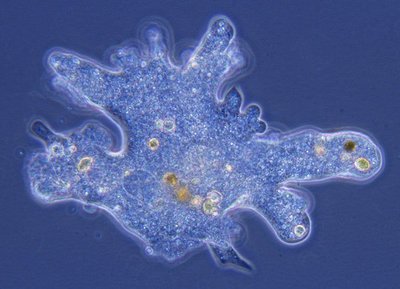
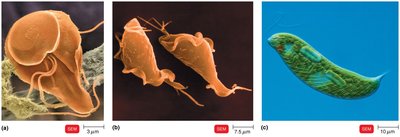
Protozoa have specialized structures for feeding and movement. Many have a protective pellicle and use cilia, flagella, or pseudopods for locomotion and food intake.
Ciliates: Use cilia to direct food into a cytostome (mouth-like opening).
Amebae: Move and ingest food by extending pseudopods (cytoplasmic projections).
Vacuoles: Digest food particles.
Anal Pore: Expels waste materials.
Medically Important Protozoa
Several groups of protozoa are important in medicine due to their roles as human pathogens.
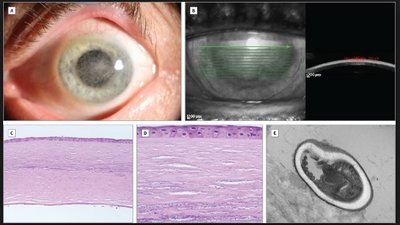
Amebae: Entamoeba histolytica (amebic dysentery), Acanthamoeba (corneal infections), Balamuthia (encephalitis).
Apicomplexa: Nonmotile, obligate intracellular parasites with complex life cycles (e.g., Plasmodium causes malaria, Toxoplasma gondii causes toxoplasmosis, Cryptosporidium causes waterborne illness).
Ciliates: Balantidium coli causes dysentery.
Diplomonads: Lack mitochondria, multiple flagella (e.g., Giardia intestinalis).
Parabasalids: Undulating membrane, no cyst stage (e.g., Trichomonas vaginalis).
Euglenozoa: Photoautotrophs or facultative chemotrophs; hemoflagellates transmitted by insect bites.
Helminths
Characteristics of Helminths
Helminths are multicellular parasitic worms classified into two main phyla: Platyhelminthes (flatworms) and Nematoda (roundworms). They are specialized for parasitism, often with reduced digestive and nervous systems and complex reproductive strategies.
Platyhelminthes: Includes trematodes (flukes) and cestodes (tapeworms).
Nematoda: Roundworms with a complete digestive system.
Dioecious: Separate male and female individuals.
Monoecious (Hermaphroditic): Both reproductive systems in one animal.
Life Cycle: Egg → larva(e) → adult, often involving multiple hosts.
Hosts in Helminth Life Cycles
Definitive Host: Supports the adult or sexually reproductive form of the parasite.
Intermediate Host: Supports the immature or asexual stages.
Platyhelminths
Trematodes (Flukes): Flat, leaf-shaped worms with suckers for attachment; absorb nutrients through their cuticle. Example: Schistosoma (blood fluke).
Cestodes (Tapeworms): Have a scolex (head) with suckers, absorb nutrients through their cuticle, and consist of proglottids (body segments with reproductive organs). Example: Taenia solium (pork tapeworm).
Nematodes (Roundworms)
Cylindrical Body: Complete digestive system.
Eggs Infective for Humans: Ascaris lumbricoides (intestinal roundworm), Enterobius vermicularis (pinworm).
Larvae Infective for Humans: Strongyloides, Necator americanus (hookworm), Dirofilaria immitis (heartworm).
Summary Table: Major Groups of Eukaryotic Microorganisms
Group | Key Features | Examples | Medical/Economic Importance |
|---|---|---|---|
Fungi | Chemoheterotrophs, cell walls of chitin, non-motile | Saccharomyces cerevisiae, Rhizopus stolonifer | Decomposition, food production, mycoses |
Algae | Photoautotrophs, aquatic, cell walls of cellulose/silica | Diatoms, dinoflagellates | Oxygen production, toxins, biofuels |
Protozoa | Unicellular, motile, complex life cycles | Plasmodium, Giardia | Parasitic diseases (malaria, dysentery) |
Helminths | Multicellular, parasitic, complex reproduction | Taenia solium, Ascaris lumbricoides | Parasitic infections |
