 Back
BackEukaryotic Microorganisms: Structure, Function, and Classification
Study Guide - Smart Notes
 Tailored notes based on your materials, expanded with key definitions, examples, and context.
General Characteristics of Eukaryotic Organisms
Major Groups of Eukaryotes
Eukaryotic microorganisms are classified into five major groups: protozoa, fungi, algae, water molds, and slime molds. These organisms include both human pathogens and species essential for ecological processes such as nutrient cycling.
Protozoa: Unicellular, lack cell walls, and are usually motile.
Fungi: Chemoheterotrophic, have chitinous cell walls, and do not perform photosynthesis.
Algae: Simple, phototrophic eukaryotes with chlorophyll a.
Water molds: Fungus-like organisms with cellulose cell walls.
Slime molds: Fungus-like protists with unique life cycles.
Reproduction in Eukaryotes
Eukaryotic reproduction is more complex than in prokaryotes, involving both asexual and sexual processes. DNA is organized into chromosomes within a nucleus, and organisms may be haploid (one genome copy) or diploid (two genome copies).
Asexual reproduction: Includes mitosis and cytokinesis.
Sexual reproduction: Involves gamete formation and fusion to produce zygotes.
Some groups (e.g., algae, fungi, protozoa) can reproduce both sexually and asexually.
Nuclear Division: Mitosis and Meiosis
Nuclear division ensures the proper distribution of genetic material during cell division. There are two main types:
Mitosis: Maintains the chromosome number of the parent cell, producing two genetically identical diploid nuclei. Four phases: prophase, metaphase, anaphase, telophase.
Meiosis: Reduces chromosome number by half, producing four genetically distinct haploid nuclei through two sequential divisions (meiosis I and II), each with prophase, metaphase, anaphase, and telophase.
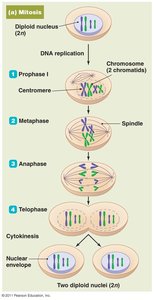
Cytokinesis and Variations
Cytokinesis is the division of the cytoplasm, usually occurring with telophase. In some algae and fungi, cytokinesis is delayed or absent, resulting in multinucleated cells called coenocytes. Cytoplasmic division can occur by cleavage furrow formation or cell plate formation in plants and fungi.
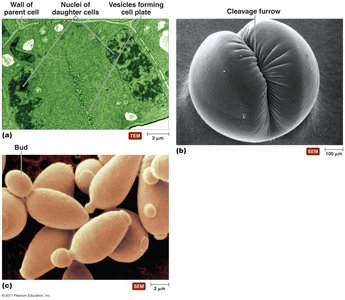
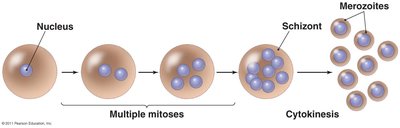
Schizogony
Schizogony is a special type of asexual reproduction seen in some protozoa, such as Plasmodium. The nucleus divides multiple times before the cytoplasm divides, producing many daughter cells (merozoites) simultaneously.
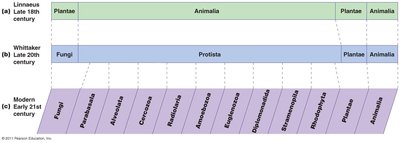
Changing Classification of Eukaryotes
The classification of eukaryotes has evolved from simple two-kingdom systems to complex, phylogenetically informed groupings. Modern classification uses molecular data (e.g., rRNA analysis) to define relationships among major groups.
Protozoa
General Characteristics
Protozoa are a diverse group of unicellular, eukaryotic organisms that lack cell walls. They are typically motile via cilia, flagella, or pseudopodia, except for apicomplexans.
Found in moist environments: aquatic habitats, soil, decaying matter.
Most are free-living; a few are pathogenic.
Morphology
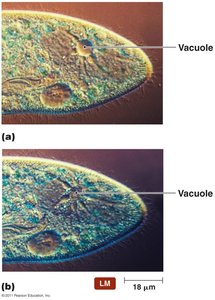
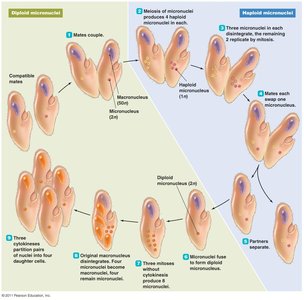
Protozoa exhibit great morphological diversity. Some have two types of nuclei: a macronucleus (containing many genome copies) and a micronucleus. They may possess contractile vacuoles for osmoregulation and can form cysts for survival in harsh conditions.
Nutrition
Most protozoa are chemoheterotrophs, obtaining nutrients by ingesting bacteria, organic matter, or other protozoa. Some, like dinoflagellates and euglenoids, are photoautotrophic.
Reproduction
Protozoa primarily reproduce asexually by binary fission or schizogony. Some species also reproduce sexually, forming gametocytes that fuse to form zygotes, or by conjugation (exchange of genetic material between cells).
Fungi
General Characteristics
Fungi are chemoheterotrophic eukaryotes with cell walls composed mainly of chitin. They do not perform photosynthesis and are more closely related to animals than to plants.
Significance of Fungi
Decompose dead organisms and recycle nutrients.
Form mutualistic relationships with plants (mycorrhizae).
Used in food production, antibiotics, and research.
Some are pathogenic to plants, animals, and humans.
Fungal Morphology
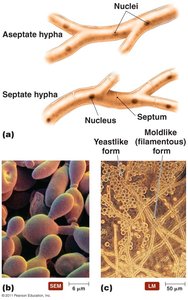
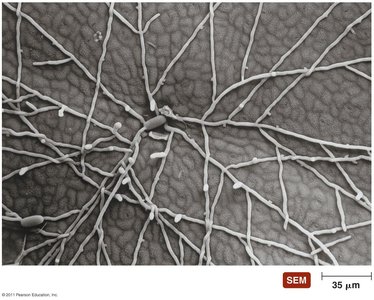
Fungi may exist as unicellular yeasts or multicellular molds. The body of a mold consists of hyphae, which form a network called a mycelium.
Nutrition
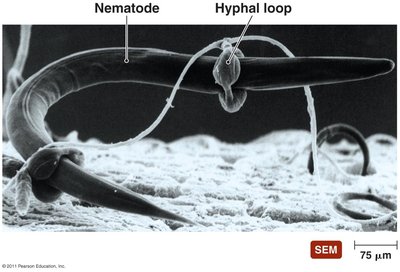
Fungi absorb nutrients from their environment. Most are saprobes, decomposing dead organic matter. Some are parasitic, using specialized structures (haustoria) to extract nutrients from living hosts. Most fungi are aerobic, but many yeasts are facultative anaerobes.
Reproduction
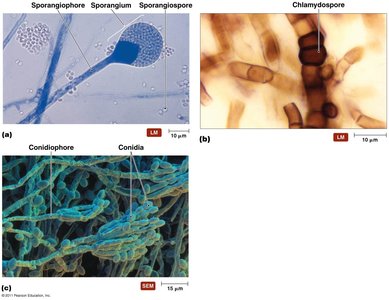
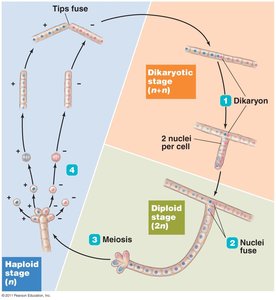
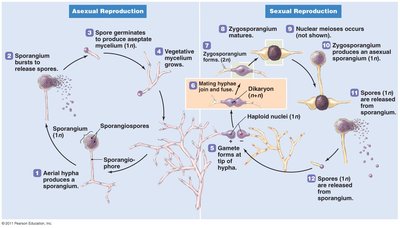
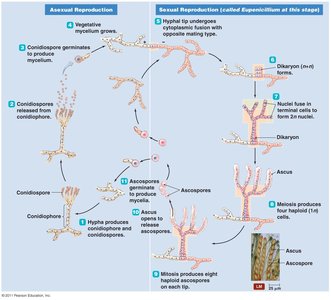
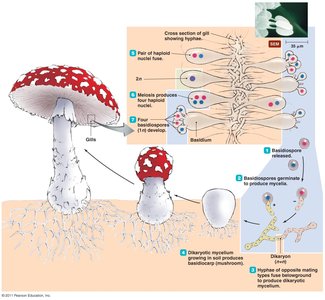
Fungi reproduce both asexually (by budding, fragmentation, or spore formation) and sexually. Yeasts reproduce by budding, while filamentous fungi produce spores that disperse widely.
Classification of Fungi
Fungi are classified into several divisions based on reproductive structures:
Zygomycota: Produce zygospores.
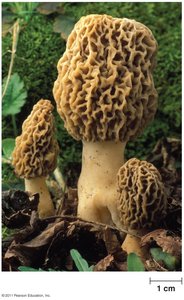
Ascomycota: Produce ascospores in asci.
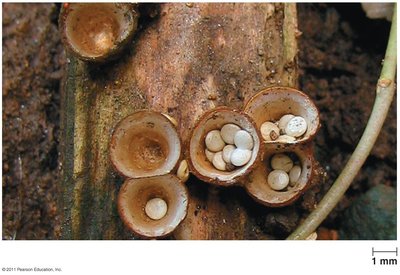
Basidiomycota: Produce basidiospores on basidia.
Deuteromycetes: Fungi with unknown sexual stages (most now placed in Ascomycota based on rRNA).
Lichens
Lichens are symbiotic associations between fungi and photosynthetic microbes (algae or cyanobacteria). They are important colonizers of harsh environments and contribute to soil formation.
Algae
General Characteristics
Algae are simple, eukaryotic phototrophs that perform oxygenic photosynthesis using chlorophyll a. They have diverse morphologies and reproductive strategies.
Distribution and Morphology
Most algae are aquatic, living in the photic zone. They may be unicellular, colonial, or multicellular (thalli).
Reproduction
Algae reproduce asexually by mitosis and cytokinesis or fragmentation. Sexual reproduction involves gamete formation and zygote meiosis. Many multicellular algae exhibit alternation of generations.
Water Molds
General Characteristics
Water molds differ from true fungi in having cellulose cell walls, tubular mitochondrial cristae, and diploid thalli. Their spores have two types of flagella. They play a role in recycling nutrients in aquatic habitats.
Other Eukaryotes of Microbiological Interest
Parasitic Helminths and Arthropod Vectors
Parasitic worms (helminths) have microscopic infective and diagnostic stages, such as eggs or larvae. Arthropod vectors transmit pathogens and are classified as mechanical or biological vectors. Major groups include:
Arachnida: Ticks and mites (four pairs of legs).
Insecta: Fleas, lice, flies, mosquitoes, and kissing bugs (three pairs of legs, three body regions).
