 Back
Foundations of Microbiology: The Microbial World and Cell Structure
Study Guide - Smart Notes
 Tailored notes based on your materials, expanded with key definitions, examples, and context.
Introduction to the Microbial World
Microorganisms: Tiny Titans of the Earth
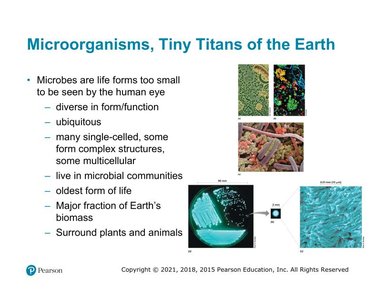
Microorganisms, or microbes, are life forms too small to be seen by the human eye. They are incredibly diverse in form and function, and are found in virtually every environment on Earth. Microbes play essential roles in ecological and biological processes, making them fundamental to life as we know it.
Diversity: Microbes vary greatly in structure, metabolism, and ecological roles.
Ubiquity: Present in water, soil, air, and even extreme environments such as volcanoes (with exceptions due to temperature limits).
Cellularity: Most are single-celled, though some form complex structures or multicellular arrangements.
Communities: Live in microbial communities, interacting with each other and their environment.
Biomass: Major contributors to Earth's total biomass.
Surroundings: Found on and around plants and animals.
Significance of Microbes
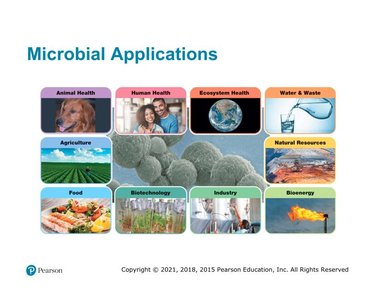
Microbes are essential for life on Earth, contributing to nutrient cycling, decomposition, and the health of plants, animals, and humans. They can be both beneficial and detrimental, but the vast majority are beneficial.
Ecological Roles: Decomposition, oxygen production, nitrogen fixation, and pollution remediation (e.g., oil spills).
Human Health: Aid in digestion, train the immune system, and influence mental health via the gut-brain axis.
Industrial Applications: Used in fermentation (e.g., beer), biotechnology, and agriculture (fertilizers).
Symbiosis: Livestock and other animals rely on microbes for digestion; sterile animal studies show the importance of microbes for health.
The Universal Tree of Life and Microbial Diversity
Phylogenetic Relationships
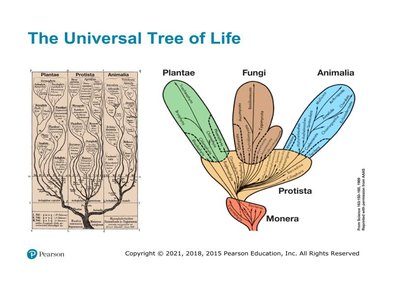
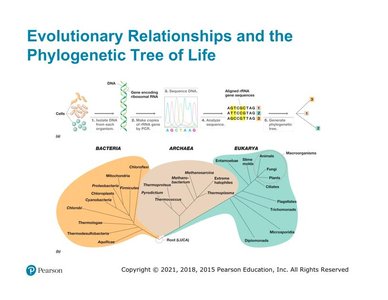
The universal tree of life illustrates the evolutionary relationships among all living organisms. Microbes are found in all three domains of life: Bacteria, Archaea, and Eukarya. Viruses, while important, are not included in the tree as they are acellular and lack ribosomal RNA.
Bacteria: Prokaryotic, diverse metabolic capabilities.
Archaea: Prokaryotic, often found in extreme environments, unique membrane lipids.
Eukarya: Includes fungi, protozoa, algae, plants, and animals.
Viruses: Acellular, obligate parasites, not part of the tree of life.
Structure and Activities of Microbial Cells
Basic Cell Structures
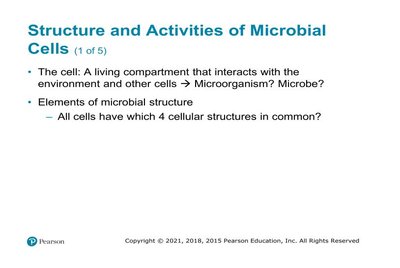
All cells share four fundamental structures: a cytoplasmic membrane, cytoplasm, ribosomes, and genetic material (DNA). These components are essential for cellular function and survival.
Cytoplasmic Membrane: Selective barrier that regulates transport of substances.
Cytoplasm: Gel-like matrix containing macromolecules and small molecules.
Ribosomes: Sites of protein synthesis.
DNA Genome: Carries genetic information.
Properties of Microbial Cells
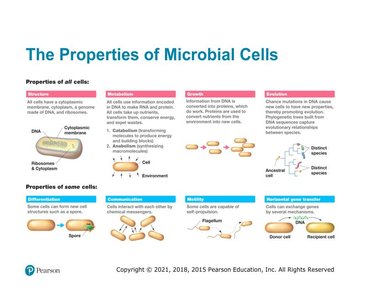
Microbial cells exhibit several key properties, some universal and others specific to certain groups.
Metabolism: Chemical reactions for energy and biosynthesis (catabolism and anabolism).
Growth: Increase in cell number via division.
Evolution: Genetic changes over generations.
Differentiation: Formation of specialized cell types (e.g., endospores).
Communication: Chemical signaling between cells.
Motility: Movement via structures like flagella.
Horizontal Gene Transfer: Exchange of genetic material between cells.
Prokaryotes vs. Eukaryotes
Cellular Organization
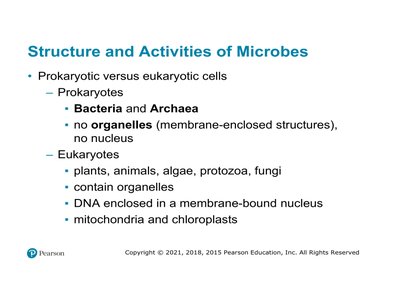
Microbes can be classified as prokaryotes or eukaryotes based on cellular structure.
Prokaryotes: Bacteria and Archaea; lack membrane-bound organelles and a nucleus.
Eukaryotes: Plants, animals, algae, protozoa, fungi; contain organelles, DNA enclosed in a nucleus, and mitochondria/chloroplasts.
Viruses: Acellular Infectious Agents
Structure and Activities of Viruses
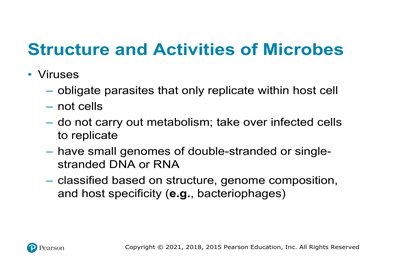
Viruses are not considered living cells. They are obligate parasites that require a host cell for replication. Viruses lack metabolism, ribosomes, and cellular structures, and are classified based on their genetic material and structure.
Genome: DNA or RNA, single- or double-stranded.
Replication: Only within host cells.
Classification: Based on structure, genome, and host specificity (e.g., bacteriophages).
Cell Size and Morphology
Cell Size and Morphology
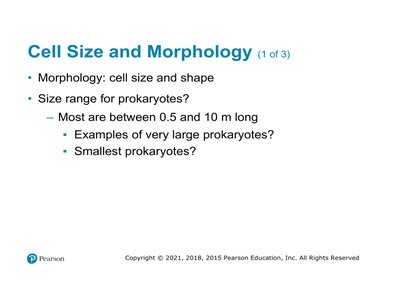
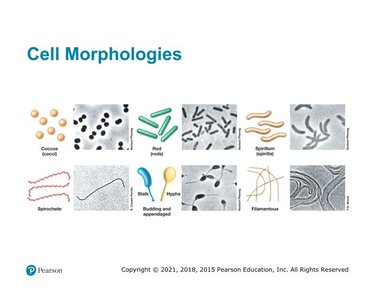
Prokaryotic cells vary in size and shape, with most ranging from 0.5 to 10 micrometers in length. Cell morphology includes cocci (spheres), bacilli (rods), spirilla (spirals), and other forms.
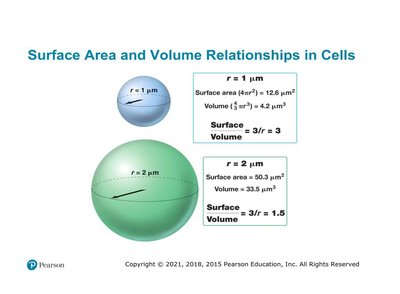
Surface Area-to-Volume Ratio: Smaller cells have a higher ratio, allowing more efficient nutrient exchange.
Examples: Pelagibacter ubique (small, high S/V ratio) vs. E. coli (larger, lower S/V ratio).
Microbial Cell Structure and Function
Cytoplasmic Membrane
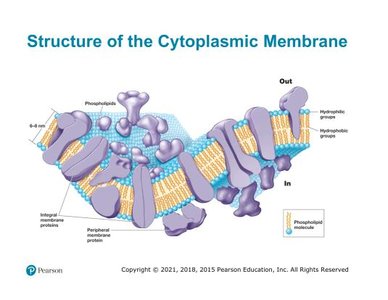
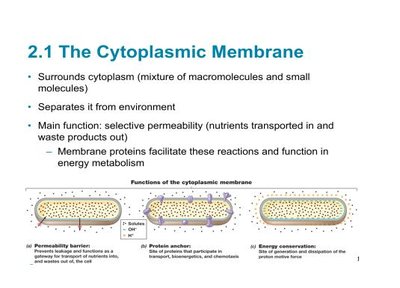
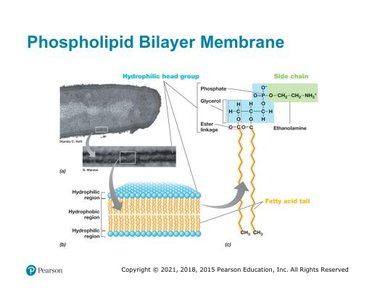
The cytoplasmic membrane surrounds the cytoplasm and acts as a selective barrier, controlling the movement of substances in and out of the cell. It is composed of a phospholipid bilayer with embedded proteins.
Selective Permeability: Allows specific molecules to pass while blocking others.
Protein Functions: Transport, energy metabolism, and signal transduction.
Bacterial vs. Archaeal Membranes
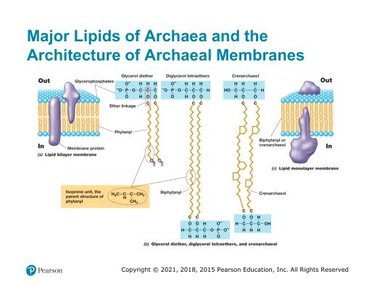
Bacterial and archaeal membranes differ in lipid composition and structure. These differences are important for adaptation to various environments.
Bacterial Cell Membrane | Archaeal Cell Membrane |
|---|---|
Ester-linked fatty acids | Ether-linked isoprenoids |
Phospholipid bilayer | Monolayer or bilayer (biphytanyl tails) |
Fatty acid tails | Biphytanyl or crenarchaeol tails |
The Cell Wall
Structure and Function
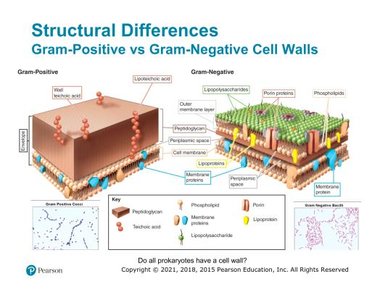
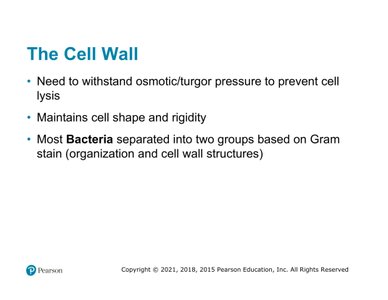
The cell wall provides structural strength, maintains cell shape, and protects against osmotic pressure. Most bacteria are classified as Gram-positive or Gram-negative based on cell wall structure and Gram staining.
Gram-Positive: Thick peptidoglycan layer, teichoic acids, stains purple.
Gram-Negative: Thin peptidoglycan, outer membrane with lipopolysaccharide (LPS), stains pink.
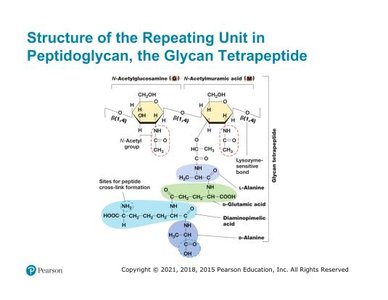
Lysozyme: Enzyme that breaks β-1,4-glycosidic bonds in peptidoglycan, leading to cell lysis.
Archaeal Cell Walls
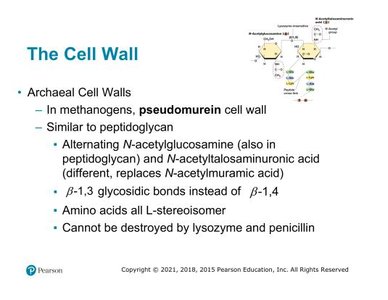
Some archaea possess pseudomurein cell walls, which are similar to peptidoglycan but have distinct chemical differences. Pseudomurein contains β-1,3-glycosidic bonds and L-amino acids, making it resistant to lysozyme and penicillin.
Specialized Structures
Endospores
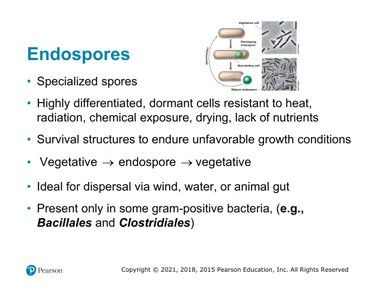
Endospores are highly resistant, dormant structures formed by some Gram-positive bacteria (e.g., Bacillales and Clostridiales) to survive harsh conditions. They can withstand heat, radiation, chemicals, and desiccation.
Life Cycle: Vegetative cell → endospore → vegetative cell.
Dispersal: Spread via wind, water, or animal gut.
Cell Surface Structures
Microbes possess various surface structures that aid in attachment, genetic exchange, and protection.
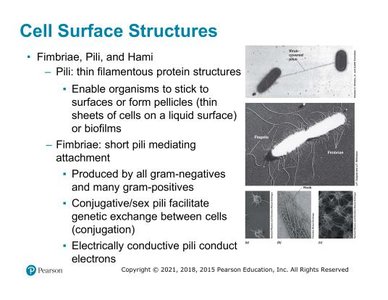
Pili: Thin filaments for attachment and conjugation (genetic exchange).
Fimbriae: Shorter filaments for attachment to surfaces.
Hami: Unique to archaea, aid in attachment.
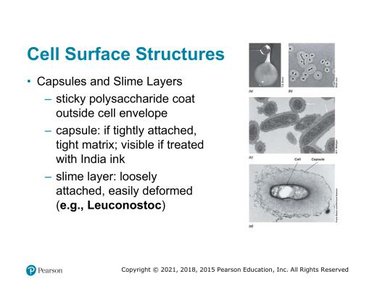
Capsules and Slime Layers: Polysaccharide coats that protect cells and aid in biofilm formation.
Summary Table: Key Differences in Microbial Cell Structure
Feature | Bacteria | Archaea | Eukarya |
|---|---|---|---|
Cell Type | Prokaryotic | Prokaryotic | Eukaryotic |
Membrane Lipids | Ester-linked fatty acids | Ether-linked isoprenoids | Ester-linked fatty acids |
Cell Wall | Peptidoglycan | Pseudomurein or S-layer | Cellulose, chitin, or none |
Organelles | Absent | Absent | Present |
Genome | Circular DNA | Circular DNA | Linear DNA |
Glossary of Key Terms
Microorganism: Living organism too small to be seen with the naked eye.
Microbe: Includes microorganisms and non-living infectious agents (e.g., viruses).
Prokaryote: Cell lacking a nucleus and membrane-bound organelles.
Eukaryote: Cell with a nucleus and membrane-bound organelles.
Endospore: Dormant, resistant cell formed by some bacteria.
Peptidoglycan: Polymer forming the bacterial cell wall.
Pseudomurein: Polymer in some archaeal cell walls, similar to peptidoglycan.
Capsule: Tightly attached polysaccharide layer outside the cell envelope.
Slime Layer: Loosely attached, easily deformed polysaccharide layer.
Pili/Fimbriae: Protein structures for attachment and genetic exchange.
