 Back
BackFunctional Anatomy of Prokaryotic and Eukaryotic Cells: Microbiology Study Notes
Study Guide - Smart Notes
 Tailored notes based on your materials, expanded with key definitions, examples, and context.
Functional Anatomy of Prokaryotic and Eukaryotic Cells
Overview: Prokaryotic vs. Eukaryotic Cells
Microbiology distinguishes between prokaryotic and eukaryotic cells based on structural and functional characteristics. Understanding these differences is fundamental for studying microbial physiology, genetics, and pathogenicity.
Prokaryotes: Cells lacking a membrane-bound nucleus; include Bacteria and Archaea.
Eukaryotes: Cells with a true nucleus and membrane-bound organelles; include fungi, protozoa, algae, and plants.
Key Differences:
Feature | Prokaryote | Eukaryote |
|---|---|---|
Nucleus | No (nucleoid region) | Yes (membrane-bound) |
Chromosomes | Usually one circular | Paired, linear |
Cell Wall | Peptidoglycan (Bacteria), Pseudomurein (Archaea) | Polysaccharides (cellulose, chitin) |
Division | Binary fission | Mitosis |
Organelles | Absent | Present |
Size, Shape, and Arrangement of Bacterial Cells
Bacteria exhibit diverse shapes and arrangements, which are important for identification and classification.
Average size: 0.2–2.0 μm diameter, 2–8 μm length
Monomorphic: Single shape
Pleomorphic: Variable shapes
Common Shapes:
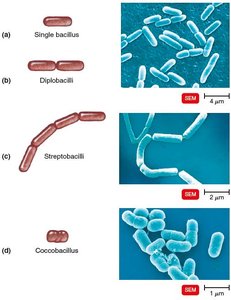
Bacillus: Rod-shaped
Coccus: Spherical
Spiral: Includes vibrio, spirillum, spirochete
Star-shaped and Rectangular: Rare forms
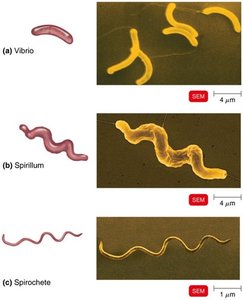
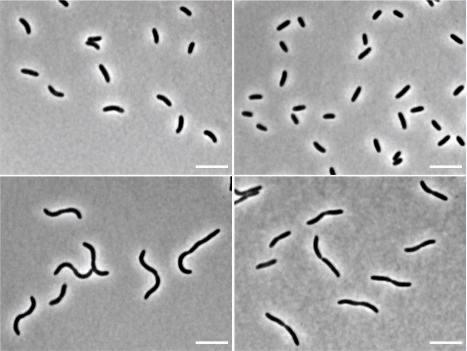
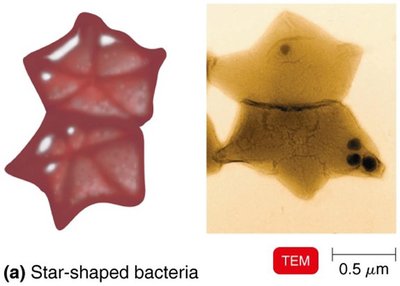
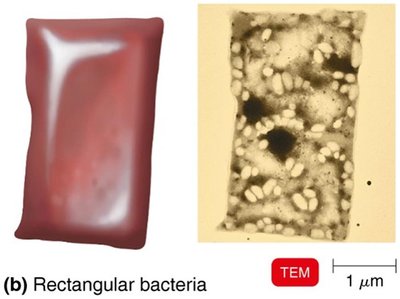
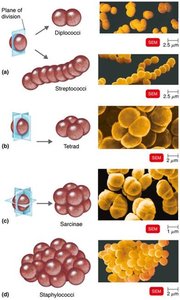
Arrangements:
Pairs: Diplococci, diplobacilli
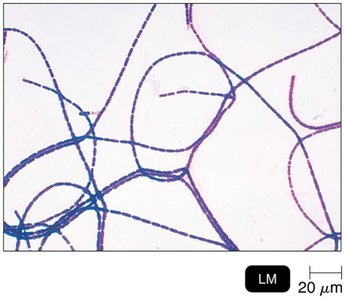
Chains: Streptococci, streptobacilli
Clusters: Staphylococci
Groups of four: Tetrads
Cubelike groups of eight: Sarcinae
Structure of a Prokaryotic Cell
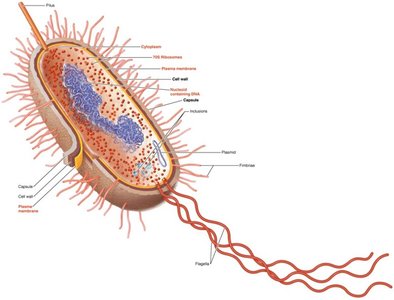
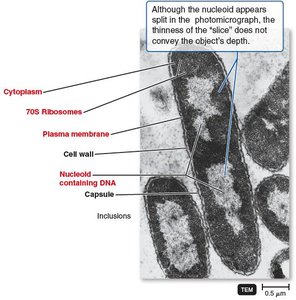
Prokaryotic cells have a simple structure but contain specialized components for survival and adaptation.
Cell wall: Provides shape and protection
Plasma membrane: Controls transport
Cytoplasm: Contains DNA, ribosomes, inclusions
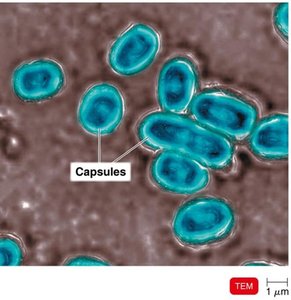
Capsule: Protective layer
Flagella: Motility
Fimbriae and pili: Attachment and DNA transfer
Glycocalyx
The glycocalyx is an external layer that enhances bacterial survival and pathogenicity.
Composition: Polysaccharide and/or polypeptide
Types: Capsule (organized, attached), Slime layer (unorganized, loose)
Functions: Prevents phagocytosis, aids in adherence, forms biofilms
Flagella
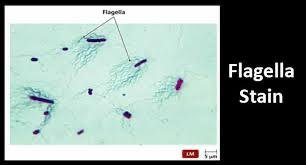
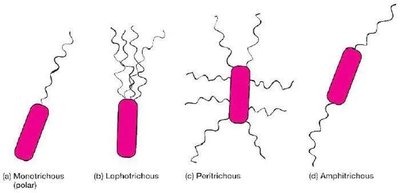
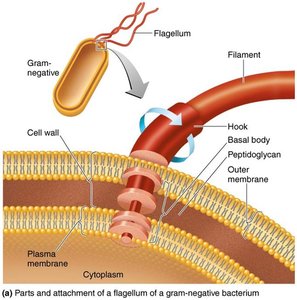
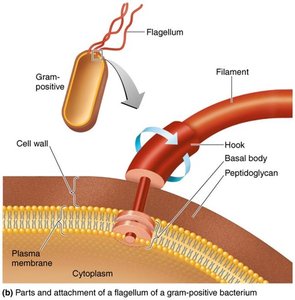
Flagella are appendages that provide motility to bacteria, enabling movement toward or away from stimuli.
Structure: Filament, hook, basal body
Composition: Protein flagellin
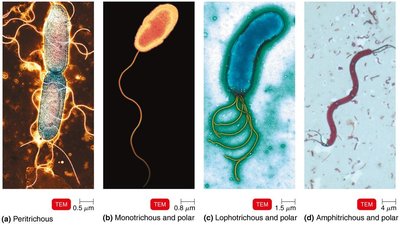
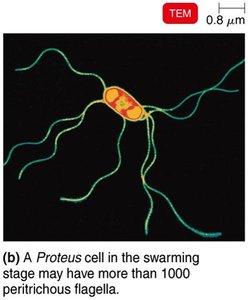
Arrangement: Monotrichous, lophotrichous, amphitrichous, peritrichous
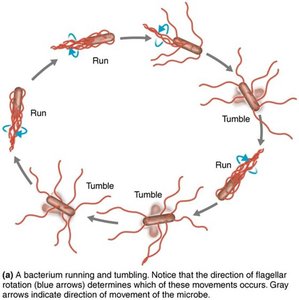
Function: Motility (run and tumble), taxis, antigenic properties (H antigens)
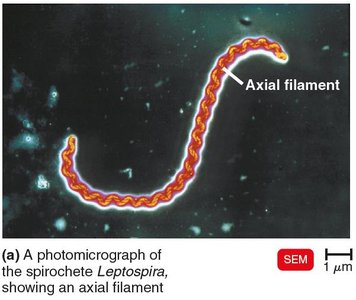
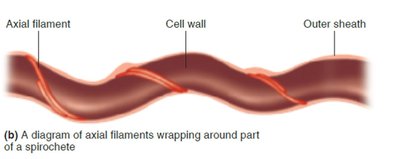
Axial Filaments
Axial filaments, or endoflagella, are unique motility structures found in spirochetes, enabling corkscrew movement.
Location: Anchored at one end, wrap around cell
Function: Rotation causes movement
Fimbriae and Pili
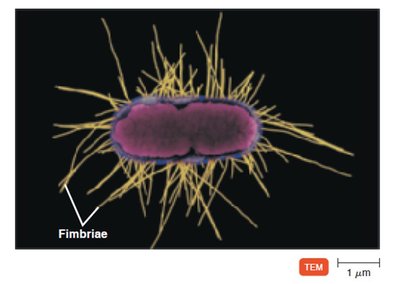
Fimbriae and pili are surface structures involved in attachment, motility, and genetic exchange.
Fimbriae: Hairlike, enable attachment and biofilm formation
Pili: Involved in motility and conjugation (DNA transfer)
Cell Wall
The cell wall is a critical structure for bacterial survival, providing shape, protection, and contributing to pathogenicity.
Composition: Peptidoglycan (Bacteria), Pseudomurein (Archaea)
Function: Prevents osmotic lysis, site of antibiotic action
Types: Gram-positive, Gram-negative, acid-fast, atypical (mycoplasmas, archaea)
Peptidoglycan Structure
Peptidoglycan is a polymer of N-acetylglucosamine (NAG) and N-acetylmuramic acid (NAM), linked by polypeptides to form a lattice.
Penicillin: Inhibits peptide cross-bridges, weakening cell wall
Gram-Positive vs. Gram-Negative Cell Walls
Gram staining differentiates bacteria based on cell wall structure, which affects susceptibility to antibiotics and pathogenicity.
Gram-Positive: Thick peptidoglycan, teichoic acids, two rings in flagella basal body, high susceptibility to penicillin
Gram-Negative: Thin peptidoglycan, outer membrane with LPS, four rings in flagella basal body, low susceptibility to penicillin
Gram Stain Mechanism
Crystal violet-iodine: Forms crystals inside cell
Alcohol: Dehydrates peptidoglycan (Gram-positive), dissolves outer membrane (Gram-negative)
Safranin: Stains Gram-negative cells
Comparative Table: Gram-Positive vs. Gram-Negative
Characteristic | Gram-Positive | Gram-Negative |
|---|---|---|
Peptidoglycan | Thick | Thin |
Teichoic acids | Present | Absent |
Outer membrane | Absent | Present |
Flagella basal body | 2 rings | 4 rings |
Penicillin susceptibility | High | Low |
Atypical Cell Walls
Some bacteria have atypical cell walls, such as acid-fast bacteria (waxy mycolic acid) and mycoplasmas (lack cell wall).
Acid-fast: Mycobacterium, Nocardia
Mycoplasmas: Sterols in membrane
Archaea: Pseudomurein or wall-less
Damage to the Cell Wall
Antibiotics and enzymes can damage bacterial cell walls, leading to cell lysis.
Lysozyme: Hydrolyzes peptidoglycan
Penicillin: Inhibits peptide bridge formation
Protoplast: Wall-less Gram-positive cell
Spheroplast: Wall-less Gram-negative cell
L forms: Irregular, wall-less cells
Plasma (Cytoplasmic) Membrane Structure
The plasma membrane is a phospholipid bilayer with embedded proteins, responsible for selective permeability and metabolic functions.
Fluid mosaic model: Proteins and lipids move freely
Glycoproteins and glycolipids: Attached carbohydrates
Plasma Membrane Function
The plasma membrane regulates transport, houses enzymes for ATP production, and may contain photosynthetic pigments.
Selective permeability: Allows passage of specific molecules
Chromatophores: Pigment-containing foldings in photosynthetic bacteria
Destruction of Plasma Membrane
Antimicrobial agents such as alcohols, detergents, and antibiotics (e.g., polymyxin) can damage the plasma membrane, causing leakage of cell contents.
Movement of Materials Across Membranes
Cells transport materials across membranes via passive and active processes.
Passive: No energy required; includes simple diffusion, facilitated diffusion, osmosis
Active: Requires energy (ATP); includes active transport, group translocation
Cytoplasm
The cytoplasm is a gel-like substance containing water, proteins, carbohydrates, lipids, ions, DNA, ribosomes, and inclusions.
Cytoskeleton: Fibers for cell division, shape, growth, DNA movement
Nucleoid
The nucleoid contains the bacterial chromosome (circular, double-stranded DNA) and plasmids (extrachromosomal DNA).
Plasmids: Carry nonessential genes, replicate independently, may transfer between cells
Ribosomes
Ribosomes are the sites of protein synthesis, composed of protein and rRNA. Prokaryotic ribosomes are 70S (50S + 30S subunits).
Antibiotics: Streptomycin, gentamicin, erythromycin, chloramphenicol target prokaryotic ribosomes
Inclusions
Inclusions are reserve deposits of nutrients and other substances within the cytoplasm.
Types: Metachromatic granules (phosphate), polysaccharide granules, lipid inclusions, sulfur granules, carboxysomes, gas vacuoles, magnetosomes
Endospores
Endospores are highly resistant, dormant structures formed by certain bacteria (e.g., Bacillus, Clostridium) under nutrient depletion.
Resistant to: Desiccation, heat, chemicals, radiation
Sporulation: Formation of endospore
Germination: Return to vegetative state
Eukaryotic Cell Structures & Functions
Flagella and Cilia
Eukaryotic flagella and cilia are projections used for locomotion or moving substances along the cell surface. Both consist of microtubules arranged in a 9+2 array.
Flagella: Long, few in number
Cilia: Short, numerous
Movement: Wavelike
Cell Wall and Glycocalyx
Eukaryotic cell walls are found in plants, algae, and fungi, composed of carbohydrates. The glycocalyx is a carbohydrate-rich layer found in animal cells, strengthening the cell surface and aiding in cell-cell recognition.
Cell wall: Cellulose (plants), chitin (fungi), glucan/mannan (yeasts)
Glycocalyx: Carbohydrates bonded to proteins/lipids
Plasma (Cytoplasmic) Membrane
Eukaryotic plasma membranes are similar to prokaryotic membranes but contain sterols and carbohydrates for attachment and recognition. Endocytosis is a unique function in eukaryotes.
Endocytosis types: Phagocytosis, pinocytosis, receptor-mediated
Cytoplasm
Eukaryotic cytoplasm contains cytosol, cytoskeleton (microfilaments, intermediate filaments, microtubules), and exhibits cytoplasmic streaming.
Ribosomes
Eukaryotic ribosomes are 80S (60S + 40S subunits), found free in cytoplasm or bound to endoplasmic reticulum. 70S ribosomes are present in mitochondria and chloroplasts.
Nucleus
The nucleus is a double-membrane structure containing DNA complexed with histones, forming chromatin. Chromatin condenses into chromosomes during cell division.
Endoplasmic Reticulum
The ER is a folded transport network. Rough ER is studded with ribosomes for protein synthesis; smooth ER synthesizes membranes, fats, and hormones.
Golgi Complex
The Golgi complex modifies proteins from the ER and transports them via secretory vesicles.
Lysosomes and Vacuoles
Lysosomes: Contain digestive enzymes
Vacuoles: Storage, shape, formed by endocytosis
Mitochondria
Mitochondria are double-membrane organelles involved in cellular respiration (ATP production), containing 70S ribosomes and circular DNA.
Chloroplasts
Chloroplasts are the site of photosynthesis, containing thylakoids with chlorophyll, 70S ribosomes, and circular DNA.
Peroxisomes and Centrosomes
Peroxisomes: Oxidize fatty acids, destroy H2O2
Centrosomes: Organize mitotic spindle, critical for cell division
The Evolution of Eukaryotes
Endosymbiotic Theory
The endosymbiotic theory explains the origin of eukaryotes: larger bacterial cells engulfed smaller ones, leading to mitochondria and chloroplasts.
Evidence: Mitochondria and chloroplasts resemble bacteria, have circular DNA, reproduce independently, have 70S ribosomes, and double membranes
