 Back
BackFundamentals of Microbial Growth and Control
Study Guide - Smart Notes
 Tailored notes based on your materials, expanded with key definitions, examples, and context.
Microbial Growth Basics
Introduction to Microbial Growth
Microbial growth refers to the increase in the number of cells in a population, primarily through cell division. Most of our understanding of microbial growth comes from laboratory studies, though microbes exhibit more complex behaviors in natural environments.
Biofilm formation: Occurs when planktonic (free-floating) bacteria adhere to surfaces, forming structured communities that are often resistant to antibiotics and immune responses. Indwelling medical devices are common sites for biofilm development.
Mechanisms of Microbial Cell Division
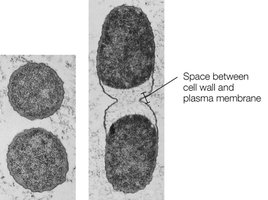
Binary fission: The most common method of cell division in prokaryotes, where one cell divides into two genetically identical daughter cells. This is an asexual process.
Budding: An asexual process where a new organism grows out of the body of a parent. The parent cell forms a small outgrowth (bud), duplicates its chromosome, and the bud eventually separates. Seen in some bacteria and fungi.
Spore formation: Some bacteria and fungi reproduce by forming spores. In bacteria, endospores are thick-walled, dormant structures that can survive harsh conditions. In fungi, spore formation can be sexual or asexual.
Generation Time and Exponential Growth
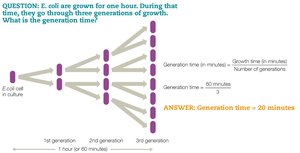
Generation time is the period required for a cell to divide and its population to double. This time varies by species and environmental conditions.
Exponential growth: Bacterial populations double at a constant rate during optimal conditions, leading to rapid increases in cell numbers.
Example: Escherichia coli has a generation time of about 20 minutes under optimal conditions.
Formula for Generation Time:
Phases of Bacterial Growth in a Closed Batch System
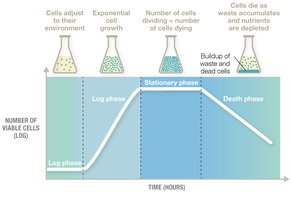
When bacteria are cultured in a closed system, they exhibit four distinct growth phases:
Lag phase: Cells adjust to their environment; little to no cell division occurs.
Log (exponential) phase: Rapid cell division and population growth.
Stationary phase: Nutrient depletion and waste accumulation slow growth; cell division rate equals cell death rate.
Death phase: Cells die at an exponential rate due to harsh conditions.
Continuous Culture and Chemostats
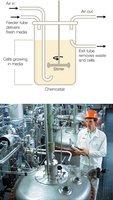
In industrial and research settings, maintaining bacteria in a specific growth phase is often necessary. A chemostat is a device that continuously supplies fresh nutrients and removes waste, keeping the culture in a desired phase, usually the log phase.
Prokaryotic Growth Requirements
Temperature Requirements
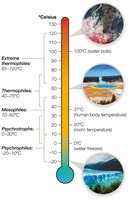
Microbes are classified based on their preferred temperature ranges:
Psychrophiles: Thrive at −20°C to 10°C.
Psychrotrophs: Grow at 0–30°C; often associated with food spoilage.
Mesophiles: Grow best at 10–50°C; includes most human pathogens.
Thermophiles: Prefer 40–75°C; found in compost piles and hot springs.
Extreme thermophiles: Grow at 65–120°C; found in extreme environments like hydrothermal vents.
pH Requirements
Acidophiles: Grow at pH 1–5; found in acidic environments like volcanic vents.
Neutralophiles: Grow best at pH 5–8; most microbes, including pathogens, fall into this category.
Alkaliphiles: Grow at pH 9–11; found in alkaline environments such as soda lakes.
Osmotic and Salt Requirements
Halophiles: Thrive in high-salt environments (up to 35%), such as the Dead Sea.
Facultative halophiles: Tolerate higher salt concentrations but do not require them for growth (e.g., Staphylococcus aureus).
Oxygen Requirements
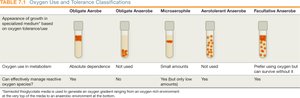
Microbes are classified by their oxygen requirements and tolerance:
Type | Oxygen Use | Growth Pattern |
|---|---|---|
Obligate aerobe | Requires oxygen | Top of tube |
Obligate anaerobe | Cannot use oxygen | Bottom of tube |
Facultative anaerobe | Uses oxygen if present, can ferment without it | Throughout tube, more at top |
Microaerophile | Requires low oxygen | Just below surface |
Aerotolerant anaerobe | Does not use oxygen but tolerates it | Evenly throughout tube |
Nutritional Requirements
Essential nutrients: Required for building cellular components; include macronutrients (e.g., carbon, nitrogen) and micronutrients (e.g., iron, zinc).
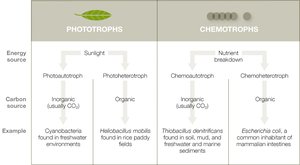
Heterotrophs: Require organic carbon sources.
Autotrophs: Use inorganic carbon (CO2) via carbon fixation.
Growth factors: Organic molecules that an organism cannot synthesize and must obtain from the environment (e.g., vitamins, amino acids).
Fastidious organisms: Require multiple growth factors and special media for cultivation.
Energy Sources
Phototrophs: Use light as an energy source.
Chemotrophs: Obtain energy from chemical compounds.
Growing, Isolating, and Counting Microbes
Types of Culture Media
Physical state: Media can be liquid (broth), solid (agar plates), or semisolid (motility testing).
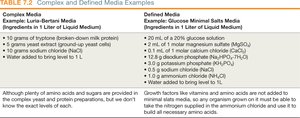
Chemical composition: Defined (synthetic) media have known ingredients; complex (enriched) media contain unknown quantities of nutrients.
Selective and Differential Media
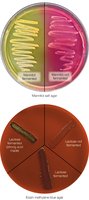
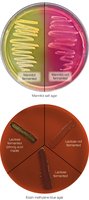
Selective media: Promote the growth of specific microbes while inhibiting others (e.g., Mannitol Salt Agar, Eosin Methylene Blue Agar).
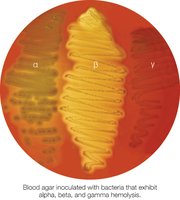
Differential media: Distinguish between different microbes based on observable changes (e.g., blood agar for hemolysis patterns).
Culturing Anaerobic Microbes
Anaerobic jars and chambers: Used to culture microbes that cannot tolerate oxygen. Oxygen is removed chemically or replaced with nitrogen or CO2.
Streak Plate Technique
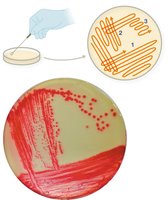
The streak plate method is used to isolate pure bacterial colonies from a mixed sample by spreading cells over the surface of an agar plate.
Methods for Counting Microbes
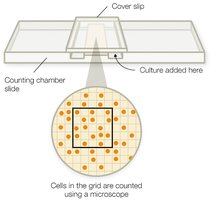
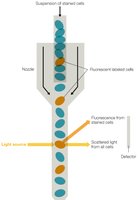
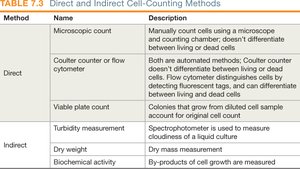
Direct methods: Involve counting individual cells or colonies (e.g., microscopic counts, viable plate counts, flow cytometry).
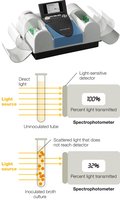
Indirect methods: Estimate cell numbers based on turbidity, dry weight, or metabolic activity.
Controlling Microbial Growth
Physical Methods of Microbial Control
Temperature: Heat (autoclaving, boiling, pasteurization, dry heat) and cold (refrigeration, freezing) are used to control microbial growth.
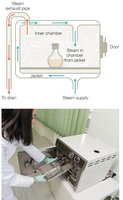
Autoclaving: Uses steam under pressure (121°C, 15 psi) for sterilization.
Boiling: Kills most pathogens but not endospores.
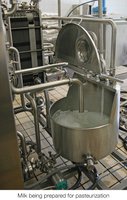
Pasteurization: Uses moderate heat to reduce pathogens in food and beverages.
Dry heat: Includes incineration and hot-air ovens for sterilization.
Radiation: Ionizing (gamma rays, X-rays) and non-ionizing (UV light) radiation are used for disinfection and sterilization.
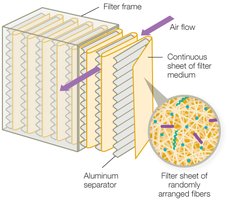
Filtration: Removes microbes from air and liquids using filters (e.g., HEPA filters for air, membrane filters for liquids).
Chemical Methods of Microbial Control
Germicides: Chemicals that kill (microbiocidal) or inhibit (microbiostatic) microbes. Classified as disinfectants (inanimate objects) or antiseptics (living tissue).
Alcohols: Intermediate-level disinfectants (e.g., ethanol, isopropanol).
Aldehydes: High- or intermediate-level disinfectants (e.g., formaldehyde, glutaraldehyde).
Phenols: Intermediate-level germicides (e.g., Lysol).
Halogens: Oxidize cell components (e.g., chlorine, iodine).
Peroxygens: High-level germicides (e.g., hydrogen peroxide).
Ethylene oxide: Sterilant gas for heat-sensitive materials.
Detergents: Cleaning agents that disrupt membranes; include anionic (soaps) and cationic (quaternary ammonium compounds) types.
Special Considerations for Microbial Control
Mycobacteria: Require control measures targeting airborne particles due to waxy cell walls.
Endospores: Highly resistant; best eliminated by autoclaving or sporicidal chemicals.
Viruses: Enveloped viruses are sensitive to heat and detergents; naked viruses are inactivated by chlorine-based agents.
Protozoa: Control methods vary by life stage; may include filtration and UV treatment.
Prions: Require combined chemical and high-temperature autoclaving for elimination.
