 Back
BackFundamentals of Microbial Growth: Structured Study Notes
Study Guide - Smart Notes
 Tailored notes based on your materials, expanded with key definitions, examples, and context.
Fundamentals of Microbial Growth
Microbial Growth Basics
Microbial growth refers to the increase in the number of cells, not cell size. This process is primarily studied in laboratory conditions, though only about 1% of bacterial species can be cultured. Growth occurs when nutritional requirements are met, leading to cell division and population increase.
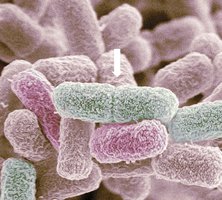
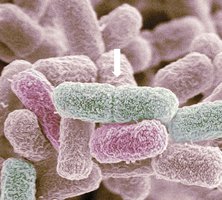
Binary Fission: Most prokaryotes divide by binary fission, an asexual process resulting in two genetically identical daughter cells. The parent cell replicates its chromosome, pinches off at the middle, and forms a septum.
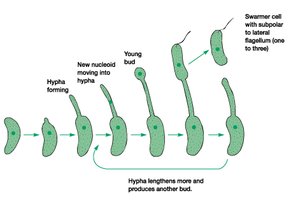
Budding: Some bacteria and fungi reproduce by budding, where a new cell forms as a small outgrowth from the parent, receiving a duplicated chromosome.
Spore Formation: Certain bacteria (e.g., Bacillus, Clostridium) and fungi form spores, which can be asexual or sexual in fungi, and are resistant structures in bacteria.
Biofilm Formation: Planktonic bacteria adhere to surfaces, forming biofilms that are difficult to treat and contribute to persistent infections.
Exponential Growth and Generation Time
Bacterial populations grow exponentially under optimal conditions. Generation time is the period required for a cell to divide, and it varies among species.
Formula: To calculate population size: Where is final cell number, is initial cell number, and is the number of generations.
Example: If 100 bacteria double every 20 minutes for 2 hours (6 generations): cells.
Health Relevance: Knowing generation time helps estimate pathogen load and informs treatment decisions.
Bacterial Growth Phases in Batch Culture
In a closed batch system, bacteria exhibit four distinct growth phases:
Lag Phase: Cells adjust to their environment, high metabolic activity but no division.
Log Phase: Rapid, exponential cell division; cells are most metabolically active and susceptible to drugs.
Stationary Phase: Growth rate levels off as nutrients deplete and waste accumulates; cell division equals cell death.
Death Phase: Cells die exponentially due to critical waste buildup and nutrient depletion.
Industrial Microbial Growth: Chemostat
Industries often maintain bacteria in the log phase using a chemostat, which continuously supplies fresh medium and removes waste to keep cells actively dividing.
Prokaryotic Growth Requirements
Temperature Requirements
Microbes are classified by their optimal temperature ranges:
Psychrophiles: -20°C to 10°C
Psychrotrophs: 0°C to 30°C (often cause foodborne illness)
Mesophiles: 10°C to 50°C (most pathogens)
Thermophiles: 40°C to 75°C (found in compost piles, hot springs)
Extreme Thermophiles: 65°C to 120°C (deep-sea vents)
pH Requirements
Microbes have specific pH ranges for growth:
Acidophiles: pH 1–5 (sulfur hot springs, volcanic vents)
Neutralophiles: pH 5–8 (majority of microorganisms)
Alkaliphiles: pH 9–11 (soda lakes, alkaline lakes)
Salt and Osmotic Requirements
Halophiles thrive in high-salt environments (up to 35%), such as the Dead Sea. Facultative halophiles tolerate higher salt but may not grow well.
Plasmolysis: In high-salt conditions, water leaves the cell, causing shrinkage.
Example: Staphylococcus aureus is a facultative halophile.
Oxygen Requirements
Microbes are classified by their oxygen use and tolerance:
Obligate Aerobes: Require oxygen
Obligate Anaerobes: Cannot tolerate oxygen
Facultative Anaerobes: Can grow with or without oxygen
Microaerophiles: Require low oxygen
Aerotolerant Anaerobes: Tolerate oxygen but do not use it
Microbial Nutrition and Energy Sources
Essential Nutrients
Microbes require macronutrients (e.g., carbon, nitrogen, oxygen, hydrogen) and micronutrients (e.g., iron, zinc). Most of a cell’s dry weight is CHON.
Heterotrophs: Require external organic carbon sources
Autotrophs: Use inorganic carbon (CO2)
Nitrogen Fixation: Some bacteria convert atmospheric N2 to usable forms (NH4, NO3, NO2)
Growth Factors
Growth factors are substances a cell cannot synthesize and must import. Fastidious organisms require multiple growth factors (e.g., Streptococcus).
Energy Sources
Phototrophs: Use light energy (e.g., cyanobacteria)
Chemotrophs: Break down chemical compounds for energy (e.g., Escherichia coli)
Growing, Isolating, and Counting Microbes
Culture Media Types
Physical State: Liquid (broth), solid (agar), semisolid (motility testing)
Chemical Composition: Complex (undefined), defined (precisely known)
Function: Selective (fosters certain bacteria), differential (distinguishes bacteria visually)
Differential and Selective Media
Blood agar is a differential medium distinguishing hemolytic activity. Mannitol salt agar (MSA) is both selective (high salt) and differential (mannitol fermentation).
Beta hemolytic: Complete RBC lysis (e.g., Streptococcus pyogenes)
Alpha hemolytic: Partial RBC lysis (e.g., Streptococcus pneumoniae)
Gamma hemolytic: No RBC lysis
Anaerobic Media and Isolation Techniques
Anaerobic media and chambers are used to culture oxygen-sensitive microbes. The streak plate technique isolates pure cultures from mixed samples.
Methods for Counting Microbes
Direct Methods: Plate counts, Coulter counter, flow cytometry
Indirect Methods: Turbidity measurement (spectrophotometry), dry weight, biochemical activity
Controlling Microbial Growth
Physical Methods
Heat: Autoclaving (steam and pressure), boiling, pasteurization, dry heat
Radiation: Ionizing (gamma, X-rays), non-ionizing (UV)
Filtration: HEPA filters for air, membrane filters for liquids
Chemical Methods
Germicides: Microbiocidal (kill microbes) or microbiostatic (inhibit growth)
Disinfectants: Used on inanimate objects
Antiseptics: Used on living tissue
Levels: Low, intermediate, high (based on spectrum of activity)
Microbial Resistance to Control Methods
Prions: Require combined chemical and heat treatments
Endospores: Most resistant; eliminated by autoclaving or sporicides
Viruses: Envelope viruses are sensitive to detergents; naked viruses to chlorine
Protozoa: Resistant stages require filtration, UV, or ozone treatments
Visual Summary
Microbial growth is influenced by environmental conditions (temperature, pH, salinity, oxygen), nutrient availability, and energy sources. Laboratory techniques allow for isolation, enumeration, and control of microbes using physical and chemical methods.
