 Back
BackFundamentals of Microbial Growth: Study Notes
Study Guide - Smart Notes
 Tailored notes based on your materials, expanded with key definitions, examples, and context.
Fundamentals of Microbial Growth
Introduction to Microbial Growth
Microbial growth refers to the increase in the number of cells in a population, not the size of individual cells. Most bacteria replicate through binary fission, an asexual process that results in genetically identical daughter cells. Laboratory studies of microbial growth have provided most of our knowledge, though only about 1% of bacterial species can be cultured in the lab.
Microbial growth: Increase in cell number via cell division.
Binary fission: Main method of bacterial cell division.
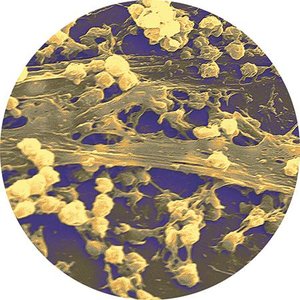
Biofilms: Complex communities of microbes adhering to surfaces, often found on medical devices and contributing to persistent infections.
Microbial Growth in Nature and Laboratory
Biofilm Formation
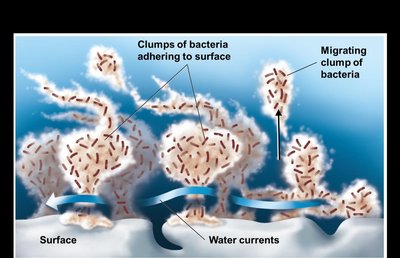
Biofilms form when planktonic (free-floating) bacteria adhere to surfaces using structures such as fimbriae. These communities share nutrients and are protected from harmful factors, making them difficult to treat in healthcare settings.
Biofilms are common on indwelling devices (e.g., catheters, heart valves).
Cells in biofilms communicate and collaborate for survival.
Biofilms contribute to persistent and hard-to-treat infections.
Mechanisms of Microbial Cell Division
Binary Fission
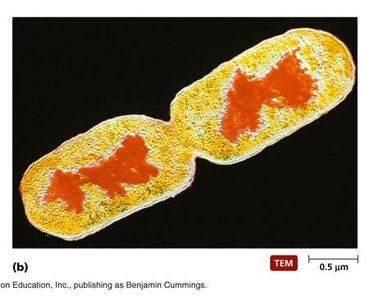
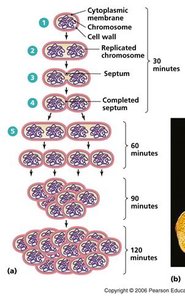
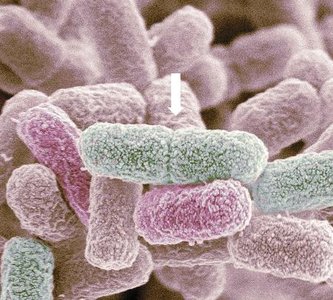
Binary fission is the most common method of cell division in prokaryotes. It involves the replication of the chromosome, formation of a septum, and division into two genetically identical daughter cells.
Steps: Chromosome replication → Septum formation → Cell division.
Results in exponential population growth under optimal conditions.
Chains of bacteria can form if division occurs in a single plane.
Budding
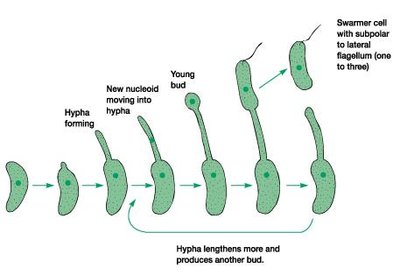
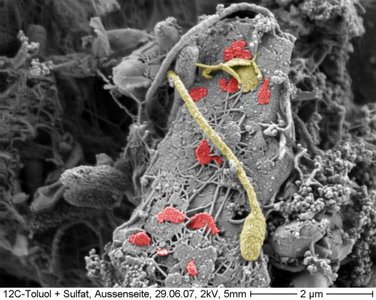
Budding is an asexual process where the original cell elongates and forms a small outgrowth (bud). The chromosome is duplicated and placed in the bud, which eventually separates from the mother cell. This process is seen in some bacteria (e.g., Hyphomicrobium) and fungi (e.g., yeast).
Budding cells are not equal in size to the original cell.
Common in soil bacteria and yeast.
Spore Formation
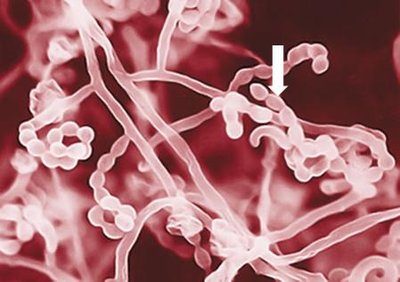
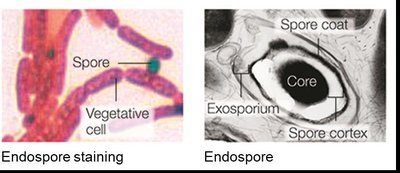
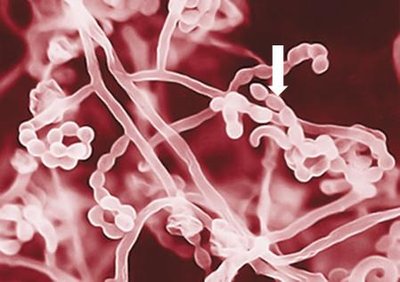
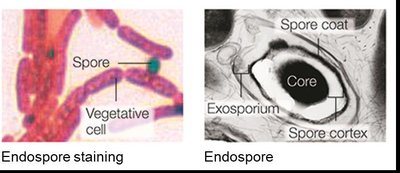
Some bacteria and fungi reproduce via spore formation. Bacterial endospores are dormant, thick-walled structures that allow survival in adverse conditions. Fungal spores can be sexual or asexual, while bacterial spores are always asexual.
Endospores: Produced by genera such as Bacillus and Clostridium.
Streptomyces: Forms spores on hyphae and is a major antibiotic producer.
Microbial Growth Curves and Phases
Generation Time and Exponential Growth
Generation time is the time required for a cell to divide. Under optimal conditions, bacteria such as Escherichia coli can divide every 20 minutes, while others like Mycobacterium tuberculosis divide much more slowly.
Exponential growth: Each generation doubles the population.
Formula:
Phases of Bacterial Growth in Batch Culture
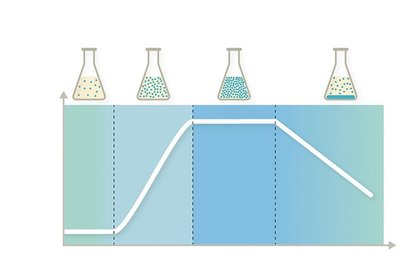
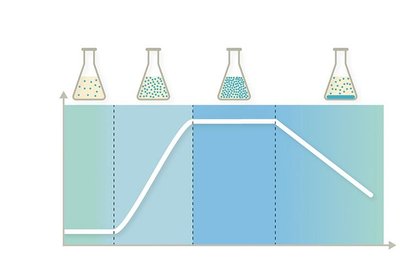
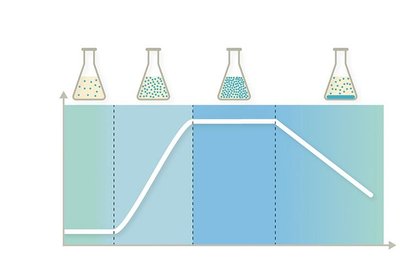
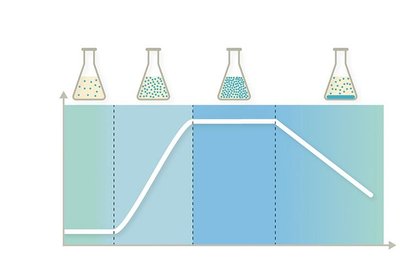
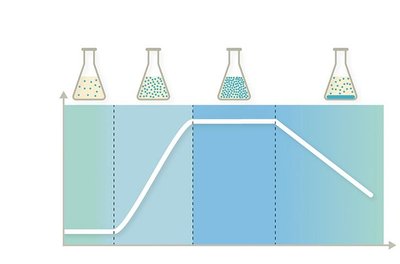
When bacteria are grown in a closed system (batch culture), they exhibit four distinct growth phases:
Lag Phase: Cells adjust to new environment; little to no cell division.
Log (Exponential) Phase: Rapid cell division and population growth; cells are most metabolically active and susceptible to antibiotics.
Stationary Phase: Growth rate slows as nutrients are depleted and waste accumulates; number of new cells equals number of dying cells.
Death Phase: Cells die at an exponential rate due to toxic waste and lack of nutrients.
Continuous Culture and Chemostats
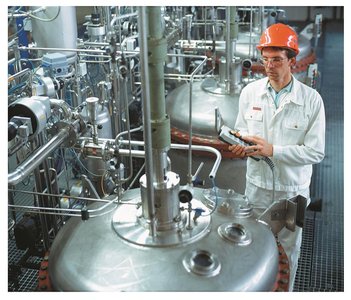
In industrial and research settings, bacteria are often maintained in the log phase using a chemostat, which continuously supplies fresh nutrients and removes waste and excess cells.
Chemostat: Device for maintaining continuous microbial growth.
Environmental Factors Affecting Microbial Growth
Oxygen Requirements
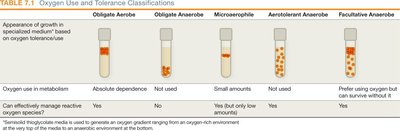
Microbes vary in their oxygen requirements and tolerance, which is determined by their ability to detoxify reactive oxygen species (ROS) using enzymes such as superoxide dismutase and catalase.
Obligate aerobes: Require oxygen for growth.
Obligate anaerobes: Cannot tolerate oxygen.
Facultative anaerobes: Can grow with or without oxygen.
Microaerophiles: Require low levels of oxygen.
Aerotolerant anaerobes: Tolerate oxygen but do not use it.
Type | Oxygen Use | Growth Pattern in Tube |
|---|---|---|
Obligate Aerobe | Requires O2 | Growth at top |
Obligate Anaerobe | No O2 | Growth at bottom |
Facultative Anaerobe | With or without O2 | Growth throughout, more at top |
Microaerophile | Low O2 | Growth just below surface |
Aerotolerant Anaerobe | Does not use O2 | Growth evenly throughout |
Temperature Requirements
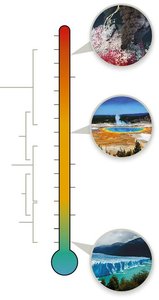
Microbes are classified by their preferred temperature ranges, which affect enzyme activity and growth rates.
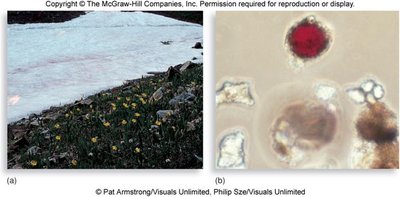
Psychrophiles: -20°C to 10°C
Psychrotrophs: 0°C to 30°C (often cause food spoilage)
Mesophiles: 10°C to 50°C (most human pathogens)
Thermophiles: 40°C to 75°C
Extreme thermophiles: 65°C to 120°C
pH and Salt Requirements
Microbes also have specific pH and salt requirements for optimal growth.
Acidophiles: Grow at pH 1–5
Neutralophiles: Grow at pH 5–8 (most microbes)
Alkaliphiles: Grow at pH 9–11
Halophiles: Thrive in high-salt environments (up to 35%)
Facultative halophiles: Tolerate high salt but do not require it
Nutritional Requirements for Microbial Growth
Essential Nutrients
Microbes require macronutrients (e.g., carbon, hydrogen, oxygen, nitrogen) and micronutrients (e.g., iron, zinc) for growth. They are classified based on their carbon and energy sources:
Heterotrophs: Require organic carbon sources.
Autotrophs: Use inorganic carbon (CO2).
Phototrophs: Use light for energy.
Chemotrophs: Obtain energy from chemical compounds.
Type | Energy Source | Carbon Source | Example |
|---|---|---|---|
Photoautotroph | Light | CO2 | Cyanobacteria |
Photoheterotroph | Light | Organic | Heliobacillus mobilis |
Chemoautotroph | Chemicals | CO2 | Thiobacillus denitrificans |
Chemoheterotroph | Chemicals | Organic | Escherichia coli |
Growth Factors
Growth factors are essential substances that a cell cannot synthesize and must obtain from the environment. Fastidious organisms require multiple growth factors and are more challenging to culture.
Fastidious: Require many growth factors (e.g., Streptococcus).
Non-fastidious: Require few growth factors (e.g., E. coli).
Microbial Culture Media
Types of Media
Culture media are classified by their physical state, chemical composition, and function.
Physical state: Liquid (broth), solid (agar), semisolid (motility testing).
Chemical composition: Defined (precisely known) or complex (not fully defined).
Function: Differential (distinguish microbes) or selective (suppress unwanted microbes).
Differential and Selective Media
Differential media allow visual distinction between species (e.g., blood agar for hemolysis patterns), while selective media foster the growth of specific microbes and inhibit others (e.g., Mannitol salt agar, Eosin methylene blue agar).
Anaerobic Media
Anaerobic media and specialized equipment (e.g., anaerobic jars and chambers) are used to culture organisms that cannot tolerate oxygen. Reducing agents like thioglycolate are added to remove oxygen from the media.
Isolation and Enumeration of Microbes
Streak Plate Technique
The streak plate technique is used to isolate pure cultures from mixed samples by spreading cells thinly on an agar plate, allowing individual colonies to form.
Methods for Counting Microbes
Microbial populations can be measured directly (e.g., plate counts, Coulter counter, flow cytometry) or indirectly (e.g., turbidity via spectrophotometry).
Direct methods: Count individual cells or colonies.
Indirect methods: Estimate population size based on turbidity or metabolic activity.
Control of Microbial Growth
Physical Methods
Heat: Autoclaving (steam under pressure), boiling, pasteurization, dry heat (incineration, hot-air ovens).
Radiation: Ionizing (gamma rays, X-rays) and non-ionizing (UV light).
Filtration: HEPA filters for air, membrane filters for liquids.
Chemical Methods
Chemical germicides are classified by their effectiveness and application:
Level | Germicide | Mode of Action | Pros/Cons |
|---|---|---|---|
Low | Detergents | Target lipid membranes | Cheap, low toxicity; less effective in hard water |
Intermediate | Alcohols, Phenols | Target proteins and membranes | Flammable, can irritate surfaces |
High | Aldehydes, Halogens, Peroxygens, Ethylene oxide | Target proteins, nucleic acids | Toxic, can leave residue |
Disinfectants: Used on inanimate objects.
Antiseptics: Used on living tissue.
Germicides can be microbiocidal (kill microbes) or microbiostatic (inhibit growth).
Microbial Resistance to Control Methods
Prions: Require combined chemical and physical treatments for elimination.
Endospores: Highly resistant; best eliminated by autoclaving or sporicides.
Viruses: Enveloped viruses are sensitive to detergents; naked viruses require chlorine-based agents.
Protozoa: Resistant stages require filtration, UV, or ozone treatments.
Summary Table: Microbial Growth and Control
Factor | Classification | Examples/Notes |
|---|---|---|
Temperature | Psychrophile, Mesophile, Thermophile, Extreme thermophile | Human pathogens are mesophiles |
pH | Acidophile, Neutralophile, Alkaliphile | Most microbes are neutralophiles |
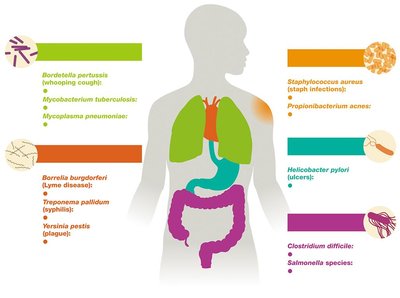
Oxygen | Obligate aerobe, Obligate anaerobe, Facultative anaerobe, Microaerophile, Aerotolerant anaerobe | Varies by body site |
Salt | Halophile, Facultative halophile | Staphylococcus is a facultative halophile |
Control Methods | Physical, Chemical | Autoclaving, filtration, germicides |
