Back
Fungal Metabolism: Biochemistry & Energetics
Study Guide - Smart Notes
 Tailored notes based on your materials, expanded with key definitions, examples, and context.
Principles of Fungal Metabolism
Overview of Fungal Metabolic Pathways
Fungi utilize a series of specialized metabolic steps to obtain nutrients, generate energy, build structural components, and produce bioactive compounds. These processes are essential for fungal survival, growth, and adaptation to diverse environments.
Osmiotrophy: Extracellular digestion and nutrient uptake
Catabolism: Primary energy production via glycolysis, respiration, and fermentation
Biosynthesis: Structural anabolism including cell wall and membrane synthesis
Alternative Carbon Usage: Glyoxylate cycle bypass for carbon conservation
Secondary Metabolism: Production of specialized bioactive metabolites
STEP 1: Osmiotrophy
Extracellular Digestion & Nutrient Uptake
Fungi digest complex organic matter outside their cells by secreting enzymes, then absorb the resulting small molecules.
Exoenzyme Secretion: Hyphae release cellulases, proteases, and lignin peroxidases into the environment to break down polymers.
Polymer Depolymerization: Enzymatic cleavage produces monosaccharides, amino acids, and fatty acids.
Proton-Coupled Symport: Nutrients are transported across the plasma membrane via ATP-driven H+/substrate co-transporters.
Example: Breakdown of cellulose in decaying plant material by fungal cellulases.
STEP 2: Catabolism
Primary Energy Production (ATP Yield)
Fungi generate ATP through glycolysis, aerobic respiration, and fermentation, depending on oxygen availability.
Glycolysis (EMP Pathway): Glucose is oxidized to pyruvate in the cytosol, yielding 2 ATP and 2 NADH per molecule.
Aerobic Respiration: Pyruvate enters the mitochondrial TCA cycle; electron transport chain produces large amounts of ATP via oxidative phosphorylation.
Ethanolic Fermentation: Under low oxygen, pyruvate is converted to ethanol and CO2, regenerating NAD+ for continued glycolysis.
Equation:
Example: Yeast fermentation in bread and alcohol production.
STEP 3: Biosynthesis
Structural Anabolism & Target Sites
Fungi synthesize essential structural molecules for cell wall and membrane integrity, which are also targets for antifungal drugs.
Cell Wall Matrix Synthesis: Glucose-6-phosphate is converted to UDP-N-acetylglucosamine, forming β-(1,3)-glucans and chitin polymers.
Antifungal Target: Echinocandins inhibit Fks1, blocking β-glucan synthesis.
Ergosterol Biosynthesis: Acetyl-CoA enters the mevalonate pathway to produce ergosterol, a key membrane component.
Antifungal Target: Azoles inhibit CYP51/Erg11; polyenes (e.g., Amphotericin B) bind ergosterol.
Example: Chitin and glucan synthesis for fungal cell wall rigidity.
STEP 4: Alternative Carbon Usage
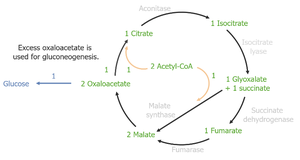
The Glyoxylate Cycle Bypass
When fungi grow on acetate or lipids, they bypass CO2-releasing steps of the TCA cycle to conserve carbon and enable gluconeogenesis.
Bypassing Decarboxylation: The glyoxylate cycle omits steps that release CO2, preserving carbon skeletons.
Key Enzymatic Pair: Isocitrate lyase cleaves isocitrate to succinate and glyoxylate; malate synthase condenses glyoxylate with acetyl-CoA.
Gluconeogenesis Conversion: Enables net conversion of 2-carbon compounds (acetate) into 4-carbon oxaloacetate for carbohydrate biosynthesis.
Equation:
Example: Fungal survival on fatty acids during nutrient limitation.
STEP 5: Specialized Bioactive Metabolites
Secondary Metabolism & Defense
Fungi produce a variety of secondary metabolites for defense, competition, and survival.
Polyketide Synthases (PKS): Assemble complex aromatic structures, including toxic compounds like aflatoxins.
Non-Ribosomal Peptides (NRPS): Synthesize peptides independently of mRNA, such as penicillin.
DHN-Melanin Pigments: Polymerize in cell walls to neutralize reactive oxygen species (ROS) and protect against UV irradiation.
Siderophore Production: Synthesize high-affinity iron chelators to scavenge insoluble ferric iron (Fe3+).
Example: Penicillin production by Penicillium species.
Summary & Overview
Fungal Metabolism Complete
Fungal metabolism encompasses osmiotrophy, catabolism, structural anabolism, glyoxylate bypass, and secondary metabolite production. These processes are interconnected and essential for fungal adaptation and pathogenicity.
Osmiotrophy: Extracellular digestion and nutrient uptake
Catabolism: Energy production via glycolysis, respiration, and fermentation
Biosynthesis: Cell wall and membrane construction
Glyoxylate Bypass: Carbon conservation and gluconeogenesis
Secondary Metabolites: Defense and ecological competition
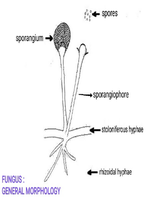
Fungal Morphology (Supplemental)
General Structure of Fungi
Fungi exhibit distinct morphological features that facilitate their metabolic functions and reproduction.
Sporangium: Structure containing spores for reproduction.
Sporangiophore: Specialized hyphal stalk supporting the sporangium.
Stoloniferous Hyphae: Horizontal hyphae connecting different parts of the fungal colony.
Rhizoidal Hyphae: Root-like hyphae anchoring the fungus and aiding in nutrient absorption.
Example: Rhizopus species morphology.