 Back
Fungi, Algae, Protozoa, and Helminths: Microbiology Study Guide
Study Guide - Smart Notes
 Tailored notes based on your materials, expanded with key definitions, examples, and context.
Fungi, Algae, Protozoa, and Helminths
Introduction
This study guide covers the essential microbiological characteristics, classification, and medical significance of fungi, algae, protozoa, and helminths. These organisms are important in both environmental and clinical contexts, and understanding their biology is crucial for health professionals.
Fungi
Importance and Characteristics of Fungi
Fungi are a diverse group of eukaryotic organisms with over 100,000 species. They play vital roles in decomposition, nutrient cycling, symbiotic relationships, and industrial applications. Some fungi cause diseases in humans, animals, and plants, while others are beneficial.
Mycology: The study of fungi.
Chemoheterotrophs: Obtain energy by decomposing organic matter.
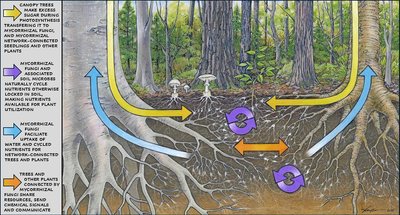
Symbiosis: Mycorrhizae form symbiotic relationships with plants, aiding water and nutrient absorption.
Industrial roles: Fungi are used in food and antibiotic production.
Comparison of Fungi and Bacteria
Fungi and bacteria differ in cell structure, metabolism, and reproduction.
Feature | Fungi | Bacteria |
|---|---|---|
Cell Type | Eukaryotic | Prokaryotic |
Cell Membrane | Sterols present | Sterols absent (except Mycoplasma) |
Cell Wall | Glucans, mannans, chitin (no peptidoglycan) | Peptidoglycan |
Spores | Sexual and asexual reproductive spores | Endospores (not for reproduction); some asexual reproductive spores |
Metabolism | Heterotrophic; aerobic, facultatively anaerobic | Heterotrophic, autotrophic; aerobic, facultatively anaerobic, anaerobic |
Vegetative Structures of Fungi
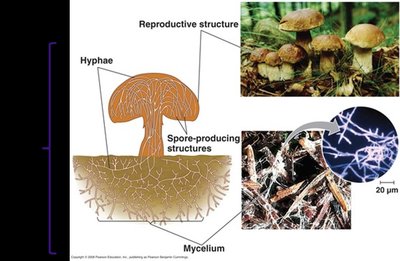
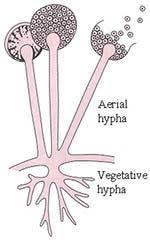
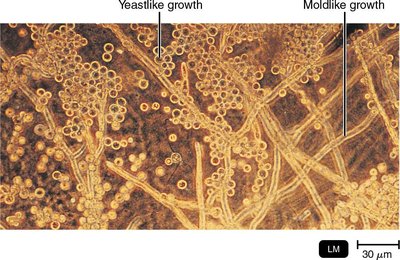
Molds and fleshy fungi have a thallus (body) composed of hyphae filaments. A mass of hyphae forms a mycelium. Hyphae are classified as vegetative (nutrient absorption) or aerial (reproduction).
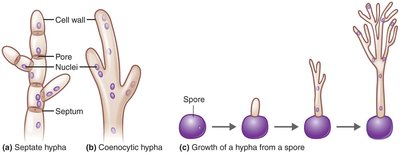
Hyphae: Filamentous structures; can be septate (with cross-walls) or coenocytic (without septa).
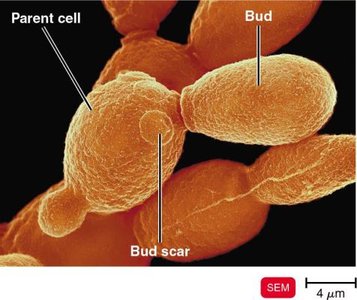
Yeasts: Nonfilamentous, unicellular fungi; reproduce by budding (uneven division) or fission (even division).
Dimorphic fungi: Exhibit yeastlike growth at 37°C and moldlike growth at 25°C.
Fungal Life Cycle
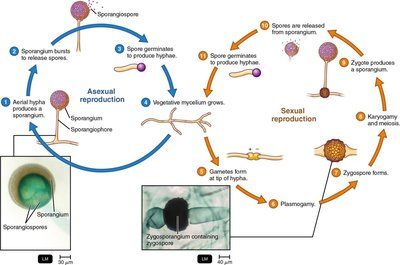
Fungi reproduce sexually and asexually via spore formation. Spores detach from the parent and germinate into new molds.
Asexual reproduction: Involves mitotic division and spore formation.
Sexual reproduction: Involves fusion of nuclei from two opposite mating types, followed by meiosis.
Environmental and Nutritional Adaptations
Fungi are adapted to grow in diverse environments:
Optimal growth at pH 5
Most molds are aerobic; most yeasts are facultative anaerobes
Can grow in high sugar and salt concentrations; resistant to osmotic pressure
Can grow in low moisture content
Require less nitrogen than bacteria
Can metabolize complex carbohydrates
Classification of Medically Important Fungi
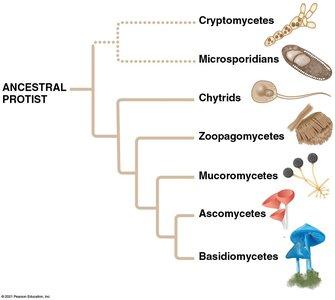
Fungi are classified into several phyla based on their reproductive structures and life cycles.
Microsporidia: Obligate intracellular parasites; lack mitochondria; cause chronic diarrhea and keratoconjunctivitis.
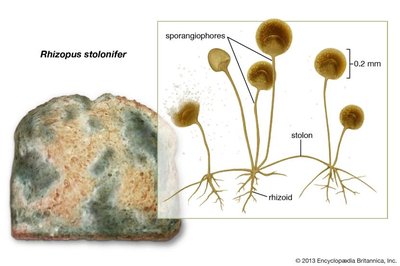
Mucoromycota: Conjugation fungi; coenocytic hyphae; cause mucormycosis (e.g., Rhizopus stolonifer).
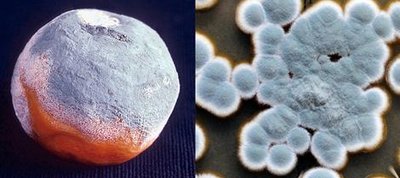
Ascomycota: Sac fungi; septate hyphae; produce sexual and asexual spores (e.g., Candida, Aspergillus, Penicillium).
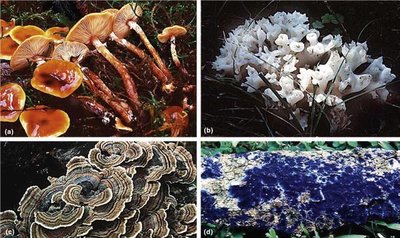
Basidiomycota: Club fungi; septate hyphae; produce basidiospores (e.g., mushrooms, Cryptococcus).
Fungal Diseases (Mycoses)
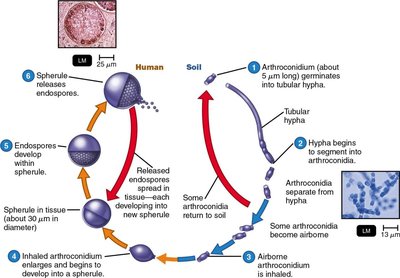
Mycoses are fungal infections. About 200 species of fungi cause human infections, especially in immunocompromised individuals. Fungi infect the body through various portals of entry and rarely cause disease in healthy hosts.
Systemic mycoses: Deep infections affecting multiple organs (e.g., Coccidioides immitis).
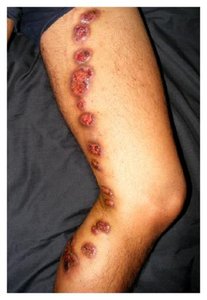
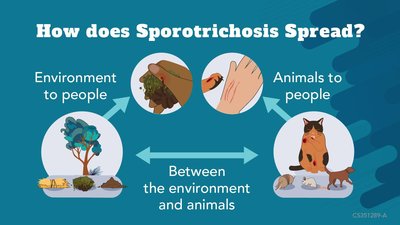
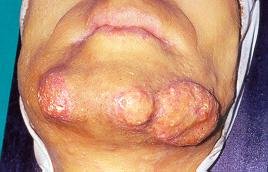
Subcutaneous mycoses: Infections beneath the skin, often from traumatic implantation (e.g., sporotrichosis).
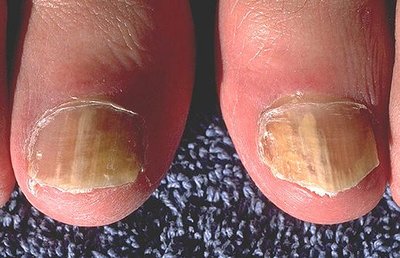
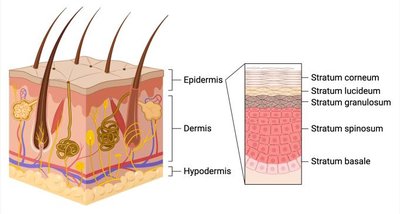
Cutaneous mycoses: Affect hair, skin, and nails; caused by dermatophytes (e.g., tinea).
Superficial mycoses: Affect outermost skin layers or hair shafts (e.g., tinea versicolor).
Opportunistic mycoses: Harmless fungi become pathogenic in compromised hosts.
Mycotoxins
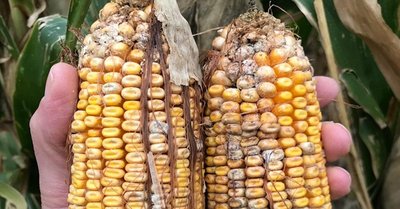
Mycotoxins are toxins produced by fungi under specific conditions. They contaminate food and pose health risks.
Aflatoxin: Produced by Aspergillus flavus; contaminates corn, peanuts, cottonseed.
Ochratoxin A: Produced by Aspergillus ochraceus; contaminates grains.
Patulin: Produced by Aspergillus clavatus; contaminates apples and silage.
Fumonisin: Produced by Fusarium; contaminates corn.
Economic Effects of Fungi
Fungi have significant economic impacts:
Aspergillus niger: Production of citric acid
Aspergillus terreus: Production of statins
Saccharomyces cerevisiae: Used in bread and wine production
Trichoderma: Production of cellulase
Taxomyces: Production of taxol
Tolypocladium inflatum: Production of cyclosporine
Coniothyrium minitans: Biological control of crop fungi
Paecilomyces: Biological control of termites
Algae
Characteristics and Importance of Algae
Algae are eukaryotic organisms lacking roots, stems, and leaves but possessing chlorophyll for photosynthesis. They are unicellular or multicellular and play a crucial role as primary producers in food chains and oxygen production.
Phycology: The study of algae.
Photosynthesis: Primary mode of nutrition; some are mixotrophic.
Economic significance: Algal blooms, fertilizers, food, agar production, diatomaceous earth.
Algae as Pathogens
Algae do not directly infect humans but some produce toxins that cause paralytic shellfish poisoning (PSP). These toxins accumulate in shellfish and cause nerve damage when ingested by humans.
Dinoflagellates: Produce neurotoxins (e.g., saxitoxin) responsible for PSP.
Red tides: Caused by dinoflagellate blooms; can be fatal due to respiratory failure.
Classification of Algae
Green algae
Red algae
Brown algae
Diatoms
Dinoflagellates
Protozoa
Characteristics and Life Cycle of Protozoa
Protozoa are unicellular eukaryotes inhabiting water and soil. Some are normal microbiota, while others cause diseases such as malaria. They have complex life cycles involving motile forms (sporozoites), feeding forms (trophozoites), and cysts for survival.
Asexual reproduction: Fission, budding, or schizogony (multiple fission).
Sexual reproduction: Conjugation.
Specialized structures: Ciliates use cilia, amebae use pseudopods, apicomplexa are nonmotile.
Medically Important Protozoa
Excavata: Move by flagella (e.g., Giardia intestinalis, Trichomonas vaginalis, Trypanosoma).
Amoebozoa: Move by pseudopods (e.g., Entamoeba histolytica, Acanthamoeba, Balamuthia).
Apicomplexa: Nonmotile, obligate intracellular parasites (e.g., Plasmodium causes malaria).
Ciliates: Move by cilia (e.g., Balantidium coli causes dysentery).
Helminths
Characteristics and Classification of Helminths
Helminths are multicellular, eukaryotic parasitic worms. They are specialized to live in hosts and may lack digestive systems, have reduced nervous systems, and complex reproductive systems. Two main phyla are Platyhelminthes (flatworms) and Nematoda (roundworms).
Platyhelminthes: Includes trematodes (flukes) and cestodes (tapeworms).
Nematoda: Includes roundworms; can be free-living or parasitic.
Life cycle: Dioecious (separate sexes) or monoecious (hermaphroditic).
Medically Important Helminths
Trematodes: Flat, leaf-shaped; absorb food through cuticle (e.g., Paragonimus spp. lung fluke).
Cestodes: Tapeworms; scolex for attachment, proglottids contain reproductive organs (e.g., Echinococcus granulosus).
Nematodes: Roundworms; infective eggs (e.g., Ascaris lumbricoides, Enterobius vermicularis), infective larvae (e.g., Necator americanus, Dirofilaria immitis).
Arthropods as Vectors
Definition and Types of Transmission
Arthropods are animals with segmented bodies, hard exoskeletons, and jointed legs. Vectors are arthropods that carry pathogenic microorganisms. Transmission can be mechanical (pathogen carried on body) or biological (pathogen multiplies in vector).
Representative classes: Arachnida (spiders, mites, ticks), Crustacea (crabs, crayfish), Insecta (bees, flies, mosquitoes, lice).
Definitive host: Microbe’s sexual reproduction occurs in the vector.
Important Arthropod Vectors of Human Diseases
Class | Order | Vector | Disease |
|---|---|---|---|
Arachnida | Mites and ticks | Dermacentor, Ixodes, Ornithodorus | Rocky Mountain spotted fever, Lyme disease, relapsing fever |
Insecta | Sucking lice, fleas, true flies | Pediculus, Xenopsylla, Chrysops, Aedes, Anopheles, Culex, Glossina | Epidemic typhus, plague, tularemia, dengue, malaria, African trypanosomiasis |
Insecta | True bugs | Triatoma | Chagas disease |
