Back
BackGenetic Exchange Mechanisms in Bacteria: Transformation, Conjugation, Transduction, and Transposons
Study Guide - Smart Notes
 Tailored notes based on your materials, expanded with key definitions, examples, and context.
Genetic Exchange in Bacteria
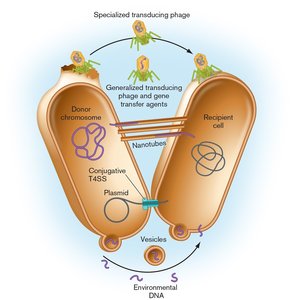
Genetic exchange in bacteria is a fundamental process that contributes to genetic diversity, adaptation, and evolution. The main mechanisms include transformation, conjugation, transduction, and the action of transposable elements (transposons). These processes allow bacteria to acquire new genetic traits, such as antibiotic resistance, and play a crucial role in microbial evolution.
Transformation
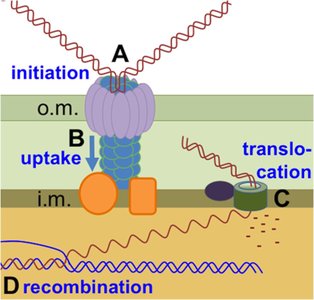
Transformation is the uptake of free DNA from the environment by a bacterial cell. This process is especially significant in Gram-positive bacteria, where DNA is taken up in a single-stranded form and integrated into the chromosome through homologous recombination.
Definition: Transformation is the genetic alteration of a bacterial cell resulting from the direct uptake and incorporation of exogenous DNA.
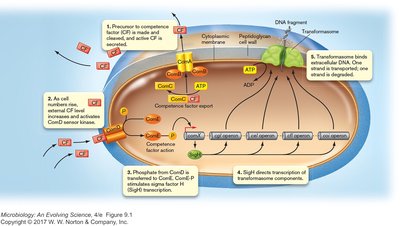
Competence: The ability of a cell to take up DNA is called competence, which is regulated by quorum sensing mechanisms in many bacteria.
Transformasome Complex: In Gram-positive bacteria, the transformasome is a protein complex that facilitates DNA uptake.
Steps of Transformation:
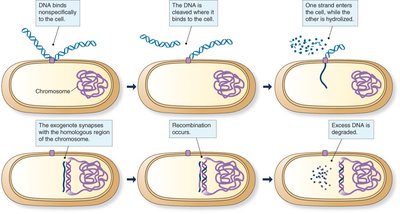
DNA binds nonspecifically to the cell surface.
DNA is cleaved, and one strand enters the cell while the other is degraded.
The exogenous DNA synapses with the homologous region of the chromosome.
Recombination occurs, and excess DNA is degraded.
Applications: Transformation is widely used in molecular biology for genetic engineering and cloning.
Conjugation
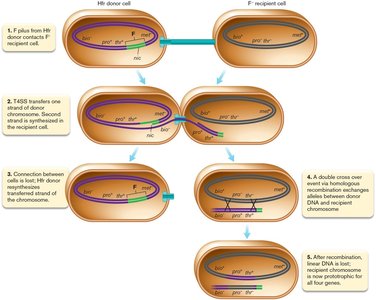
Conjugation is a process of direct DNA transfer between bacterial cells via cell-to-cell contact, typically mediated by plasmids. It is a major mechanism for the spread of antibiotic resistance genes and other traits.
Definition: Conjugation is the transfer of genetic material between bacteria through direct contact, usually involving a pilus.
Fertility Factor (F factor): In Escherichia coli, the F factor is a well-studied plasmid that enables conjugation. It contains two origins of replication: oriV (for vegetative replication) and oriT (for transfer).
Mechanism:
Donor (F+) cell forms a pilus to contact the recipient (F–) cell.
Plasmid DNA is transferred through the pilus.
Surface exclusion prevents donors with the same plasmid from conjugating with each other.
Hfr Strains: High-frequency recombination (Hfr) strains have the F factor integrated into the chromosome, allowing transfer of chromosomal genes during conjugation.
Significance: Conjugation is a driving force in bacterial evolution and adaptation.
Transduction
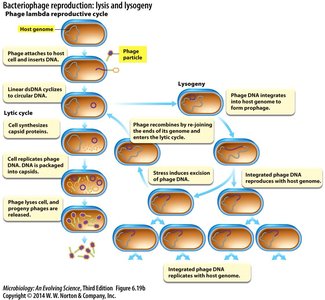
Transduction is the transfer of bacterial genes by bacteriophages (viruses that infect bacteria). There are two main types: generalized and specialized transduction.
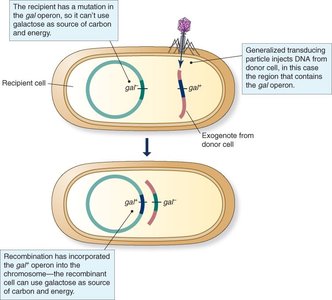
Generalized Transduction: Any bacterial gene can be transferred. Occurs when a phage accidentally packages host DNA instead of its own during the lytic cycle.
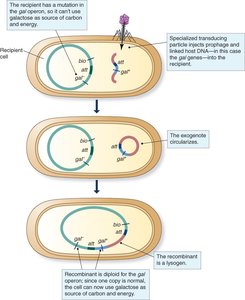
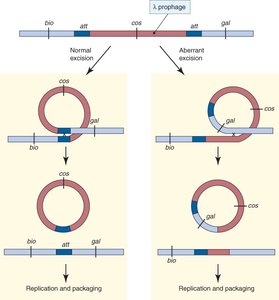
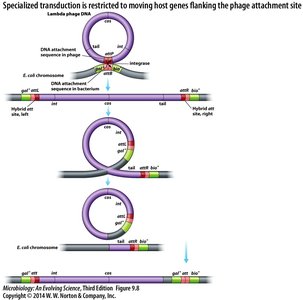
Specialized Transduction: Only specific genes near the prophage integration site are transferred. Occurs due to aberrant excision of a lysogenic phage.
Key Differences:
Feature
Generalized Transduction
Specialized Transduction
Genes Transduced
Any host gene
Specific genes near prophage site
DNA in Particle
Host DNA only
Host + phage DNA
Mechanism
Packaging error
Aberrant excision
Recombinant Ploidy
Haploid
Diploid for transduced genes
Applications: Transduction is used in genetic mapping and gene transfer studies.
Transposons (Transposable Elements)
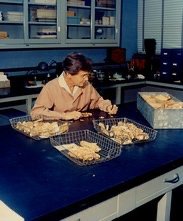
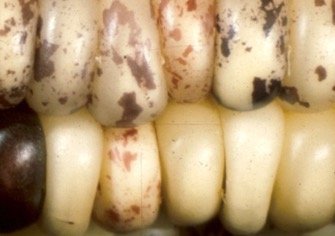
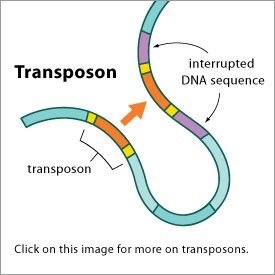
Transposons are DNA sequences that can move from one location to another within a genome, causing mutations and contributing to genetic diversity. They were first discovered by Barbara McClintock in maize (corn).
Definition: Transposons are mobile genetic elements capable of changing their position within the genome.
Types:
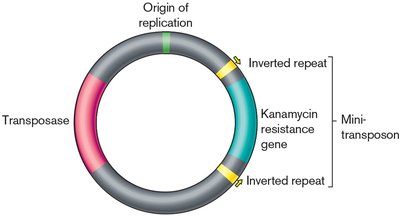
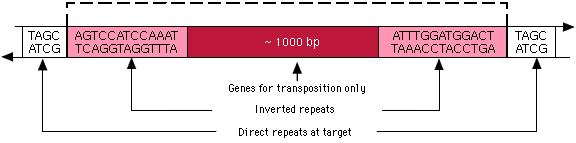
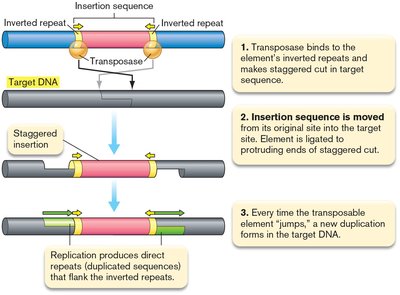
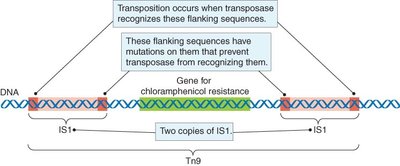
Insertion Sequences (IS): The simplest transposons, containing only genes for transposition (e.g., transposase) flanked by inverted repeats.
Composite Transposons: Consist of two IS elements flanking additional genes, such as antibiotic resistance genes.
Mechanisms of Transposition:
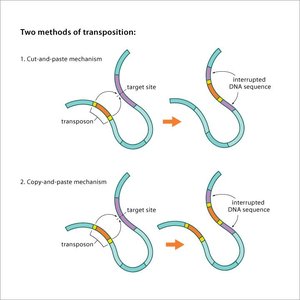
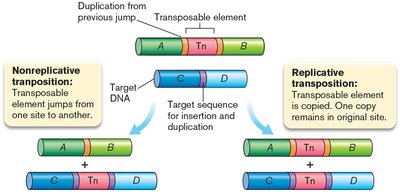
Replicative Transposition: The transposon is copied, and one copy remains at the original site while another inserts elsewhere.
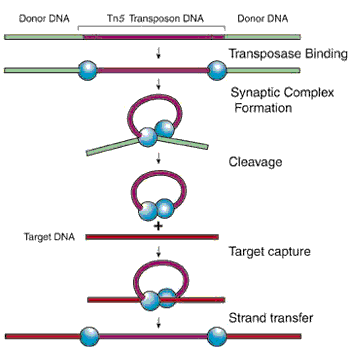
Nonreplicative (Cut-and-Paste) Transposition: The transposon is excised from its original site and inserted into a new site.
Structure: Transposons have inverted repeats at their ends and may cause mutations if they insert into functional genes.
Applications: Used in genetic analysis, mutagenesis, and as tools in biotechnology.
Conjugative Transposition
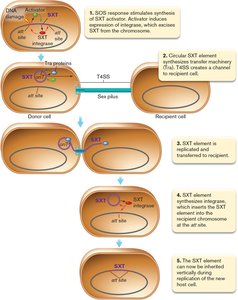
Some transposons can transfer between cells via conjugation, combining the mobility of transposons with the horizontal gene transfer capability of conjugation. These elements often carry antibiotic resistance genes and play a significant role in the spread of resistance among bacterial populations.
Transposable Elements in Genetic Analysis
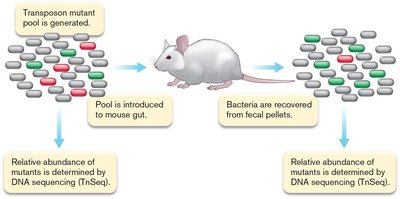
Transposons are powerful tools in genetic analysis, allowing researchers to disrupt genes and study their function. By generating pools of mutants, scientists can identify essential genes and analyze gene function in various environments.