 Back
BackGlobal Regulatory Networks in Microbiology: Catabolite Repression, Sporulation, and Quorum Sensing
Study Guide - Smart Notes
 Tailored notes based on your materials, expanded with key definitions, examples, and context.
Global Regulatory Networks
Overview of Global Regulatory Networks
Global regulatory networks are mechanisms that coordinate the regulation of many genes and operons simultaneously, enabling microorganisms to rapidly and efficiently respond to environmental changes. These networks are essential for survival, adaptation, and group behaviors in bacteria.
Definition: Global regulatory networks involve regulatory proteins, signal molecules, and genetic elements that control multiple genes or operons in response to specific signals.
Example: Catabolite repression is a classic example, where the presence of glucose represses the expression of operons involved in the metabolism of alternative sugars (e.g., lac, gal, ara, mal operons).
Catabolite Repression
Mechanism and Regulation
Catabolite repression ensures that bacteria preferentially use the most efficient carbon source available, typically glucose. When glucose is present, the expression of genes required for the metabolism of other sugars is repressed.
Signal: The presence or absence of glucose in the environment.
Signal Recognition: Intracellular levels of cyclic AMP (cAMP) decrease when glucose is abundant. The cAMP receptor protein (CRP, also known as CAP) cannot bind DNA without cAMP, so catabolite operons are not activated.
Gene Expression Regulation: When glucose is depleted, cAMP levels rise, cAMP binds to CRP, and the complex activates transcription of catabolite operons.
Final Response: Bacteria switch to metabolizing alternative sugars only when glucose is scarce.
Equation: The regulatory effect can be summarized as:
Examples of Global Regulatory Networks
Sporulation in Bacillus subtilis
Sporulation is a survival mechanism triggered by nutrient deprivation. It involves a complex regulatory cascade, including two-component phosphorelay systems and alternative sigma factors, to turn off vegetative genes and activate sporulation genes.
Trigger: Starvation or nutrient depletion.
Regulatory Mechanism: Two-component signal transduction system (sensor kinase and response regulator) initiates the sporulation process.
Alternative Sigma Factors: These factors direct RNA polymerase to specific promoters for sporulation genes.
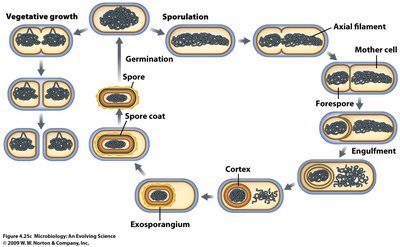
Example: The process involves the formation of a spore within the mother cell, which is eventually released to survive harsh conditions.
Regulation of Sporulation in Bacillus subtilis
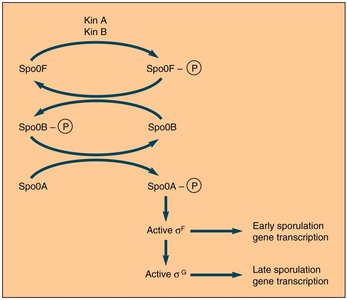
The initiation of sporulation is tightly regulated by a phosphorelay system involving multiple proteins and phosphorylation events, ultimately activating specific sigma factors for early and late sporulation gene transcription.
Sensor Kinase: Detects nutrient deprivation and initiates phosphorylation cascade.
Response Regulator: Activates sporulation genes and represses vegetative genes.
Phosphorelay: Sequential transfer of phosphate groups through Spo0F, Spo0B, and Spo0A proteins.
Sigma Factors: (early) and (late) control the timing of gene expression during sporulation.
Equation:
Quorum Sensing
Mechanism and Significance
Quorum sensing is a form of bacterial communication that enables the coordination of group behaviors in response to population density. It relies on the production, release, and detection of signaling molecules called autoinducers.
Definition: Quorum sensing allows bacteria to sense their population density and regulate gene expression collectively.
Autoinducers: Signal molecules (e.g., acyl homoserine lactone in Gram-negative bacteria) synthesized by specific enzymes (e.g., LuxI in Vibrio fischeri).
Receptor: LuxR is a transcription factor activated by binding to the autoinducer, leading to the expression of target genes.
Applications: Regulates bioluminescence, virulence, biofilm formation, antibiotic production, and symbiosis.
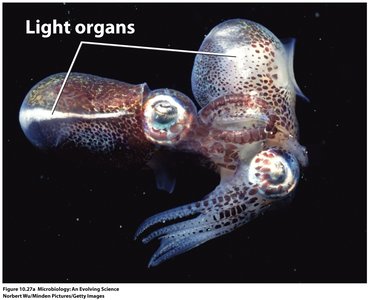
Example: In Vibrio fischeri, quorum sensing controls bioluminescence, which is only produced at high cell densities, such as in symbiosis with marine animals.
Quorum Sensing in Vibrio fischeri
In Vibrio fischeri, the lux operon is regulated by quorum sensing. The autoinducer (acyl homoserine lactone) accumulates as cell density increases, binds to LuxR, and activates transcription of bioluminescence genes.
LuxI: Synthesizes the autoinducer molecule.
LuxR: Binds autoinducer and activates gene expression.
Regulation: Over 300 genes can be regulated by quorum sensing in some bacteria (e.g., Pseudomonas aeruginosa).
Group Behaviors Regulated by Quorum Sensing
Quorum sensing controls a variety of group behaviors, which can be beneficial, harmful, or neutral to the host or environment.
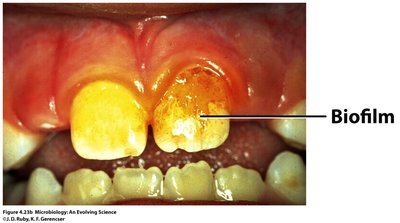
Biofilm Formation: Bacteria form structured communities attached to surfaces, protected by an extracellular matrix.
Antibiotic Production: Some bacteria coordinate the production of antibiotics to outcompete other microbes.
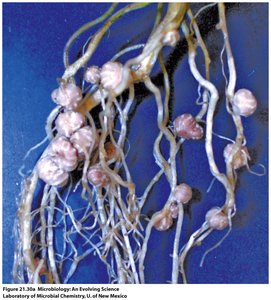
Symbiosis: Nitrogen-fixing nodules in plants (e.g., Rhizobia), bioluminescence in marine animals.
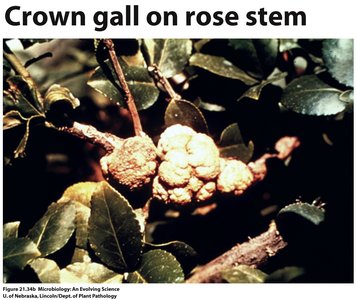
Virulence: Expression of genes involved in pathogenicity, such as in biofilm-associated infections or plant tumors (e.g., Agrobacterium tumefaciens).
Summary Table: Examples of Global Regulatory Networks
Network | Signal | Regulatory Mechanism | Outcome |
|---|---|---|---|
Catabolite Repression | Glucose availability | cAMP-CRP complex | Repression of alternative sugar operons |
Sporulation (B. subtilis) | Nutrient deprivation | Two-component system, sigma factors | Spore formation |
Quorum Sensing | Population density | Autoinducers, transcription factors | Group behaviors (e.g., bioluminescence, biofilms) |
