 Back
BackHelminthic Parasites of Humans: Cestodes, Trematodes, and Nematodes
Study Guide - Smart Notes
 Tailored notes based on your materials, expanded with key definitions, examples, and context.
Helminthic Parasites of Humans
Overview of Helminths
Helminths are macroscopic, multicellular, eukaryotic worms that parasitize humans and other animals. Their life cycles are complex, often involving intermediate hosts to support larval stages. Adult worms may be dioecious (separate sexes) or monoecious (both sexes in one individual). Helminths are classified into three main groups: Cestodes (tapeworms), Trematodes (flukes), and Nematodes (roundworms).
Cestodes: Flat, segmented intestinal parasites lacking digestive systems.
Trematodes: Flat, leaf-shaped worms grouped by the site they parasitize in the body.
Nematodes: Cylindrical worms with complete digestive tracts and protective cuticles.
Cestodes (Tapeworms)
General Features
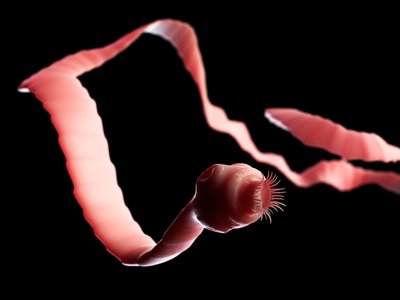
Cestodes, commonly known as tapeworms, are flat, segmented intestinal parasites. All tapeworms lack digestive systems and possess a similar body plan, consisting of a scolex (head), neck, and strobila (body made of proglottids).
Scolex: Attachment organ with suckers and hooks.
Proglottids: Segments containing reproductive organs.

Life Cycle of Tapeworms
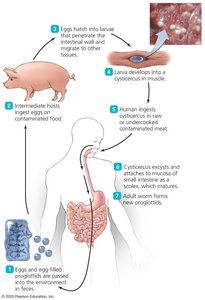
The life cycle of tapeworms involves intermediate hosts, typically livestock, and humans as definitive hosts. Eggs are shed in feces, ingested by intermediate hosts, and larvae encyst in muscle tissue. Humans acquire infection by consuming undercooked or raw meat.
Taenia Species
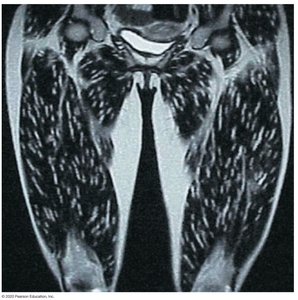
Taenia saginata (beef tapeworm) and Taenia solium (pork tapeworm) infect humans through consumption of contaminated meat. Cattle and swine serve as intermediate hosts. Most infections are asymptomatic, but intestinal blockage can occur with large worm burdens.
Diagnosis: Identification of proglottids or eggs in fecal samples.
Treatment: Praziquantel.
Prevention: Proper cooking or freezing of meat.
Echinococcus granulosus
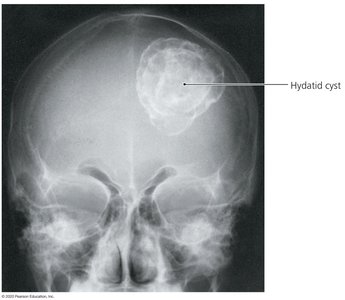
This canine tapeworm causes hydatid disease. Canines are infected by eating cysticerci in herbivore hosts. Humans are accidental intermediate hosts, acquiring infection from food or water contaminated with dog feces. Larvae form hydatid cysts in various tissues.
Diagnosis: Immunoassay and visualization of cysts.
Treatment: Anthelmintic drugs or surgical removal.
Prevention: Good hygiene practices.
Trematodes (Flukes)
General Features
Trematodes, or flukes, are flat, leaf-shaped worms lacking a complete digestive tract. They attach to host tissues via a ventral sucker. Their geographical distribution is limited by the presence of specific intermediate hosts, often snails.
Grouped by site of infection: Liver, blood, lung, etc.
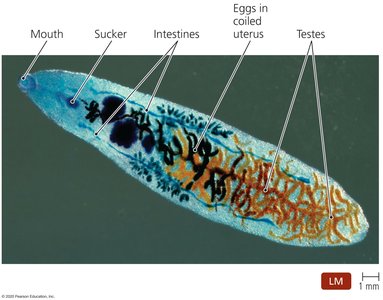
Life Cycles of Flukes
Fluke life cycles involve multiple larval stages and intermediate hosts, typically snails and aquatic plants or animals. Humans acquire infection by ingesting contaminated vegetation or through skin penetration by larvae.
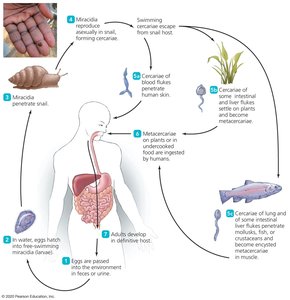
Fasciola Species (Liver Flukes)
Fasciola hepatica and Fasciola gigantica cause fascioliasis, primarily infecting sheep and cattle. Humans are accidental definitive hosts, acquiring infection by ingesting metacercariae from aquatic vegetation. Chronic infection occurs in the bile ducts.
Diagnosis: Eggs in feces and clinical symptoms.
Treatment: Oral bithionol or triclabendazole (not praziquantel).

Schistosoma Species (Blood Flukes)
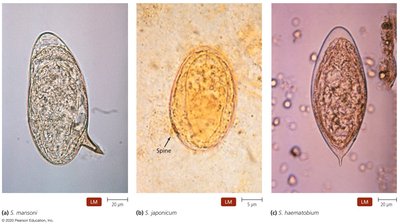
Schistosoma species are dioecious blood flukes causing schistosomiasis, prevalent in sub-Saharan Africa. Infection occurs when cercariae burrow through the skin during contact with contaminated water. Eggs migrate to intestines or urinary tract, causing chronic disease.
Diagnosis: Identification of spiny eggs in stool or urine; immunological assays.
Treatment: Praziquantel.
Prevention: Improved sanitation and avoiding contaminated water.
Nematodes (Roundworms)
General Features
Nematodes, or roundworms, are long, cylindrical worms with complete digestive tracts and a protective cuticle. They parasitize almost every vertebrate and exhibit diverse reproductive strategies.
Transmission: Fecal-oral, skin penetration, consumption of undercooked meat, insect vectors.
Ascaris lumbricoides
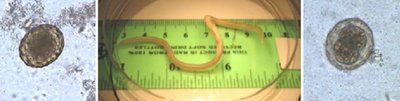
Ascaris lumbricoides is the most common nematode infection worldwide, causing ascariasis. Eggs are ingested in contaminated food or water, and adult worms reside in the small intestine. Most infections are asymptomatic, but high worm burdens can cause obstruction.
Diagnosis: Eggs in stool or larvae in sputum.
Treatment: Albendazole or mebendazole.
Prevention: Proper sanitation and hygiene.

Ancylostoma duodenale and Necator americanus (Hookworms)
Hookworms are the second most common nematode infection. Larvae in soil burrow through skin, causing ground itch, and migrate to the small intestine. Adult worms suck blood, leading to chronic anemia and nutritional deficiencies.
Diagnosis: Anemia and identification of eggs and blood in stool.
Treatment: Albendazole, mebendazole, or pyrantel pamoate.
Prevention: Sanitation and wearing shoes in endemic areas.
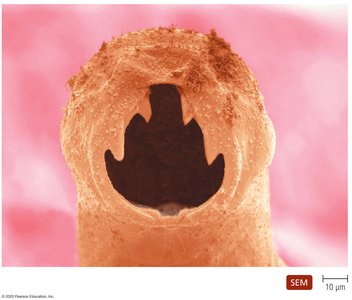
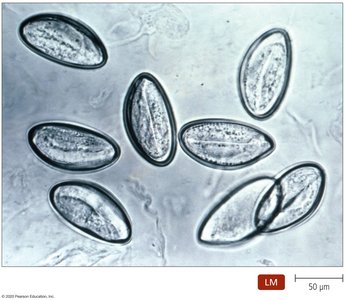
Enterobius vermicularis (Pinworm)
Pinworm is the most common parasitic worm in the U.S., causing enterobiasis. Humans are the only host. Female pinworms deposit eggs in the anus, causing intense perianal itching.
Diagnosis: Identification of eggs or adult worms.
Treatment: Pyrantel pamoate or mebendazole.
Prevention: Limiting spread from infected individuals.
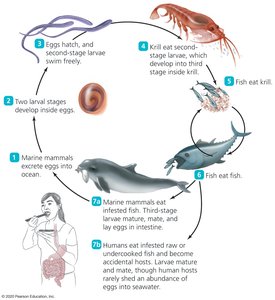
Anisakis simplex
Anisakis simplex is a marine nematode causing anisakiasis. Humans are accidental intermediate hosts, infected by consuming raw or undercooked fish. The life cycle involves several larval stages.
Diagnosis: Endoscopic identification of worms in the intestine.
Treatment: Removal of worms.
Prevention: Avoiding raw and undercooked marine fish.
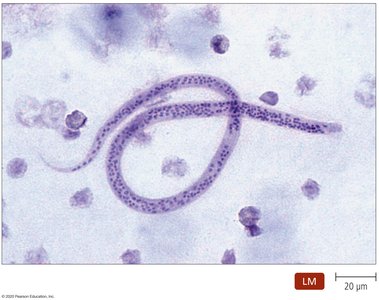
Wuchereria bancrofti (Filarial Nematode)
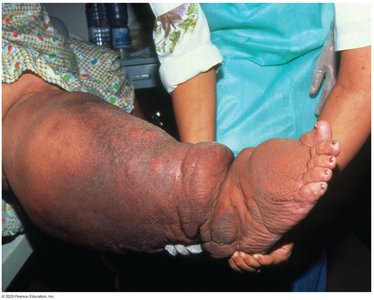
Wuchereria bancrofti infects the lymphatic system, causing filariasis and elephantiasis. Transmission occurs via mosquitoes. Infections may remain asymptomatic for years, but lymphatic damage can result in severe swelling.
Diagnosis: Identification of microfilariae in blood.
Treatment: Diethylcarbamazine.
Prevention: Avoiding infected mosquitoes.
Key Features of Representative Helminthic Parasites
Summary Table
The following table summarizes key features of representative helminthic parasites, including their primary infection, geographical distribution, mode of transmission, and length of adult worms.
Group | Organism | Primary Infection/Disease | Geographical Distribution | Mode of Transmission | Length of Adult Worms |
|---|---|---|---|---|---|
Cestodes | Taenia saginata; Taenia solium | Beef/pork tapeworm infestation | Worldwide with local endemic areas | Consumption of undercooked meat | T. saginata: 5–25 m; T. solium: 2–7 m |
Cestodes | Echinococcus granulosus | Hydatid disease | Worldwide with local endemic areas | Consumption of eggs shed in dog feces | 3–6 mm |
Trematodes | Fasciola hepatica; F. gigantica | Fascioliasis | Europe, Middle East, Asia, Africa, Hawaii | Consumption of aquatic vegetation | Up to 30 mm; up to 75 mm |
Trematodes | Schistosoma spp. | Schistosomiasis | Caribbean, South America, Arabia, Africa, India, eastern Asia | Direct skin penetration | 7–20 mm |
Nematodes | Ascaris lumbricoides | Ascariasis | Tropics and subtropics worldwide | Fecal-oral | Females: 20–35 cm; males: 15–30 cm |
Nematodes | Ancylostoma duodenale, Necator americanus | Hookworm disease | Africa, Asia, Americas, Australia, Middle East, southern Europe | Direct skin penetration | Ancylostoma females: 10–13 mm, males: 8–11 mm; Necator females: 9–11 mm, males: 7–9 mm |
Nematodes | Enterobius vermicularis | Pinworm | Worldwide | Anal-oral, fecal-oral, inhalation | Females: 8–13 mm; males: 2–5 mm |
Nematodes | Anisakis simplex | Anisakiasis | Wherever people consume raw marine fish | Consumption of infested raw or undercooked marine fish | 15 mm |
Nematodes | Wuchereria bancrofti | Filariasis, elephantiasis | Worldwide, tropics | Mosquitoes | Females: 80–100 mm; males: 40 mm |
Quiz Review
The only helminth disease of humans spread by an insect vector is filariasis.
Members of the group Cestodes are intestinal parasites that completely lack digestive systems.
Anemia is a common consequence of hookworm infestation: True.
