 Back
BackHelminthology & Parasitic Worms: Microbiology Study Notes
Study Guide - Smart Notes
 Tailored notes based on your materials, expanded with key definitions, examples, and context.
The Helminths: Overview
Introduction to Helminths
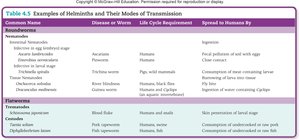
Helminths are parasitic worms that include tapeworms, flukes, and roundworms. While many flatworms and roundworms are free-living, parasitic helminths spend part of their life cycle in the gastrointestinal tract of their hosts. Adult helminths are multicellular and often visible to the naked eye.
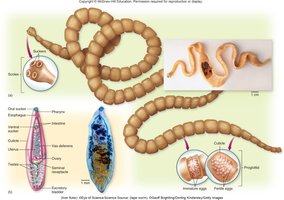
Flatworms (Phylum Platyhelminthes): Thin, often segmented; includes cestodes (tapeworms) and trematodes (flukes).
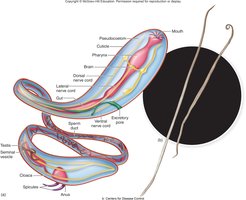
Roundworms (Phylum Nematoda): Also called nematodes; elongated, cylindrical, unsegmented.
General Morphology
Helminths are multicellular animals with developed organ systems. The reproductive tract is highly developed, while digestive, excretory, nervous, and muscular systems are often reduced.
Reproductive Adaptation: High egg production ensures survival of the species.
Life Cycles and Reproduction
Helminth Life Cycle
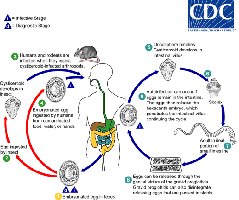
Helminths must transmit an infective form (egg or larva) to another host. The host in which the larva develops is the intermediate host, while adulthood and mating occur in the definitive host. Transmission occurs via contaminated food, soil, water, or infected animals, and infection can be oral or through skin penetration.
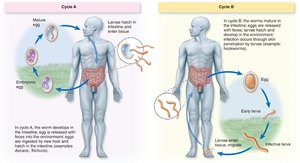
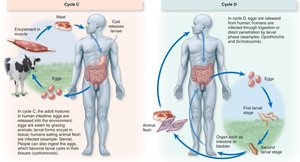
Eggs: Released into the environment, protected by a shell, and provided with nutrients.
Sexual Reproduction: Nematodes have separate sexes; trematodes may be hermaphroditic or have separate sexes; cestodes are generally hermaphroditic.
Distribution and Importance
Global and Regional Impact
About 50 species of helminths parasitize humans, with billions of cases worldwide. Incidence is higher in tropical regions, but infections are also common in developed countries.
Common Infections Worldwide: Ascaris lumbricoides (roundworm), Trichuris trichiura (whipworm), hookworms, schistosomiasis, lymphatic filariasis.
Common in the US: Enterobius vermicularis (pinworm), Trichuris trichiura, hookworms.
Pathogenesis and Virulence Factors
Mechanisms of Pathogenicity
Helminths lack sophisticated virulence factors but have adaptations for survival, such as specialized mouthparts, enzymes for tissue penetration, and protective cuticles. Damage is often due to the host's immune response.
Definitive Host: Where the adult worm is found.
Intermediate Host: Where larval stages develop.
Diagnosis, Prevention, and Treatment
Diagnosis
Diagnosis involves blood counts (eosinophilia), serological tests, travel history, and identification of eggs, larvae, or adult worms in stool or tissues.
Prevention and Treatment
No vaccines are available. Prevention focuses on minimizing contact and interrupting life cycles. Antihelminthic drugs target metabolic processes or movement, but resistance can occur. Surgery may be required in some cases.
Major Helminthic Diseases of the Gastrointestinal Tract
Intestinal Distress as the Primary Symptom
Both tapeworms and roundworms can cause intestinal symptoms. The most common nematode is Enterobius vermicularis (pinworm), and the most common tapeworm is Taenia solium.
Enterobius vermicularis (Pinworm)
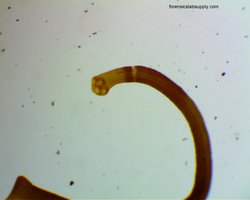
The most common worm infection in children in temperate zones. Transmission is via the fecal-oral route, with eggs lodging under fingernails or on fomites. Eggs hatch in the small intestine, and larvae mature in the large intestine.
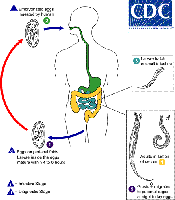
Symptoms: Anal itching, disrupted sleep, nausea, abdominal discomfort, diarrhea.
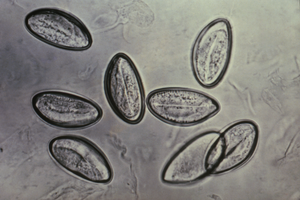
Diagnosis: Adhesive tape test for eggs.
Treatment: Treat all household members.
Trichuris trichiura (Whipworm)
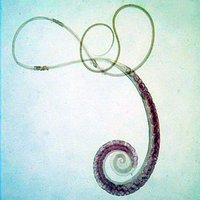
Common in tropical/subtropical regions with poor sanitation. Causes localized hemorrhage, dysentery, loss of muscle tone, and rectal prolapse (can be fatal in children).
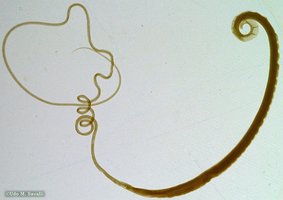
Diphyllobothrium latum (Fish Tapeworm)
Intermediate host is fish; humans are definitive hosts. Common in the Great Lakes, Alaska, and Canada. Transmitted via raw or undercooked fish (e.g., sushi).
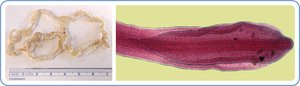
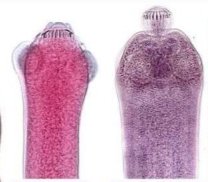
Hymenolepis Species (Dwarf and Rat Tapeworms)
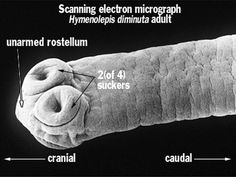
Most common human tapeworms worldwide. Hymenolepis nana (dwarf tapeworm) and H. diminuta (rat tapeworm) are transmitted via contaminated food or water.
Intestinal Distress with Migratory Symptoms
Some helminths migrate through the circulatory or lymphatic system, causing symptoms in the digestive tract and inflammatory reactions along their migratory routes. Eosinophilia and pneumonia may occur during the lung stage.
Taenia solium (Pork Tapeworm) and Cysticercosis
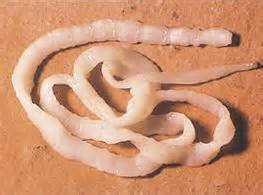
Adult worms attach to the intestine via a scolex with hooklets and suckers. Transmission is through undercooked pork. Cysticercosis occurs when humans ingest eggs, leading to larval cysts in tissues, including the brain (neurocysticercosis).
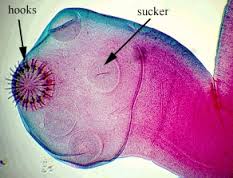
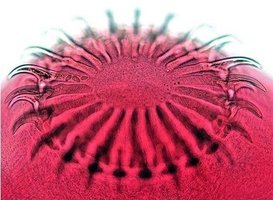
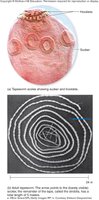
Symptoms: Seizures (neurocysticercosis), digestive symptoms.
Prevalence: Rare in the US, but significant in areas with close human-pig contact.
Schistosomiasis (Liver Disease)
Caused by blood flukes (Schistosoma mansoni, S. japonicum, S. haematobium). Second most prominent parasitic disease after malaria. Snails are the intermediate host; humans are the definitive host. Transmission occurs via skin penetration in contaminated water.
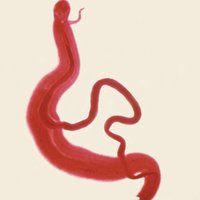
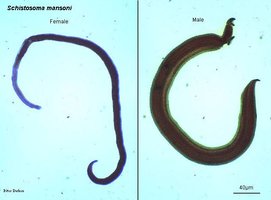
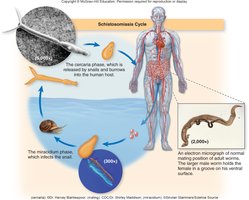
Symptoms: Hepatomegaly, liver disease, splenomegaly, granulomatous response in CNS and heart.
Virulence: Antigenic cloaking by coating with host proteins.
Prevalence: >200 million people affected worldwide; rare in the US.
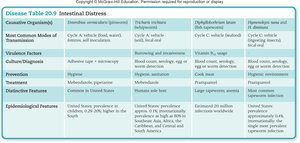
Summary Table: Major Helminthic Diseases
Disease (Organism) | Most Common Modes of Transmission | Virulence Factors | Culture/Diagnosis | Prevention | Treatment | Distinctive Features | Epidemiological Features |
|---|---|---|---|---|---|---|---|
Enterobiasis (pinworm) | Cycle A (fecal-oral, direct contact) | Eggs sticky, easily spread | Adhesive tape test, microscopy | Hygiene, sanitation | Mebendazole, albendazole | Most common in US children | United States prevalence: 20-40 million cases/year |
Trichuriasis (whipworm) | Cycle A (soil, ingestion) | Burrowing, mucosal damage | Eggs in stool, microscopy | Sanitation, hygiene | Mebendazole, albendazole | Rectal prolapse in children | Worldwide, especially tropics |
Diphyllobothriasis (fish tapeworm) | Cycle C (raw fish) | Large size, nutrient absorption | Eggs/proglottids in stool | Cook fish, avoid raw fish | Praziquantel | Largest tapeworm in humans | Great Lakes, Alaska, Canada |
Hymenolepiasis (dwarf/rat tapeworm) | Cycle C (contaminated food/water) | Small size, high egg output | Eggs in stool | Sanitation | Praziquantel | Most common tapeworm worldwide | Worldwide |
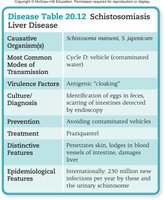
Schistosomiasis (blood fluke) | Cycle D (contaminated water, skin penetration) | Antigenic cloaking | Eggs in feces/urine, serology | Avoid contaminated water | Praziquantel | Penetrates skin, chronic liver disease | 230 million new cases/year worldwide |
