Back
BackHost-Microbe Interactions and Pathogenesis: (chapter 10)
Study Guide - Smart Notes
 Tailored notes based on your materials, expanded with key definitions, examples, and context.
Host–Microbe Interactions
Basics of Host–Microbe Interactions
Host–microbe interactions refer to the dynamic relationships between humans and the microorganisms that colonize various body sites. These interactions can be benign, mutualistic, or pathogenic, influencing health or disease.
Normal microbiota colonize skin, digestive, genital, urinary, and respiratory systems.
Mutualistic microbes manufacture vitamins, compete with pathogens, and promote immune maturation.
Disruption of microbiota balance (dysbiosis) can compromise health and promote disease.
Pathogens are disease-causing microbes with adaptations for host tissue interaction.
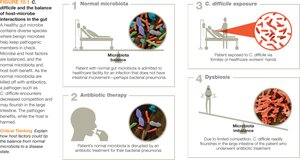
Dysbiosis and Disease
Dysbiosis is the disruption of normal microbiota, often due to antibiotics or illness, which can allow opportunistic pathogens to flourish.
Example: Clostridium difficile can cause disease when antibiotics kill normal gut microbiota.
Commensal organisms may become pathogenic in different hosts (e.g., Group B streptococci in newborns).
Opportunistic Pathogens
Opportunistic pathogens cause disease under certain conditions, such as weakened immunity or when they access unusual body sites.
Examples: Escherichia coli causing peritonitis, yeast infections in immunocompromised hosts.
Tropism
Tropism is the preference of a pathogen for specific hosts or tissues. This specificity impacts pathogen emergence and disease development.
Host factors (age, health, habits) influence disease outcome.
Virulence and Pathogenicity
Definitions and Factors
Pathogenicity is a microbe's ability to cause disease, while virulence describes the degree of disease caused. Virulence factors help pathogens overcome host defenses.
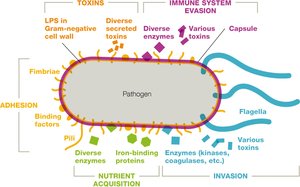
Virulence factors include toxins, enzymes, adhesins, and immune evasion mechanisms.
Virulence evolves in response to host and environmental pressures.
Virulent vs. Attenuated Pathogens
Virulent pathogens cause significant disease, while attenuated pathogens are weakened and often used in vaccines.
Attenuation occurs when pathogens lose virulence factors in cell culture.
Infectious Dose (ID50) and Lethal Dose (LD50)
ID50 is the number of cells/virions needed to infect 50% of hosts; LD50 is the amount of toxin needed to kill 50% of hosts.
Lower ID50 indicates higher infectivity.
Values depend on species, immune fitness, and exposure route.

Toxins: Endotoxins and Exotoxins
Overview of Toxins
Toxins are molecules that cause tissue damage and immune suppression. Toxigenic microbes produce toxins; toxemia is the presence of toxins in the bloodstream.
Two main classes: Endotoxins and Exotoxins.
Endotoxins
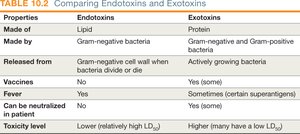
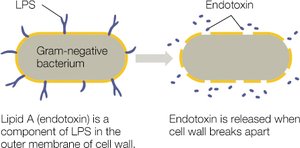
Endotoxins are lipid components (Lipid A) of Gram-negative bacterial LPS, released when bacteria die.
Cause fever, inflammation, and septic shock.
Not neutralized by vaccines; difficult to treat.
Exotoxins
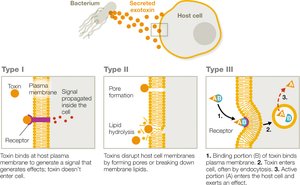
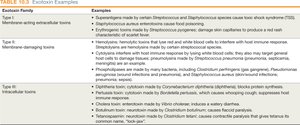
Exotoxins are soluble proteins produced by Gram-positive and Gram-negative bacteria, affecting various cell types.
Classified by target: neurotoxins, enterotoxins, hepatotoxins, nephrotoxins.
Three main families: Type I (membrane-acting), Type II (membrane-damaging), Type III (intracellular/AB toxins).
Steps to Infection
Portals of Entry
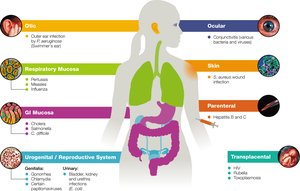
Pathogens enter hosts through specific portals: mucous membranes, skin, respiratory, GI, urogenital, and transplacental routes.
Mucous membranes are the most common entry site.
Some pathogens use multiple portals.
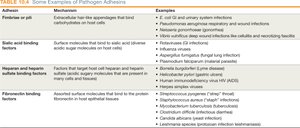
Adhesion to Host Tissues
Pathogens use adhesins to stick to host cells, targeting specific surface molecules and determining tissue tropism.
Adhesins include fimbriae, pili, capsules, and cell wall components.
Biofilms and Quorum Sensing
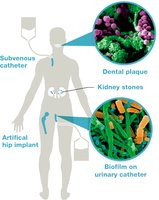
Bacteria form biofilms on surfaces, contributing to persistent infections and resistance to treatment.
Biofilms are common on medical devices and in organs (e.g., catheters, kidney stones).
Invasion and Nutrient Acquisition
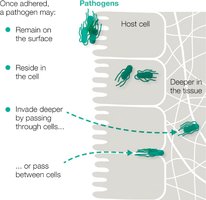
After adhesion, pathogens invade tissues and obtain nutrients, often causing cytopathic effects.
Pathogens may stay on the surface, invade deeper tissues, or reside intracellularly.
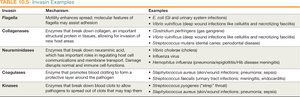
Invasins (enzymes) help break down tissues, form clots, and induce uptake.
Siderophores and extracellular enzymes scavenge nutrients, especially iron.
Cytopathic Effects
Pathogens and the immune system can damage host cells, causing cytocidal (cell-killing) or noncytocidal (cell-damaging) effects.
Bacteria invade, release toxins, and exploit nutrients.
Viruses disrupt cell function and may transform cells.
Immune Evasion and Suppression
Hiding from Host Immune Defenses
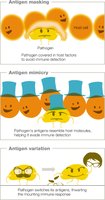
Pathogens evade immune detection by hiding within cells, latency, antigenic masking, mimicry, and variation.
Intracellular pathogens include viruses and some bacteria (Listeria, Mycobacterium).
Latency allows persistent or recurrent disease (e.g., herpes, HIV).
Antigenic masking, mimicry, and variation prevent rapid immune response.
Undermining the Host Immune Response
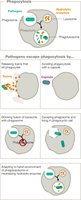
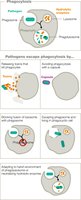
Pathogens may suppress immune function or avoid phagocytosis by various mechanisms.
Interfere with phagocytosis (capsules, escaping phagosomes, blocking fusion, neutralizing enzymes).
Suppress immune cells, break down antibodies, inhibit signaling.
Transmission and Reservoirs
Transmission to New Hosts
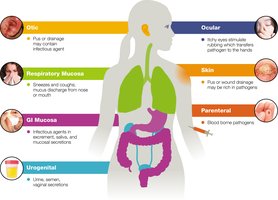
Pathogens must exit the host and transmit to new hosts to perpetuate infection cycles. Symptoms often facilitate transmission.
Portals of exit include feces, urine, blood, saliva, mucus, semen.
Entry and exit portals are often the same.
Reservoirs
Reservoirs are environmental niches or organisms where pathogens persist between infections.
Examples: soil, water, humans, animals, fomites.
Biosafety and Infection Control
Biosafety Levels (BSL)
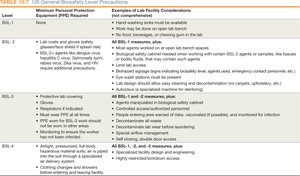
Biosafety levels dictate laboratory and healthcare practices based on pathogen risk. There are four BSLs, each with specific criteria and examples.
BSL-1: Minimal risk, standard precautions (e.g., Bacillus subtilis).
BSL-2: Moderate risk, not airborne (e.g., Staphylococcus aureus, Salmonella).
BSL-3: Serious/lethal, airborne transmission (e.g., Mycobacterium tuberculosis).
BSL-4: High risk, no cures (e.g., Ebola, Marburg).
Infection Control Practices
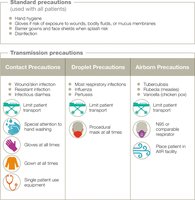
Standard and transmission precautions protect healthcare workers and patients from infection.
Universal precautions: treat all patients as potential sources of infection.
Hand washing, gloves, barrier clothing, proper waste management, disinfection.
Transmission precautions: contact, droplet, and airborne precautions for specific pathogens.