 Back
BackHost Resistance to Viral Infections: Mechanisms and Immune Responses
Study Guide - Smart Notes
 Tailored notes based on your materials, expanded with key definitions, examples, and context.
Host Resistance to Viral Infections
Overview
Host resistance to viral infections is the ability of an organism to limit or prevent viral replication, spread, and disease. This resistance relies on a multi-layered defense system, including both innate (non-specific) and adaptive (specific) immunity. The effectiveness of these mechanisms varies between species and individuals, and pathogens must overcome these defenses to establish infection.
Resistance: Reduces viral pathogen burden.
Tolerance: Minimizes damage caused by infection without necessarily reducing viral load.
Mechanisms of Host Resistance
Nonspecific Host Defenses (Innate Immunity)
Innate immunity provides the body's first line of defense against any pathogen, regardless of its type. These defenses do not retain memory from prior encounters.
Physical and Chemical Barriers: Skin, mucus, and saliva act as barriers to prevent viruses from entering the body.
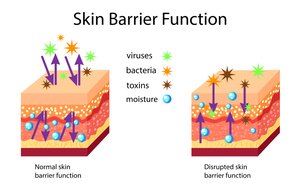
Cellular and Molecular Responses: Immune cells and proteins respond to viral invasion.
Interferons: Signaling proteins released by infected cells to alert neighboring cells and inhibit viral replication.
Natural Killer (NK) Cells: Identify and destroy infected cells.
Antigen-Presenting Cells (APCs): Present viral fragments to other immune cells, initiating adaptive responses.
Interferons and the Antiviral State
Interferons are signaling proteins released by infected and neighboring cells, warning the immune system and establishing an antiviral state. 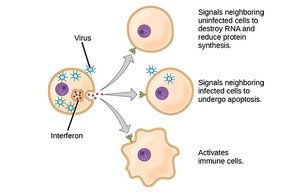
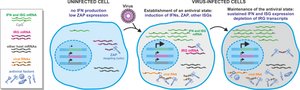
Induction of Interferon Stimulated Genes (ISGs): Interferons signal neighboring cells to upregulate ISGs, which encode proteins that interfere with viral life cycle stages.
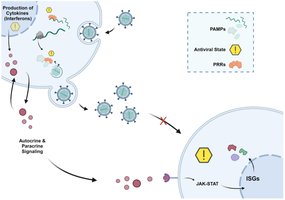
ISGs can degrade viral RNA or inhibit viral replication by disrupting protein synthesis.
Natural Killer (NK) Cells
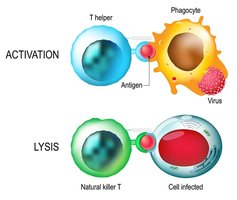
NK cells are a first line of defense, directly killing infected cells and releasing pro-inflammatory cytokines.
Cytotoxic Killing: NK cells release perforin and granzymes to induce cell death (lysis) in infected cells.
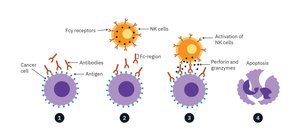
Antibody-Dependent Cell-Mediated Cytotoxicity (ADCC): NK cells bind to antibody-coated infected cells, leading to their destruction.
Cytokine Production: Activated NK cells produce cytokines to coordinate immune responses and limit virus replication.
Tissue Damage and Immunopathology: Excessive NK cell activity can cause tissue damage, especially in chronic infections.
Antigen-Presenting Cells (APCs)
APCs, such as dendritic cells and macrophages, act as messengers between innate and adaptive immunity.
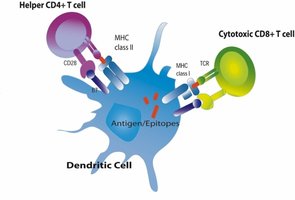
After ingesting a virus, APCs mature and migrate to lymph nodes, presenting viral peptides on MHC molecules to activate T cells.
Adaptive Immunity
Specific Immune System Responses
Adaptive immunity is slower to develop but highly specific to the virus.
B Cells: Produce antibodies that target and neutralize viruses.
T Cells: Include T helper cells (coordinate responses) and cytotoxic T cells (kill infected cells).
Immunological Memory: Memory B and T cells allow for faster, more robust responses upon re-exposure.
Time Course of Immune Responses
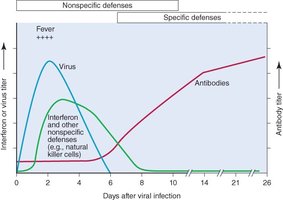
Innate defenses act quickly after infection; adaptive responses take days to weeks to develop.
Humoral Response: Antibody Production
B cells produce antibodies that neutralize viruses and prevent infection. 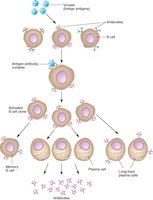
Neutralization: Antibodies bind to viruses or their antigens, preventing entry into host cells.
Blocking Attachment: Neutralizing antibodies block viral surface proteins from attaching to host cell receptors.
Inhibiting Entry: Antibodies interfere with fusion of viral and host cell membranes.
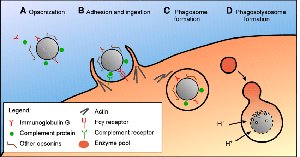
Opsonization and Phagocytosis: Antibodies coat viral particles, marking them for destruction by phagocytic cells.
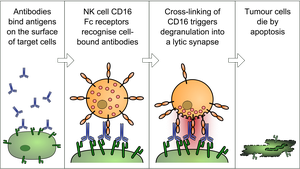
Antibody-Dependent Cellular Cytotoxicity (ADCC): Antibodies bind to viral antigens on infected cells, attracting NK cells to induce apoptosis.
T Cell Responses
T cells attack viruses that have already infected host cells.
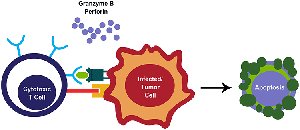
Cytotoxic T Cells (CD8+): Identify and destroy infected cells displaying viral antigens on MHC class I molecules.
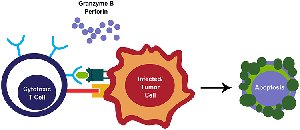
Antigen Recognition: Cytotoxic T cells bind to viral antigens presented by MHC class I on infected cells.
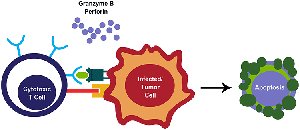
Targeted Killing: Cytotoxic T cells release perforin and granzymes to induce apoptosis in infected cells.
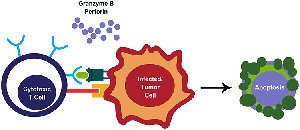
Apoptosis Induction: Perforin creates pores, granzymes enter and trigger programmed cell death.
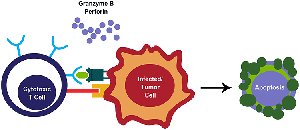
Viral Elimination: Apoptosis destroys infected cells and viruses inside, preventing further spread.
Helper T Cells (CD4+)
Helper T cells coordinate the adaptive immune response, supporting cytotoxic T cells and B cells.
Antigen Presentation: Helper T cells recognize viral antigens presented by APCs on MHC class II molecules.
Activating B Cells: Help B cells mature and produce neutralizing antibodies.
Enhancing Cytotoxic T Cells: Secrete cytokines to promote proliferation and maturation of cytotoxic T cells.
Boosting Innate Immunity: Release cytokines to activate macrophages and NK cells.
Factors Influencing Resistance
Genetic Factors
Genes within the major histocompatibility complex (MHC) significantly influence immune response and resistance.
Physiological Factors
Age, nutritional status, stress, and underlying health conditions impact resistance to viral infections.
Co-evolution
Viruses evolve to evade host defenses, leading to an ongoing evolutionary arms race.
Distinction from Host Tolerance
Resistance: Reduces viral burden.
Tolerance: Withstands infection damage without reducing viral load.
Example: The body may minimize tissue damage even if the virus persists.
