 Back
BackHost–Microbe Interactions and Pathogenesis: Core Concepts and Clinical Applications
Study Guide - Smart Notes
 Tailored notes based on your materials, expanded with key definitions, examples, and context.
Host–Microbe Interactions
Basics of Host–Microbe Interactions
Host–microbe interactions are dynamic relationships that can be benign, beneficial, or lead to disease. The outcome depends on both host and microbial factors, including the immune system, normal microbiota, and the presence of virulence factors.
Normal microbiota: Microorganisms that colonize the skin, digestive, genital, urinary, and respiratory systems without causing disease under normal conditions.
Mutualism: Both host and microbe benefit; microbes may produce vitamins, compete with pathogens, and help mature the immune system.
Dysbiosis: Disruption of the normal microbiota, often due to antibiotics, can allow opportunistic pathogens (e.g., Clostridium difficile) to flourish and cause disease.
Opportunistic pathogens: Normally harmless microbes that cause disease when host defenses are compromised or when they access new tissues.
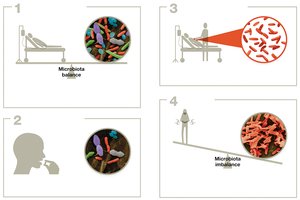
Example: Antibiotic therapy can disrupt gut microbiota, leading to overgrowth of C. difficile and disease.
Host Factors and Pathogen Emergence
Commensal organisms may be harmless in one host but pathogenic in another (e.g., Group B streptococci in women vs. newborns).
Tropism: The preference of a pathogen for a specific host or tissue, influencing which organisms can cause disease in which hosts.
Virulence and Pathogenicity
Virulence Factors
Virulence factors are microbial traits that enhance the ability to cause disease by overcoming host defenses, adhering to cells, invading tissues, and acquiring nutrients.
Pathogenicity: The ability of a microbe to cause disease.
Virulence: The degree or extent of disease caused.
Virulence factors include toxins, adhesion molecules, enzymes, and immune evasion strategies.
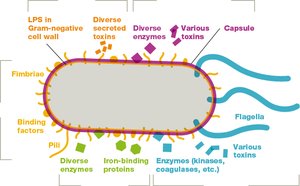
Classic Virulence Factors
Directly damage host cells or provoke harmful immune responses.
Examples: Toxins, enzymes, adhesion factors, and immune evasion mechanisms.
Virulence and Transmission
Pathogens must balance virulence and transmission; highly virulent pathogens may cause severe outbreaks but are often geographically limited.
Basic Reproduction Number (): The average number of secondary infections produced by one infected individual in a fully susceptible population.
Example: COVID-19 ranged from 2.24–3.58.
Virulent vs. Attenuated Pathogens
Attenuated pathogens lose virulence factors and are less likely to cause disease; often used in vaccines.
Infectious Dose and Lethal Dose
ID50: Number of cells or virions needed to infect 50% of exposed hosts.
LD50: Amount of toxin needed to kill 50% of affected hosts.
Toxins as Virulence Factors
Endotoxins
Endotoxins are lipid components of Gram-negative bacterial cell walls (Lipid A of LPS) released upon cell lysis, causing systemic effects such as fever, inflammation, and septic shock.
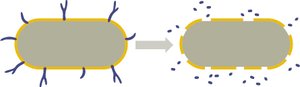
Not easily neutralized; no vaccines available.
Can contaminate medical devices and drugs.
Exotoxins
Exotoxins are secreted proteins produced by both Gram-positive and Gram-negative bacteria, classified by their mode of action:
Type I: Bind to host cell surface and trigger signaling cascades (do not enter cell).
Type II: Damage host cell membranes by forming pores or degrading lipids.
Type III: Enter host cells (often as AB toxins) and disrupt cellular processes.
Steps to Infection
1. Entry into the Host
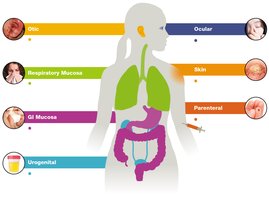
Pathogens enter the host through specific portals of entry, which may include mucous membranes, skin, parenteral routes, and transplacental transmission.
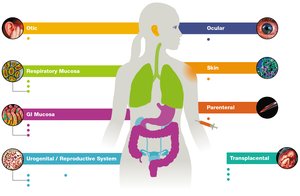
Common portals: respiratory tract, GI tract, urogenital tract, skin, ocular, otic, parenteral, transplacental.
Some pathogens use multiple portals of entry.
2. Adhesion to Host Tissues
After entry, pathogens must adhere to host tissues using specific or nonspecific mechanisms, often mediated by adhesins.
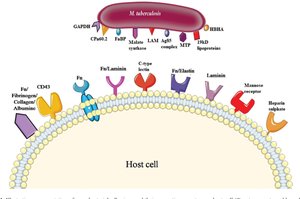
Adhesins: Cell wall components, capsules, fimbriae, pili, and membrane-associated molecules.
3. Invasion and Nutrient Acquisition
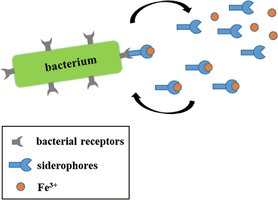
Pathogens invade tissues and obtain nutrients using invasins, motility, and extracellular enzymes. This often results in tissue damage and cytopathic effects.
Invasins: Facilitate tissue penetration and spread.
Extracellular enzymes: Lipases, proteases, and others break down host tissues for nutrients.
Siderophores: Specialized molecules that scavenge iron from host proteins.
4. Evasion of Host Immune Defenses
Pathogens use various strategies to evade immune detection and destruction, including antigen masking, mimicry, variation, and intracellular lifestyles.

Latency: Pathogens remain dormant within host cells (e.g., herpesviruses, HIV).
Capsules: Prevent phagocytosis.
Antigenic variation: Alter surface molecules to avoid immune recognition.
5. Transmission to New Hosts
Successful pathogens must exit the host and be transmitted to new hosts. Portals of exit often mirror portals of entry and include feces, urine, blood, saliva, and respiratory droplets.
Symptoms such as coughing, sneezing, and diarrhea can facilitate transmission.
Biosafety and Infection Control
Biosafety Levels (BSL)
Biosafety levels are classifications that dictate laboratory practices and containment based on the risk posed by infectious agents.
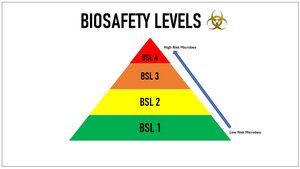
BSL-1: Minimal risk; standard practices (e.g., Bacillus subtilis).
BSL-2: Moderate risk; includes most clinical pathogens (e.g., Staphylococcus aureus).
BSL-3: High risk; airborne transmission, serious or lethal diseases (e.g., Mycobacterium tuberculosis).
BSL-4: Highest risk; dangerous, exotic, untreatable pathogens (e.g., Ebola virus).
Infection Control Practices
Standard and transmission-based precautions are essential for preventing healthcare-associated infections.
Standard precautions: Hand hygiene, gloves, barrier clothing, disinfection, and safe handling of sharps.
Transmission precautions: Additional measures for contact, droplet, or airborne pathogens (e.g., isolation rooms, respirators).
Visual Summary
The five steps to infection (entry, adhesion, invasion, evasion, exit/transmission) are facilitated by virulence factors and are the foundation for understanding host–microbe interactions and pathogenesis.
