 Back
BackHuman Microbiomes: Infant and Normal Development
Study Guide - Smart Notes
 Tailored notes based on your materials, expanded with key definitions, examples, and context.
Overview of Human Microbiomes (Infant & Normal)
Key Concepts and Terminology
The human microbiome refers to the collective genomes of the microorganisms (bacteria, viruses, fungi, and archaea) that inhabit various sites of the human body. Understanding the development and diversity of these communities is essential for appreciating their roles in health and disease, especially during early life stages.
Community: A group of organisms occupying a space that may interact; microbiomes are microbial communities.
Microbial Ecology: The study of interactions among microorganisms and between microorganisms and their environment.
Diversity: A measure of community composition, including richness (number of taxa) and evenness (relative abundance).
Phylogenetic Diversity: Accounts for evolutionary distances between organisms, often calculated by summing branch lengths in a phylogenetic tree.
Functional Diversity: Diversity of functions in a community, which is more challenging to measure than taxonomic diversity.
Diversity Metrics
Alpha Diversity: Diversity within a single community.
Beta Diversity: Diversity between different communities.
Approaches to assess diversity include microscopic observation, culturing, and molecular (culture-independent) methods.
Molecular Methods for Characterizing Microbial Diversity
PCR & Sanger Sequencing: Amplification and sequencing of marker genes (e.g., 16S rRNA gene).
Next Generation Sequencing (NGS): High-throughput sequencing of marker genes or whole genomes (metagenomics).
Bioinformatics: Sequence analysis involves alignment, clustering, phylogenetics, assembly, annotation, and diversity analysis.
Metagenome: The collective genomes of the microbiome, typically assessed via shotgun sequencing.
Specialized Concepts in Microbiome Research
Holobiont and Hologenome
The holobiont is the combined entity of a host and its associated microorganisms. The hologenome is the sum of the genetic information of the host and its microbiome. The Holobiont-Hologenome Theory of Evolution suggests that hosts and their microbiomes can evolve as a single unit, though this is controversial and may only apply in cases of strict vertical transmission (e.g., mitochondria, endosymbionts).
Co-evolution and Related Terms
Co-evolution: Reciprocal changes in allele frequencies in populations of different organisms.
Cospeciation: Speciation in one organism causes speciation in another, often leading to codiversification.
Codiversification: Associated organisms display similar evolutionary histories.
Phylosymbiosis: Congruence between host phylogeny and the structure of their microbial communities.
Commensalism, Probiotics, and Prebiotics
Commensal: An organism that benefits from an association without affecting the host's fitness. This term is debated, as subtle effects on the host are often found.
Probiotics: Live microbes administered for health benefits.
Prebiotics: Substances that promote the growth of beneficial microbes.
Development of the Infant Microbiome
Origins and Early Development
The infant microbiome is seeded during and after birth, with potential contributions from the maternal vaginal, gut, and skin microbiomes, as well as the environment. The existence of a prenatal or placental microbiome is debated, with some evidence for and against in utero colonization.
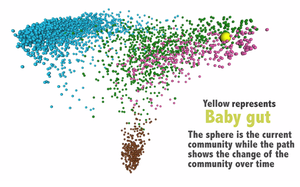
Infant microbiomes initially have low biomass and diversity (low alpha diversity), but high inter-individual variability (high beta diversity).
Diversity patterns shift over the first 1–3 years, becoming more "adult-like" by age 2–3.
Key factors influencing early microbiome development include delivery mode (vaginal vs. C-section), feeding (breastmilk vs. formula), antibiotic exposure, and environmental factors.
Health Implications of Early Microbiome Development
Dysbiosis: Disruption of the normal microbiome is associated with non-communicable diseases such as obesity, diabetes, IBD, asthma, and neuropsychiatric disorders.
Early-life microbiome composition can predict later health outcomes, including adiposity and BMI.
Antibiotic use and C-sections in early life are linked to increased risk of asthma, allergies, and obesity.
Breastmilk provides both microbes and prebiotics (e.g., HMOs) that support healthy microbiome development.
Maternal and Environmental Influences
Maternal diet and microbiome composition influence the infant's microbiome and risk of diseases such as asthma, allergy, and diabetes.
The household environment, including exposure to pets and siblings, increases microbial diversity and reduces risk of asthma/allergy.
Key Microbial Taxa in Early Life
Vaginal Microbiome and Lactobacillus
Lactobacillus species are dominant in the vaginal microbiome, especially in women of European ancestry. These bacteria are gram-positive, facultative anaerobes that produce lactic acid, lowering pH and protecting against pathogens. Neonatal exposure to maternal Lactobacillus during vaginal delivery provides protection and nutrients to the infant.
Probiotic Role: Lactobacillus is commonly used in probiotics to treat diarrhea, vaginal infections, and eczema.
Other Key Colonizing Taxa
Bacteroidaceae: e.g., Bacteroides dorei, B. uniformis, B. ovatus, B. thetaiotaomicron
Bifidobacteriaceae and Enterobacteriaceae are also important early colonizers of the infant gut.
Human Milk Oligosaccharides (HMOs)
HMOs are complex sugars in human milk that are indigestible by infants but serve as prebiotics for beneficial gut microbes, especially Bifidobacterium. The composition of HMOs varies among mothers, influencing the infant's gut microbiome.
Immunity and Microbiome Development
Immune System Maturation
The development of the adaptive immune system occurs in parallel with microbiome diversification. Early microbial exposures help "train" the immune system to distinguish between beneficial and harmful microbes, influencing immune tolerance and susceptibility to disease.
Controversies: The Placental Microbiome
Evidence For and Against
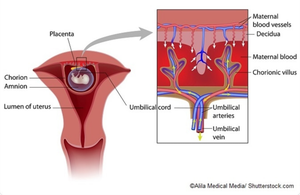
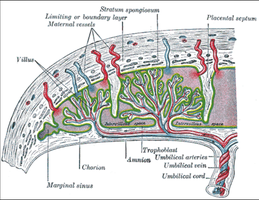
There is ongoing debate about whether the placenta harbors a true microbiome. Some studies report microbial DNA in placental tissues, while others attribute these findings to contamination. The "sterile womb" hypothesis posits that colonization begins at birth, while the "in utero colonization" hypothesis suggests prenatal microbial exposure.
Microbiome Community Trajectories
Colonization Patterns and Influences
Multiple trajectories of microbiome community colonization occur in infants, influenced by birth mode, feeding practices, antibiotic exposure, environment, and maternal/family health. Studies (e.g., Swedish cohort) have identified distinct colonization patterns and the impact of C-sections on these trajectories.
Summary of Key Points
General ecology and evolution concepts are foundational in microbiome research.
Specialized terms such as "holobiont" and "commensal" are debated in the field.
Maternal and reproductive microbiomes are critical for infant health.
The existence of a prenatal microbiome remains controversial, with most evidence suggesting minimal or no colonization before birth.
Vaginal and breastmilk microbiomes are essential for seeding and supporting the infant microbiome.
Microbiome diversity increases during the first years of life, shaping immune development and long-term health.
