 Back
BackImmune Response Diseases and Preventable Diseases: Hypersensitivities, Autoimmunity, and Vaccination
Study Guide - Smart Notes
 Tailored notes based on your materials, expanded with key definitions, examples, and context.
Immune Response Diseases
Hypersensitivities
Hypersensitivities are inappropriate or exaggerated immune responses that result in host tissue damage. They are classified into four main types based on their immune mechanisms and clinical manifestations.
Type I (Immediate) Hypersensitivity: Mediated by IgE antibodies, this type is commonly associated with allergies and occurs within minutes of exposure to an allergen. Symptoms can range from mild (hay fever) to severe (anaphylactic shock).
Type II (Cytotoxic) Hypersensitivity: Involves IgG or IgM antibodies directed against antigens on host cell surfaces, leading to cell destruction via complement activation or antibody-dependent cellular cytotoxicity.
Type III (Immune Complex-Mediated) Hypersensitivity: Characterized by the formation of antigen-antibody complexes that deposit in tissues, triggering inflammation and tissue injury.
Type IV (Delayed-Type) Hypersensitivity: A cell-mediated response involving T cells, with maximal reaction occurring 24–48 hours after antigen exposure. Common examples include contact dermatitis and the tuberculin skin test.
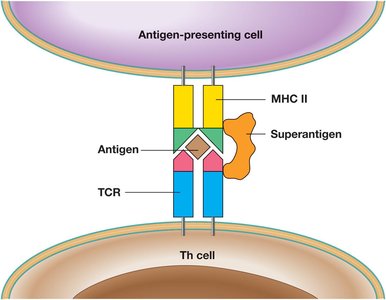
Superantigens are pathogen-derived proteins that cause excessive activation of T cells, resulting in massive cytokine release and systemic inflammation, which can be damaging to the host.
Type I Hypersensitivity: Mechanism and Examples
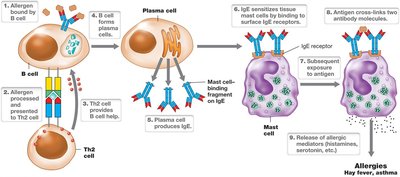
Type I hypersensitivity involves a two-step process:
Primary response: Allergen exposure stimulates TH2 cells to secrete cytokines, causing B cells to produce IgE antibodies. These IgE antibodies bind to mast cell receptors.
Secondary response: Upon re-exposure, the allergen cross-links IgE on mast cells, triggering degranulation and release of mediators such as histamine, leading to allergic symptoms.
Examples: Hay fever, asthma, reactions to bee stings, animal dander, and latex.
Treatment: Removal of allergen, antihistamines, steroids, adrenalin, and desensitization therapy.
Type IV Hypersensitivity (Delayed-Type)
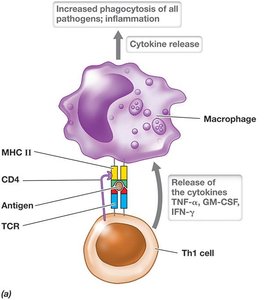
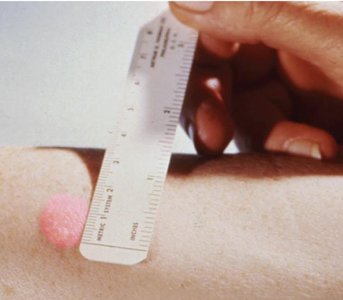
Type IV hypersensitivity is mediated by T cells and does not involve antibodies. The response peaks 24–48 hours after antigen exposure. Typical antigens include microbial proteins (e.g., Mycobacterium tuberculosis), self-antigens (as in autoimmune diseases), and chemicals that bind to skin proteins (e.g., poison ivy).
Mechanism: Antigen-presenting cells present antigen to TH1 cells, which release cytokines, activating macrophages and causing inflammation.
Examples: Tuberculin skin test, contact dermatitis.
Autoimmune Diseases
Mechanisms and Examples
Autoimmune diseases occur when the immune system mounts a response against self-antigens, leading to tissue damage. These diseases may be mediated by antibodies (Type II and III hypersensitivities) or T cells (Type IV hypersensitivity).
Type II: Antibodies bind to self-antigens on host cells, leading to cell destruction (e.g., Goodpasture’s syndrome, Myasthenia gravis).
Type III: Immune complexes deposit in tissues, causing inflammation (e.g., systemic lupus erythematosus, rheumatoid arthritis).
Type IV: T cell-mediated destruction of self-tissues (e.g., multiple sclerosis, Type 1 diabetes).
Disease | Target | Mechanism |
|---|---|---|
Type 1 diabetes | Pancreatic beta cells | Cell-mediated and autoantibody (Type II & IV) |
Myasthenia gravis | Skeletal muscle | Autoantibodies to acetylcholine receptor (Type II) |
Goodpasture’s syndrome | Kidney | Autoantibodies to basement membrane (Type II) |
Rheumatoid arthritis | Joints | Immune complexes (Type III) |
Systemic lupus erythematosus | Multiple tissues | Immune complexes (Type III) |
Multiple sclerosis | Central nervous system | Cell-mediated and autoantibody (Type II & IV) |
Superantigens
Mechanism and Clinical Impact
Superantigens are microbial proteins that bind outside the conventional antigen-binding site of the T cell receptor and MHC class II molecule, causing non-specific activation of a large number of T cells. This leads to excessive cytokine production and systemic inflammatory responses, such as toxic shock syndrome and certain types of food poisoning.
Summary of Hypersensitivity Types
Type | Description | Immune Mechanism | Latency | Examples |
|---|---|---|---|---|
I | Immediate | IgE sensitization of mast cells | Minutes | Bee sting, hay fever |
II | Cytotoxic | IgG interaction with cell surface antigen | Hours | Drug reactions (penicillin) |
III | Immune complex | IgG interaction with soluble antigen | Hours | Systemic lupus erythematosus |
IV | Delayed type | TH1 cell activation of macrophages | Days (24–48 h) | Poison ivy, tuberculin test |
Immunity: Natural vs. Artificial, Passive vs. Active
Definitions and Mechanisms
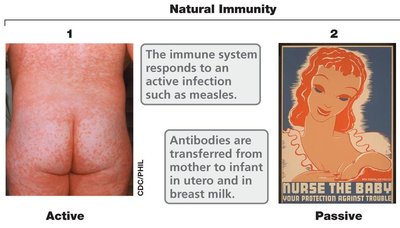
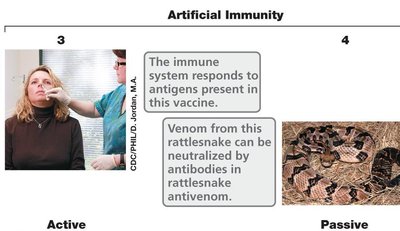
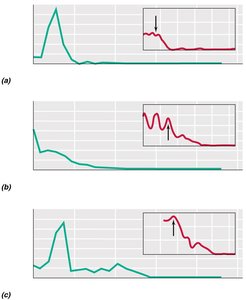
Active Immunity: The host produces its own immune response after exposure to antigen. Can be natural (infection) or artificial (vaccination).
Passive Immunity: The host receives antibodies or immune cells from another source. Can be natural (maternal antibodies) or artificial (antiserum, antitoxin).
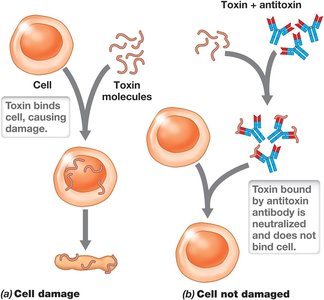
Neutralization of Exotoxins by Antitoxins
Antitoxins are antibodies that bind to and neutralize exotoxins, preventing them from damaging host cells. This is a form of passive immunity, often used in cases of toxin-mediated diseases.
Comparison of Active and Passive Immunity
Active Immunity | Passive Immunity |
|---|---|
Exposure to antigen; immune response generated by host | No exposure to antigen; antibodies or cells provided by donor |
Memory cells produced; long-lasting | No memory; short-lived |
Develops over weeks | Immediate protection |
Vaccination and Herd Immunity
History and Importance
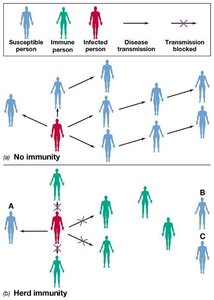
Vaccination is the process of inducing active immunity by exposing individuals to antigens in a controlled manner. The concept of herd immunity refers to the resistance of a population to infection when a high proportion of individuals are immune, thereby protecting susceptible individuals.
Immunization Recommendations
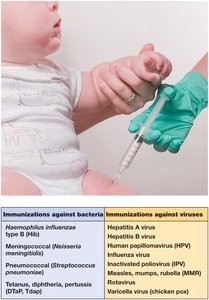
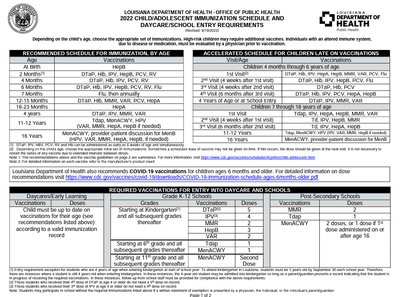
Routine immunization schedules are established to protect infants and children from common infectious diseases. These schedules are often mandated by law for school entry.
Measles, Mumps, and Rubella (MMR) Vaccine
Diseases and Vaccine Impact
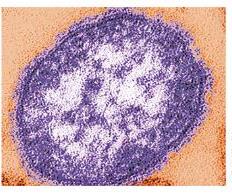
Measles: Caused by a paramyxovirus; symptoms include fever, rash, and complications such as pneumonia and encephalitis. The rash is likely due to a Type IV hypersensitivity response.
Mumps: Caused by a paramyxovirus; characterized by swollen salivary glands.
Rubella: Caused by a togavirus; can cause congenital defects if contracted during pregnancy.
MMR Vaccine: Contains attenuated viruses for all three diseases and has dramatically reduced their incidence.


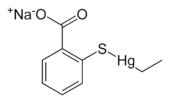
Vaccine Safety: Thiomersal (Thimerosal)
Thiomersal is a mercury-containing compound previously used as a preservative in some vaccines. Extensive studies have shown no link between thiomersal and autism.
Types of Vaccines
Classifications and Examples
Toxoid: Chemically inactivated toxins that retain antigenicity (e.g., tetanus, diphtheria).
Surface protein: Purified or inactivated proteins from pathogens (e.g., pertussis).
Killed cells/inactivated virus: Pathogens killed by heat or chemicals (e.g., typhoid, influenza).
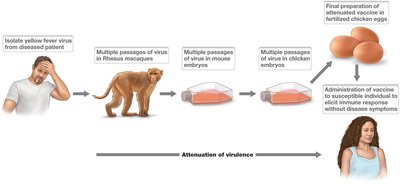
Live attenuated: Weakened strains that induce strong immunity (e.g., MMR, BCG).
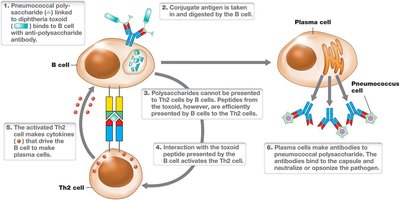
Conjugate: Polysaccharide antigens linked to proteins to enhance immunogenicity (e.g., Hib, PCV7).
Recombinant antigen: Antigen produced in a non-pathogenic host (e.g., hepatitis B, HPV).
Nucleic acid vaccines: DNA or mRNA encoding antigen (e.g., COVID-19 vaccines).
Tables: Vaccines for Infectious Diseases
Bacterial Disease | Type of Vaccine |
|---|---|
Anthrax | Toxoid |
Cholera | Killed cells or extract |
Diphtheria | Toxoid |
Haemophilus influenzae type b | Conjugate |
Meningitis | Purified polysaccharide |
Pertussis | Killed bacteria or acellular proteins |
Pneumonia | Purified polysaccharide or conjugate |
Tetanus | Toxoid |
Tuberculosis | Attenuated strain |
Viral Disease | Type of Vaccine |
|---|---|
Hepatitis A | Recombinant DNA vaccine |
Hepatitis B | Recombinant DNA or inactivated virus |
HPV | Recombinant DNA vaccine |
Influenza | Inactivated or attenuated virus |
Measles, mumps, rubella | Attenuated virus |
Polio | Attenuated or inactivated virus |
Rabies | Inactivated or attenuated virus |
Rotavirus | Attenuated virus |
Varicella | Attenuated virus |
Additional info: This guide covers the immunological basis of hypersensitivity, autoimmunity, and vaccination, with emphasis on mechanisms, clinical examples, and public health relevance. It is suitable for exam preparation in a college-level microbiology course.
