 Back
BackImmunity to Viral Infections: Innate and Adaptive Responses
Study Guide - Smart Notes
 Tailored notes based on your materials, expanded with key definitions, examples, and context.
Viruses and the Immune System
Introduction to Viruses as Infectious Agents
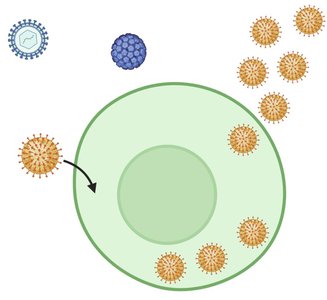
Viruses are major pathogens affecting humans, animals, and plants, causing diseases that range from mild (e.g., the common cold) to severe (e.g., hemorrhagic fevers). Unlike bacteria and eukaryotes, viruses have simple genomes and cannot replicate independently; they must infect host cells and hijack the host's biosynthetic machinery for replication. The host immune system has evolved complex mechanisms to detect and eliminate virus-infected cells, which is crucial for controlling viral diseases.
Viruses require host cells for replication.
The immune response is essential for controlling and eliminating viral infections.
Viruses have evolved strategies to evade immune detection, allowing some to persist for the host's lifetime.
Host Immune Responses to Viral Infection
Overview of Immune Response Phases
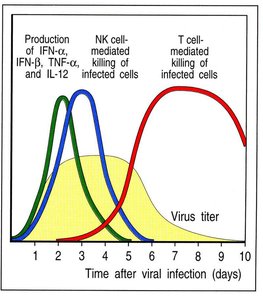
The immune response to viral infection involves both innate and adaptive components. The innate response acts rapidly, while the adaptive response provides specificity and memory.
Innate Immunity: Provides immediate, non-specific defense (e.g., interferons, natural killer cells).
Adaptive Immunity: Develops over days, involving T and B lymphocytes that target specific viral antigens.
The severity of viral disease often correlates with the degree of immune system disruption.
Innate Immune Mechanisms
Cytokines and Interferons
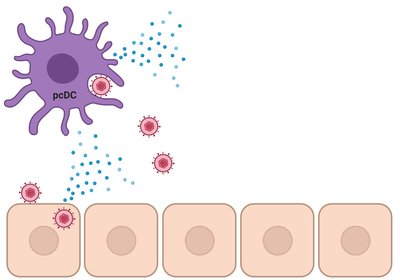
Cytokines are small proteins released by cells that regulate immunity, inflammation, and hematopoiesis. Interferons (IFNs) are a subset of cytokines critical for antiviral defense.
Interferons (Type I IFNs): Produced by infected and dendritic cells upon viral detection; induce expression of interferon-stimulated genes (ISGs), upregulate MHC I, and activate NK cells.
Chemokines: Direct migration and activation of immune cells.
Interleukins: Regulate immune cell growth and differentiation.
Tumor Necrosis Factor (TNF): Mediates inflammation and cell death.
Natural Killer (NK) Cells
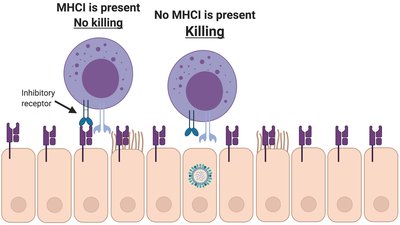
NK cells are lymphocytes that play a central role in the early innate response to viral infection, especially before cytotoxic T lymphocytes are fully activated.
Activated by interferons and recruited to infection sites.
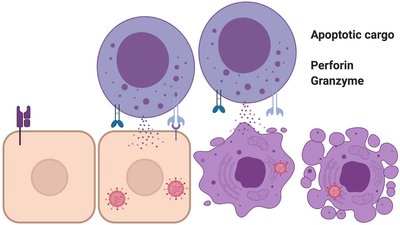
Detect and kill infected cells by recognizing changes in cell surface proteins, particularly the loss of MHC I molecules.
Secrete cytotoxic molecules (e.g., perforin, granzymes) to induce apoptosis in infected cells.
Adaptive Immune Mechanisms
Cytotoxic T Lymphocytes (CD8+ T Cells)
Cytotoxic T cells are crucial for eliminating virus-infected cells during the adaptive immune response.
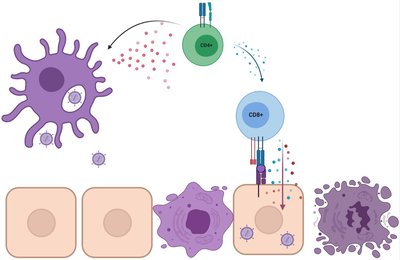
Activated by antigen-presenting cells (APCs) displaying viral peptides on MHC I molecules.
Recognize and kill infected cells through the release of perforin and granzymes.
Clonal expansion ensures a large population of virus-specific T cells.
Helper T Cells (CD4+ T Cells)
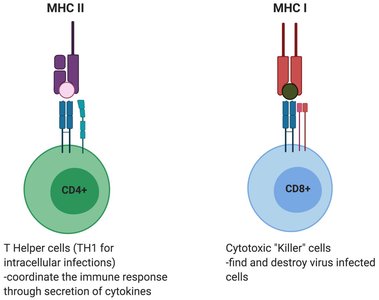
CD4+ T cells coordinate the immune response by secreting cytokines and providing help to B cells for antibody production.
Recognize antigens presented on MHC II molecules by APCs.
Differentiate into various subsets (e.g., Th1, Th2) to direct appropriate immune responses.
Antibody-Mediated Immunity (Humoral Response)
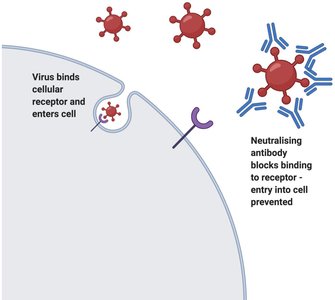
Antibodies produced by B cells are essential for neutralizing extracellular viruses and preventing infection of new cells.
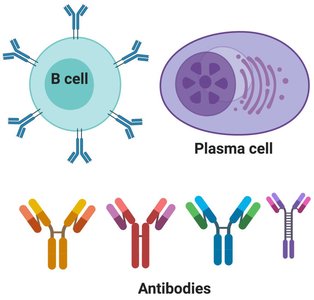
B cells recognize viral antigens and, with help from CD4+ T cells, differentiate into plasma cells that secrete antibodies.
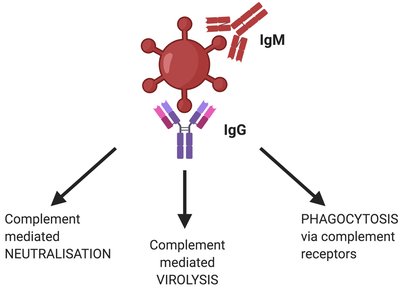
Antibodies can neutralize viruses, opsonize them for phagocytosis, and activate the complement system.
Pattern Recognition and Viral Detection
Pattern Recognition Receptors (PRRs)
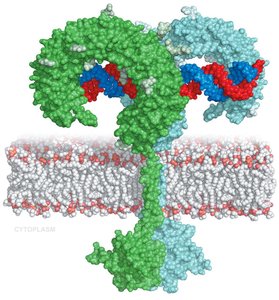
PRRs are germline-encoded receptors that detect pathogen-associated molecular patterns (PAMPs) unique to microbes, including viruses.
Toll-like Receptors (TLRs): Detect viral nucleic acids in endosomes (e.g., TLR3 for dsRNA, TLR7/8 for ssRNA, TLR9 for CpG DNA).
RIG-I-like Receptors (RLRs): Detect viral RNA in the cytoplasm (e.g., RIG-I, MDA5).
cGAS-STING Pathway: Detects cytosolic DNA, leading to interferon production.
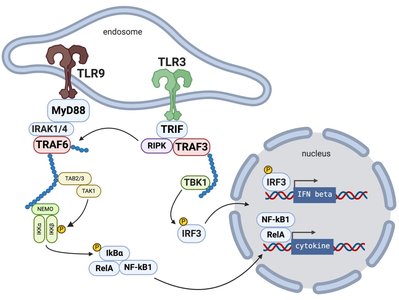
Viral Evasion of Immune Responses
Mechanisms of Immune Evasion
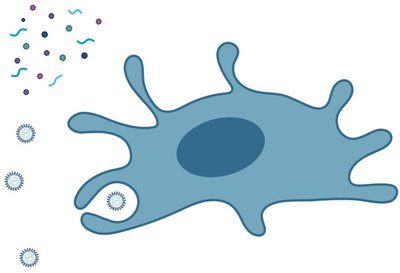
Viruses have evolved diverse strategies to evade or subvert host immune responses, allowing for persistent infection or enhanced pathogenicity.
Inhibition of interferon signaling (e.g., viral proteins that block JAK-STAT pathway).
Disruption of PRR signaling (e.g., cleavage of adaptor proteins by viral proteases).
Mimicry of host proteins to avoid detection.
Direct inhibition of apoptosis or antigen presentation.
Summary Table: Key Innate and Adaptive Immune Mechanisms Against Viruses
Immune Component | Main Function | Key Molecules/Cells |
|---|---|---|
Innate Immunity | Immediate, non-specific defense; limits early viral replication | Interferons, NK cells, macrophages, dendritic cells |
Adaptive Immunity | Specific recognition and elimination of infected cells; memory formation | CD8+ T cells, CD4+ T cells, B cells, antibodies |
Pattern Recognition | Detection of viral PAMPs; initiation of immune signaling | TLRs, RLRs, cGAS-STING |
Immune Evasion | Subversion of host defenses to promote viral survival | Viral proteins targeting IFN, PRR, apoptosis pathways |
Conclusion
The immune response to viral infection is a coordinated effort involving both innate and adaptive mechanisms. While the host has evolved sophisticated means to detect and eliminate viruses, pathogens continually adapt to evade these defenses, highlighting the dynamic interplay between viruses and the immune system.
