 Back
BackCh 17 Immunization and Immune Testing: Microbiology Study Guide
Study Guide - Smart Notes
 Tailored notes based on your materials, expanded with key definitions, examples, and context.
Immunization and Immune Testing
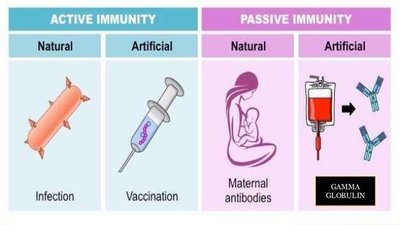
Overview of Immunization
Immunization is a critical process in microbiology and public health, involving the induction of immunity against infectious diseases. It can be achieved through active or passive methods, each with distinct mechanisms and applications.
Active Immunization: Administration of antigens to stimulate the patient's own adaptive immune response.
Passive Immunotherapy: Transfer of antibodies from an immune individual or animal to provide immediate protection.
History of Immunization
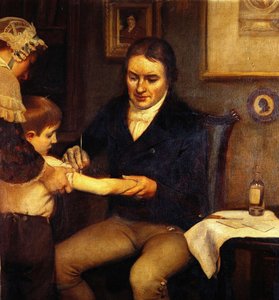
The practice of immunization has evolved over centuries, beginning with variolation and advancing to modern vaccination techniques.
Variolation: Early method where material from smallpox scabs was used to induce immunity.
Edward Jenner (1796): Developed the first vaccine using cowpox to protect against smallpox.
Louis Pasteur (1879): Developed vaccines against bacterial pathogens.
Impact of Immunization on Disease Prevalence
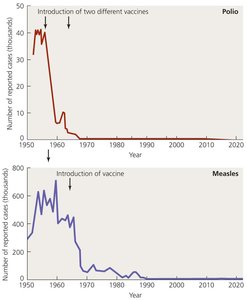
Immunization has dramatically reduced the incidence of many infectious diseases, such as polio and measles, as shown by epidemiological data.
Polio and Measles: Introduction of vaccines led to a sharp decline in reported cases.
Global Challenges in Immunization
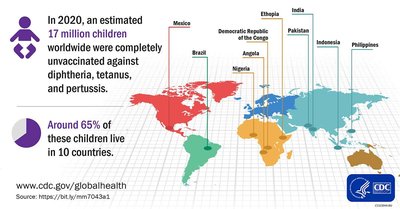
Despite advances, many children worldwide remain unvaccinated, especially in developing nations.
Barriers: Lack of access, incomplete vaccine development, and vaccine-associated risks.
Global Statistics: In 2020, 17 million children were unvaccinated against key diseases.
Types of Vaccines
Attenuated (Live) Vaccines
Attenuated vaccines use pathogens with reduced virulence to stimulate a strong immune response.
Attenuation: Process of reducing pathogen virulence.
Advantages: Strong, long-lasting immunity; potential for contact immunity.
Risks: Residual virulence may cause disease in susceptible individuals.
Inactivated (Killed) Vaccines
Inactivated vaccines use whole microbes or subunit fragments that are killed or inactivated.
Whole Agent Vaccines: Inactivated whole microbes.
Subunit Vaccines: Antigenic fragments of microbes.
Adjuvants: Chemicals added to enhance antigenicity.
Toxoid Vaccines
Toxoid vaccines use chemically or thermally modified toxins to stimulate immunity.
Applications: Useful for bacterial diseases like diphtheria and tetanus.
Immunity: Stimulate antibody-mediated immunity; require multiple doses.
Combination and Recombinant Vaccines
Combination Vaccines: Simultaneous administration of antigens from several pathogens.
Recombinant DNA Technology: Use of genetic engineering to produce safer and more effective vaccines, including mRNA vaccines.
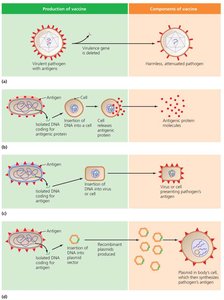
Vaccine Function and Types
Vaccines function by presenting antigens to the immune system, prompting the production of antibodies and memory cells. 
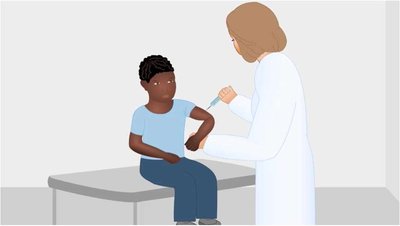
Vaccine Manufacture
Microbial Cultures: Many vaccines are produced by growing microbes in culture vessels.
Egg-Based Production: Viruses are often cultured in chicken eggs; individuals with egg allergies must avoid certain vaccines.
Immunization Schedules
The CDC provides recommended immunization schedules for different age groups to ensure optimal protection. 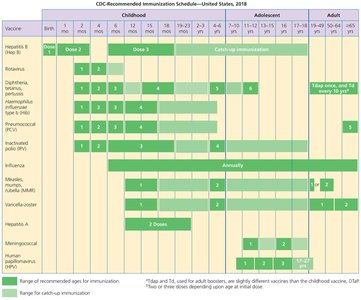
Principal Vaccines and Their Uses
Method of Administration | Vaccine Type | Disease | Disease Agent | Vaccine |
|---|---|---|---|---|
Intramuscular | Inactive subunit | Hepatitis B | Hepatitis B virus | Hepatitis B |
Oral | Attenuated, recombinant | Gastroenteritis | Rotavirus | Rotavirus |
Intramuscular | Toxoid | Diphtheria, Tetanus, Whooping cough | Diphtheria toxin, Tetanus toxin, Bordetella pertussis | DTaP |
Subcutaneous | Attenuated | Measles, Mumps, Rubella | Measles virus, Mumps virus, Rubella virus | MMR |
Intramuscular | Inactive recombinant | Genital warts, cervical cancer | Human papillomaviruses | HPV |
Vaccine Safety
Mild Toxicity: Most vaccines cause only mild side effects.
Anaphylactic Shock: Rare but severe allergic reactions.
Residual Virulence: Attenuated vaccines may retain some virulence.
Controversies: Allegations of vaccines causing autism, diabetes, and asthma are not substantiated by research.

Passive Immunotherapy
Antiserum and Hybridomas
Passive immunotherapy involves the administration of antiserum containing preformed antibodies.
Immediate Protection: Useful for recent infections or ongoing diseases.
Limitations: Allergic reactions (serum sickness), rapid degradation of antibodies, no protection from future infections.
Hybridomas: Overcome limitations by producing monoclonal antibodies.
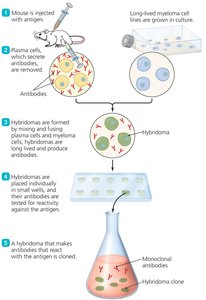
Herd Immunity
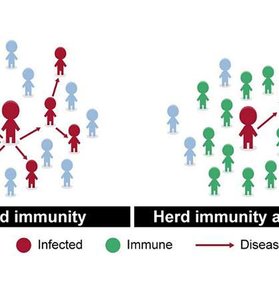
Herd immunity, or population immunity, is the indirect protection from infectious disease when a significant portion of the population is immune.
Mechanism: Reduces disease spread, protecting unvaccinated individuals.
Antigen vs. Antibody
Definitions and Differences
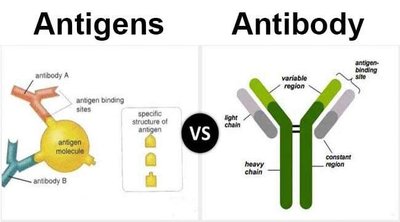
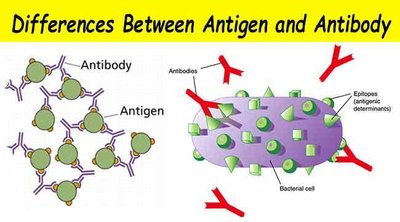
Antigen: A molecule capable of inducing an immune response.
Antibody: A protein produced by B cells that binds specifically to antigens.
Structure: Antibodies have variable and constant regions; antigens have specific binding sites (epitopes).
Serological Tests
Overview of Serology
Serology is the study of blood serum to detect the presence of antigens or antibodies.
Uses: Monitor infection spread, diagnose diseases.
Precipitation Tests
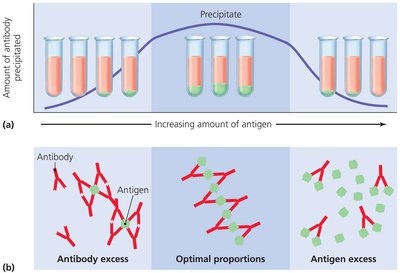
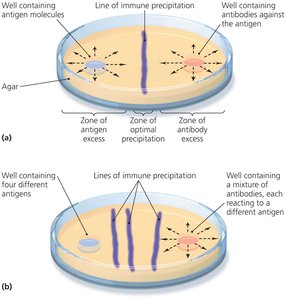
Precipitation tests involve mixing antigens and antibodies to form visible complexes.
Immune Complexes: Large aggregates formed at optimal antigen-antibody proportions.
Immunodiffusion: Common technique for precipitation reactions.
Agglutination Tests
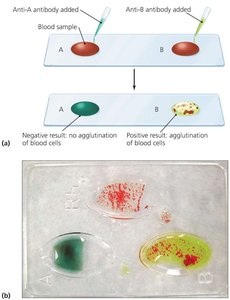
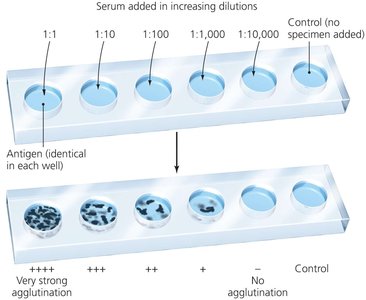
Agglutination tests detect the clumping of particulate antigens by antibodies.
Hemagglutination: Agglutination of red blood cells, used for blood typing.
Titration: Serial dilution to measure antibody levels; titer is the highest dilution showing positive agglutination.
Neutralization Tests
Neutralization tests assess the ability of antibodies to neutralize pathogens.
Viral Neutralization: Absence of cytopathic effect indicates presence of antibodies.
Viral Hemagglutination Inhibition: Used for viruses that clump red blood cells.
Complement Fixation Test
Principle: Detects antibodies by complement activation and membrane attack complex formation.
Application: Used for detecting small amounts of antibodies.
Labeled Antibody Tests
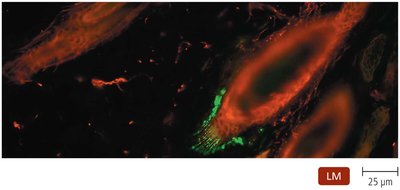
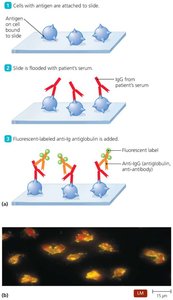
Fluorescent Immunoassays: Use fluorescent dyes to detect antigens or antibodies.
Direct: Detects antigen with labeled antibody.
Indirect: Detects antibody with labeled anti-antibody.
ELISA (Enzyme-Linked Immunosorbent Assay)
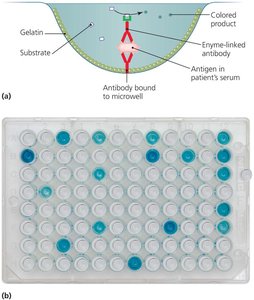
ELISA uses enzyme-labeled antibodies to detect antigens or antibodies, producing a colored product.
Advantages: Sensitive, quantitative, easy to perform, can test many samples quickly.
Antibody Sandwich ELISA: Antigen is sandwiched between two antibodies for detection.
Immunoblot (Western Blot)
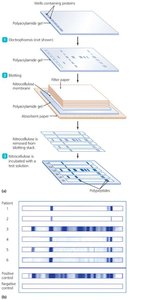
Immunoblotting detects specific proteins in a mixture, confirming the presence of antibodies or antigens.
Steps: Electrophoresis, blotting, detection.
Point-of-Care Testing
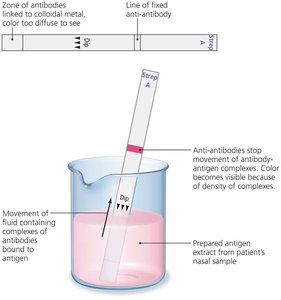
Point-of-care tests are rapid immunoassays used for quick diagnosis.
Immunofiltration: Rapid ELISA using membrane filters.
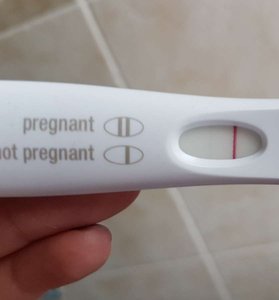
Immunochromatographic Assays: Antigen solution flows through a strip, producing a visible line when antigen-antibody complexes are detected. Used in pregnancy tests and rapid infection identification.
Summary Table: Serological Tests and Their Uses
Test | Use |
|---|---|
Immunodiffusion (precipitation) | Diagnosis of syphilis, pneumococcal pneumonia |
Agglutination | Blood typing, pregnancy testing, diagnosis of various infections |
Viral neutralization | Diagnosis of infections by specific viruses |
Viral hemagglutination inhibition | Diagnosis of viral infections (influenza, measles, mumps, rubella) |
Complement fixation | Diagnosis of measles, influenza A, syphilis, rubella, rickettsial infections |
Direct fluorescent antibody | Diagnosis of rabies, group A Streptococcus infections |
Indirect fluorescent antibody | Diagnosis of syphilis, mononucleosis |
ELISA | Pregnancy testing, hepatitis diagnosis, initial HIV diagnosis |
Immunoblot (western blot) | Confirmation of HIV, diagnosis of Lyme disease |
Conclusion
Immunization and immune testing are foundational concepts in microbiology, essential for disease prevention, diagnosis, and epidemiological monitoring. Understanding the types of vaccines, their mechanisms, and the various serological tests enables effective control and management of infectious diseases. Additional info: Recombinant DNA technology and mRNA vaccines represent modern advances in vaccine development, offering improved safety and efficacy.
