 Back
BackImmunization and Immune Testing: Principles and Applications
Study Guide - Smart Notes
 Tailored notes based on your materials, expanded with key definitions, examples, and context.
Immunization and Immune Testing
Overview of Artificial Immunity
Immunization is a critical strategy in microbiology for preventing infectious diseases. It involves the artificial induction of immunity through two main approaches: active immunization and passive immunotherapy.
Active Immunization: Administration of antigens to stimulate the patient's own immune response.
Passive Immunotherapy: Transfer of preformed antibodies from an immune individual or animal to provide immediate protection.
Challenges in Disease Eradication
Despite the success of vaccines, several challenges hinder the eradication of infectious diseases:
Limited vaccine access in developing nations.
Lack of effective vaccines for some pathogens.
Vaccine-associated risks and public hesitancy reduce investment in new vaccine development.
Types of Vaccines
Attenuated (Modified Live) Vaccines
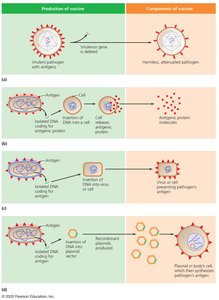
Attenuated vaccines use pathogens with reduced virulence to stimulate a strong immune response. The process of reducing virulence is called attenuation.
Can induce mild infections but rarely cause disease in healthy individuals.
Provide robust, long-lasting immunity and may confer contact immunity (protection of unvaccinated individuals through transmission of the vaccine strain).
Risk: May cause disease in immunocompromised or susceptible individuals due to residual virulence.
Inactivated (Killed) Vaccines
Inactivated vaccines are safer than live vaccines and are produced by killing the pathogen.
Whole agent vaccines: Contain inactivated whole microbes.
Subunit vaccines: Contain only antigenic fragments of the microbe.
Often require multiple doses and adjuvants (chemicals that enhance immune response).
Toxoid Vaccines
Toxoid vaccines are made from chemically or thermally modified toxins to stimulate active immunity, especially for bacterial diseases caused by toxins (e.g., tetanus, diphtheria).
Stimulate antibody-mediated immunity.
Require multiple doses due to limited antigenic determinants.
Combination Vaccines
Combination vaccines contain antigens from multiple pathogens, allowing simultaneous immunization against several diseases (e.g., DTaP for diphtheria, tetanus, and pertussis).
Vaccines Using Recombinant Gene Technology and mRNA Vaccines
Modern vaccines utilize recombinant DNA technology to improve efficacy, safety, and cost-effectiveness. mRNA vaccines represent a recent advancement, encoding antigens that are produced by the host's cells.
Vaccine Manufacture and Administration
Production Methods
Vaccines are mass-produced by culturing microbes in controlled environments. Viruses are often grown in chicken eggs, which can be problematic for individuals with egg allergies.
Examples of Common Vaccines
The following table summarizes several important vaccines, their disease agents, types, and methods of administration:
Vaccine | Disease Agent | Disease | Vaccine Type | Administration |
|---|---|---|---|---|
Hepatitis B | Hepatitis B virus | Hepatitis B | Inactive subunit (recombinant yeast) | Intramuscular |
Rotavirus | Rotavirus | Gastroenteritis | Attenuated, recombinant | Oral |
DTaP | Diphtheria toxin, Tetanus toxin, Bordetella pertussis | Diphtheria, Tetanus, Whooping cough | Toxoid, Toxoid, Inactivated subunit | Intramuscular |
Polio | Poliovirus | Poliomyelitis | Inactivated (attenuated also available) | Subcutaneous/Intramuscular/Oral |
MMR | Measles, Mumps, Rubella viruses | Measles, Mumps, Rubella | Attenuated | Subcutaneous |
HPV | Human papillomaviruses | Genital warts, Cervical cancer | Inactive recombinant | Intramuscular |
Vaccines Not Recommended for General Population (U.S.)
Certain vaccines are available but not routinely recommended for the general population, such as anthrax, BCG (tuberculosis), rabies, and yellow fever vaccines. These are typically reserved for high-risk groups.
Vaccine Safety
While vaccines are generally safe, some risks exist:
Mild toxicity (e.g., soreness, fever).
Rare risk of anaphylactic shock (severe allergic reaction).
Residual virulence in attenuated vaccines.
Unsubstantiated allegations linking vaccines to autism, diabetes, and asthma (not supported by scientific research).
Passive Immunotherapy
Principles and Limitations
Passive immunotherapy involves the administration of antiserum containing preformed antibodies, providing immediate but temporary protection.
Used for recent infections or ongoing diseases.
Limitations include risk of allergic reactions (serum sickness), rapid degradation of antibodies, and lack of long-term protection.
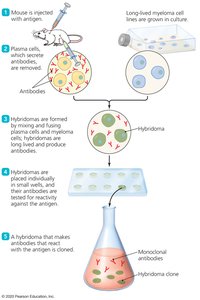
Development of hybridomas (fusion of antibody-producing cells with myeloma cells) allows for the production of monoclonal antibodies, overcoming some limitations of traditional antisera.
Review Questions
Administration of modified live vaccines is an example of: Active immunization.
Subunit vaccines: Are a type of inactivated vaccine, contain antigenic fragments, and often require multiple doses.
Summary Table: Vaccine Types and Features
Vaccine Type | Main Feature | Example |
|---|---|---|
Attenuated (Live) | Weakened pathogen, strong immunity | MMR, Varicella |
Inactivated (Killed) | Killed pathogen, safer, may need boosters | Polio (Salk), Influenza |
Subunit | Antigenic fragments, fewer side effects | Hepatitis B, HPV |
Toxoid | Inactivated toxins, antibody response | Tetanus, Diphtheria |
Combination | Multiple antigens, broad protection | DTaP, MMR |
Recombinant/mRNA | Genetically engineered, high safety | HPV, COVID-19 mRNA vaccines |
Key Terms
Antigen: A molecule capable of inducing an immune response.
Adjuvant: Substance that enhances the body's immune response to an antigen.
Hybridoma: Cell produced by fusing an antibody-producing B cell with a myeloma (cancer) cell, used to produce monoclonal antibodies.
Contact Immunity: Immunity conferred to unvaccinated individuals by transmission of live vaccine organisms.
