 Back
BackChapter 17
Study Guide - Smart Notes
 Tailored notes based on your materials, expanded with key definitions, examples, and context.
Immunization
Artificial Methods of Immunity
Immunization refers to the process by which an individual's immune system becomes fortified against an agent. There are two main artificial methods:
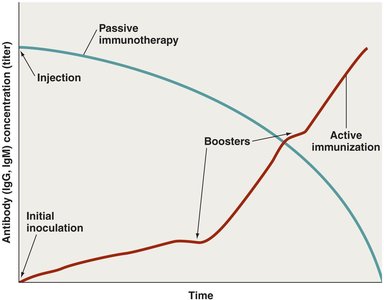
Active Immunization: Administration of antigens so the patient actively mounts a protective immune response.
Passive Immunization: Transfer of antibodies formed by an immune individual or animal to another individual, providing immediate but temporary protection.
Brief History of Immunization
Early observations in China noted that children who recovered from smallpox did not contract the disease again. This led to variolation, the deliberate infection with material from smallpox scabs.
Edward Jenner (1796) discovered the process of vaccination using cowpox to protect against smallpox.
Louis Pasteur (1879) developed vaccines against other pathogens, such as Pasteurella multocida.
Antibody transfer was developed after it was discovered that vaccines protect through the action of antibodies.
Despite advances, many developing nations lack access to vaccines, and some pathogens still lack effective vaccines. Vaccine-associated risks can also discourage investment in new vaccine development.
Effect of Immunization in Reducing Disease Prevalence
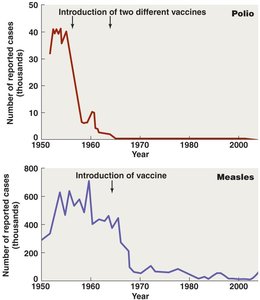
Immunization has dramatically reduced the prevalence of diseases such as polio and measles, as shown by the sharp decline in reported cases following the introduction of vaccines.
Types of Vaccines (Active Immunization)
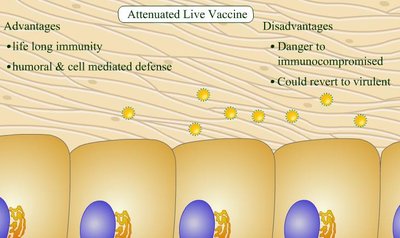
Attenuated (Live) Vaccines: Use pathogens with reduced virulence. They can cause mild infections and stimulate strong, long-lasting immune responses, including contact immunity. However, they may retain enough residual virulence to cause disease in immunocompromised individuals.
Inactivated (Killed) Vaccines: Include whole agent and subunit vaccines. These are safer than live vaccines but are antigenically weaker and often require adjuvants to enhance immune response.
Toxoid Vaccines: Contain chemically or thermally modified toxins. They are useful for some bacterial diseases and stimulate antibody-mediated immunity but require multiple doses due to few antigenic determinants.
Combination Vaccines: Simultaneous administration of antigens from several pathogens.
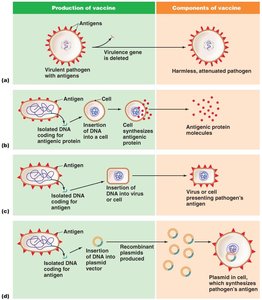
Recombinant Gene Technology Vaccines: Use recombinant DNA techniques to improve vaccine effectiveness, safety, and cost.
Vaccine Manufacture and Safety
Vaccines are mass-produced by growing microbes in culture vessels; viruses are often cultured in chicken eggs, which can be problematic for individuals with egg allergies.
Vaccine safety concerns include mild toxicity, risk of anaphylactic shock, residual virulence, and unsubstantiated allegations of links to autism, diabetes, and asthma.
CDC Recommended Immunization Schedule
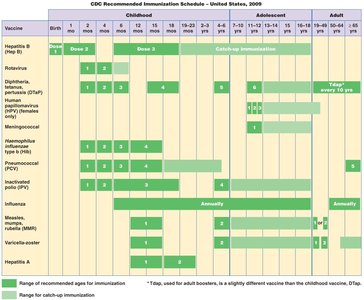
The CDC provides a recommended immunization schedule for various age groups to ensure optimal protection against infectious diseases.
Passive Immunotherapy
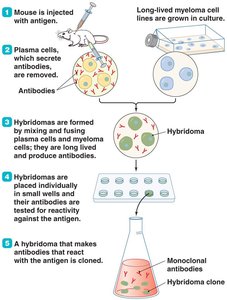
Passive immunotherapy involves the administration of antiserum containing preformed antibodies, providing immediate protection. Limitations include the presence of antibodies against many antigens, risk of serum sickness, possible viral contamination, and rapid degradation of antibodies. These are overcome by the development of hybridomas, which produce monoclonal antibodies.
Immune Testing (Serology)
Principles and Categories
Immune testing, or serology, involves the study and diagnostic use of antigen-antibody interactions in blood serum. There are two main categories:
Direct Testing: Detects the presence of antigens.
Indirect Testing: Detects antibodies formed against antigens.
Precipitation Tests
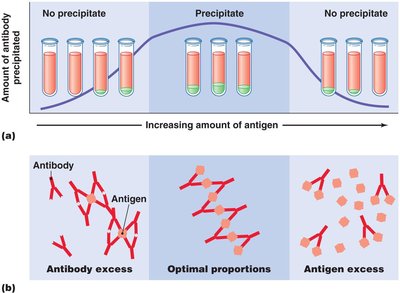
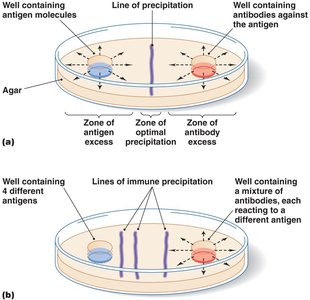
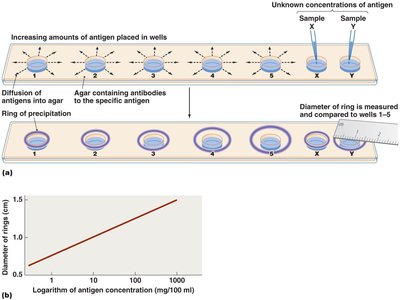
Precipitation tests are among the simplest serological tests. When antigens and antibodies are mixed in optimal proportions, they form large complexes called precipitates. Immunodiffusion is used to determine optimal concentrations, and radial immunodiffusion measures specific antibodies in serum.
Agglutination Tests
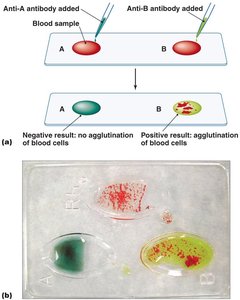
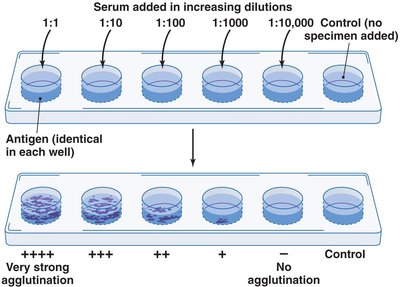
Agglutination occurs when antibodies cross-link particulate antigens, causing clumping of insoluble particles. This is distinct from precipitation, which involves soluble molecules. Hemagglutination is the agglutination of red blood cells and is used to determine blood type.
Neutralization Tests
Viral Neutralization: Viruses introduced into cell cultures kill the cells (cytopathic effect). If the virus is neutralized by antibodies, the cells survive, indicating the presence of antibodies.
Viral Hemagglutination Inhibition Test: Used for viruses that cause hemagglutination but are not cytopathic. The presence of antibodies inhibits hemagglutination, indicating exposure to the virus.
Complement Fixation Test
This test detects the presence of specific antibodies by measuring the generation of membrane attack complexes during complement activation. It is sensitive enough to detect small amounts of antibody.
Labeled Antibody Tests
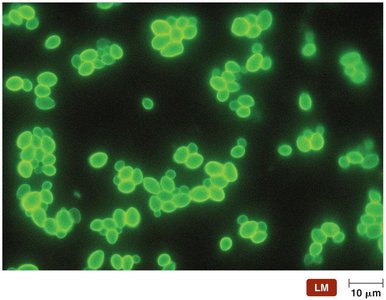
Fluorescent Antibody Tests: Use antibodies labeled with fluorescent dyes (e.g., fluorescein) to detect antigens or antibodies. There are direct and indirect versions of these tests.
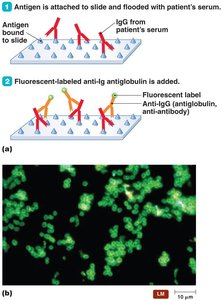
ELISA (Enzyme-Linked Immunosorbent Assay): Uses an enzyme as a label. The enzyme reacts with its substrate to produce a colored product, indicating a positive test. ELISA can detect and quantify antigens or antibodies and is widely used due to its sensitivity and ability to process many samples quickly.
Antibody Sandwich ELISA: A modification used to detect antigens, where the antigen is sandwiched between two antibody molecules.
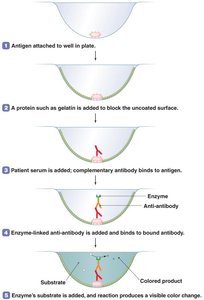
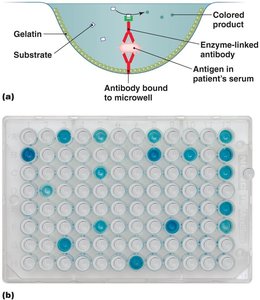
Western Blot Test: Detects antibodies against multiple antigens and is less subject to misinterpretation than other tests.

Recent Developments in Immune Testing
Immunofiltration: A rapid ELISA using antibodies bound to membrane filters, allowing for quick assays due to the large surface area.
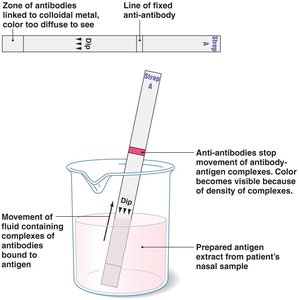
Immunochromatography: A very rapid and easy-to-read ELISA where antigen solution flows through a porous strip and produces a visible line when antigen-antibody complexes are detected. Commonly used in pregnancy tests.
Additional info: The above notes expand on the original content by providing definitions, context, and examples for each type of immunization and immune testing method, as well as highlighting the importance of these techniques in clinical and public health settings.
