 Back
BackImmunization and Immune Testing: Principles and Applications
Study Guide - Smart Notes
 Tailored notes based on your materials, expanded with key definitions, examples, and context.
Immunization: Concepts and Types
Definitions and Overview
Immunization is a critical process in microbiology and public health, involving the stimulation of the immune system to protect against infectious diseases. The terms vaccine, vaccination, and immunization are often used interchangeably but have distinct meanings:
Vaccine: A preparation containing antigens that stimulate an immune response, typically administered via injection, orally, or nasally.
Vaccination: The act of introducing a vaccine into the body to induce immunity.
Immunization: The process by which an individual becomes protected against a disease, usually through vaccination.
Types of Acquired Immunity
Acquired immunity can be classified based on how it is obtained:
Naturally acquired immunity: Results from exposure to antigens in daily life (e.g., recovering from an infection).
Artificially acquired immunity: Results from deliberate introduction of antigens (e.g., vaccination).
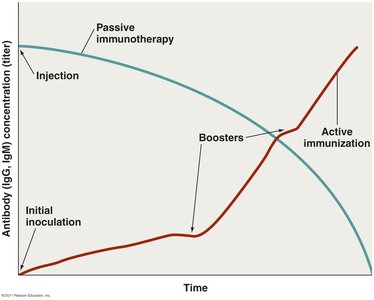
Active immunity: The body produces its own antibodies in response to antigens.
Passive immunity: Antibodies are transferred from another individual (e.g., maternal antibodies, antiserum).
Brief History of Immunization
Early observations in China noted that children who recovered from smallpox did not contract the disease again, leading to variolation (inoculation with smallpox scabs).
Edward Jenner (1796) developed the first vaccine using cowpox to protect against smallpox.
Louis Pasteur (1879) advanced vaccine development with work on Pasteurella multocida.
Discovery that vaccines protect via antibody production led to the development of antibody transfer techniques.
Effect of Immunization on Disease Prevalence
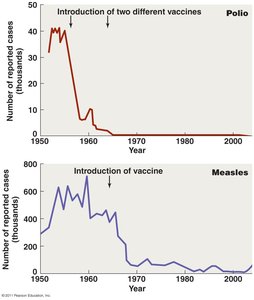
Widespread vaccination has dramatically reduced the incidence of diseases such as polio and measles.
Active Immunization: Vaccine Types and Production
Types of Vaccines
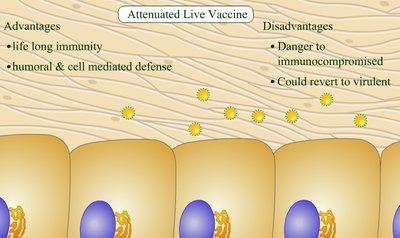
Attenuated (live) vaccines: Contain weakened pathogens that stimulate strong, long-lasting immunity but may pose risks to immunocompromised individuals.
Inactivated (killed) vaccines: Contain killed pathogens or subunits; safer but often require adjuvants and booster doses.
Toxoid vaccines: Contain inactivated toxins; used for diseases like tetanus and diphtheria, requiring multiple doses.
Combination vaccines: Contain antigens from multiple pathogens for simultaneous protection.
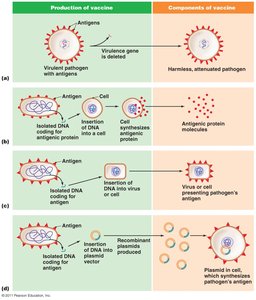
Recombinant vaccines: Use genetic engineering to produce antigens or antigenic proteins.
mRNA vaccines: Contain messenger RNA encoding a pathogen protein, delivered via lipid nanoparticles to stimulate an immune response (e.g., COVID-19 vaccines).
Examples of Vaccine Types
Vaccine Type | Examples (U.S. Childhood Schedule) |
|---|---|
Live, attenuated | Measles, mumps, rubella (MMR), Varicella, Rotavirus, Influenza (nasal spray) |
Inactivated/Killed | Polio (IPV), Hepatitis A |
Toxoid | Diphtheria, tetanus (DTaP) |
Subunit/conjugate | Hepatitis B, Influenza (injection), Hib, Pertussis (DTaP), Pneumococcal |
Vaccine Manufacture and Safety
Vaccines are mass-produced by culturing microbes; viruses often grown in chicken eggs.
Individuals with egg allergies may need alternative vaccines.
Vaccine safety concerns include mild toxicity, risk of anaphylactic shock, and rare residual virulence. Allegations of links to autism, diabetes, and asthma are not supported by research.
CDC Recommended Immunization Schedule
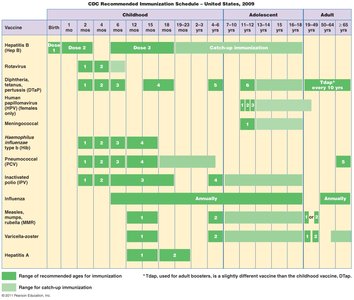
The CDC provides a schedule for routine immunizations across different age groups to ensure optimal protection.
Herd Immunity
Achieved when a high percentage of the population is vaccinated, reducing disease transmission.
Thresholds vary by disease (e.g., 70% for COVID-19, 95% for measles).
Variants and Vaccine Challenges
Viral variants arise through mutation, especially in unvaccinated or immunocompromised hosts.
Mutations may affect viral attachment sites, impacting vaccine effectiveness (e.g., influenza, COVID-19).
Passive Immunotherapy
Principles and Applications
Involves administration of preformed antibodies (antiserum) for immediate protection.
Limitations include short duration, risk of allergic reactions (serum sickness), and possible contamination.
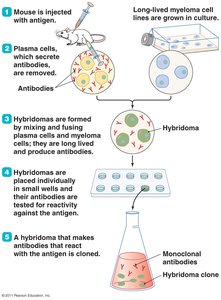
Hybridoma technology enables production of monoclonal antibodies, overcoming many limitations.
Comparison: Active Immunization vs. Passive Immunotherapy
Immune Testing (Serology)
Overview
Immune testing, or serology, involves the detection of antigens or antibodies in blood serum to diagnose infections and immune status. Tests are categorized as:
Direct testing: Detects antigens in a sample.
Indirect testing: Detects antibodies formed against specific antigens.
Precipitation Tests
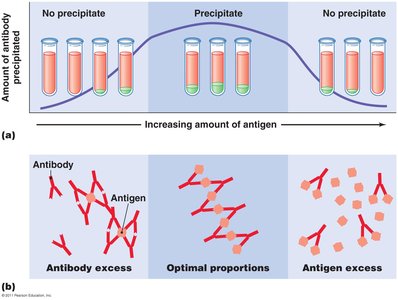
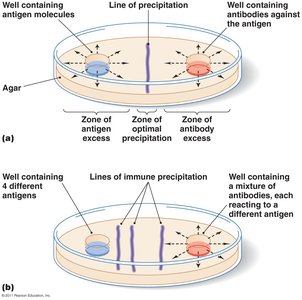
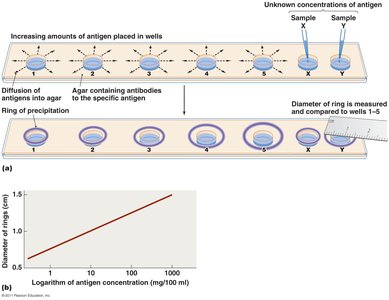
Antigen and antibody form visible precipitates when mixed in optimal proportions.
Immunodiffusion and radial immunodiffusion are common techniques.
Agglutination Tests
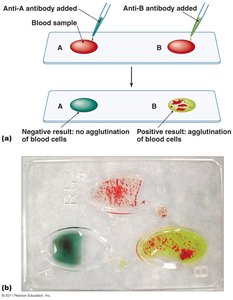
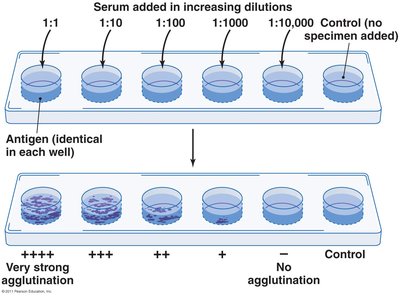
Antibodies cross-link particulate antigens, causing visible clumping (agglutination).
Hemagglutination is used for blood typing.
Neutralization Tests
Assess the ability of antibodies to neutralize viruses or toxins.
Viral neutralization and hemagglutination inhibition are common methods.
Complement Fixation Test
Detects small amounts of antibody by measuring complement activation and cell lysis.
Labeled Antibody Tests
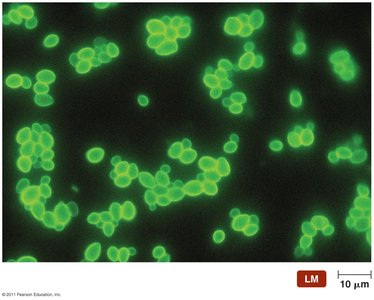
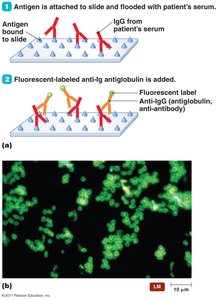
Antibodies are linked to detectable labels (fluorescent dyes or enzymes).
Direct and indirect fluorescent antibody tests use dyes like fluorescein.
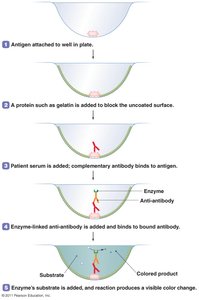
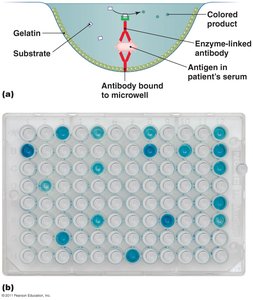
ELISA (Enzyme-Linked Immunosorbent Assay)
Uses enzyme-linked antibodies to detect antigens or antibodies via color change.
Can be used quantitatively and for high-throughput screening.
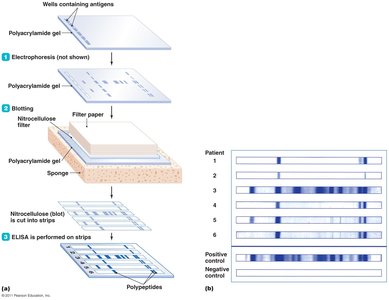
Western Blot Test
Detects antibodies against multiple antigens, providing high specificity and sensitivity.
Recent Developments in Immune Testing
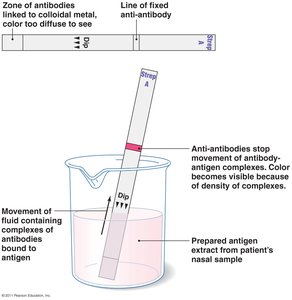
Immunofiltration and immunochromatography provide rapid, easy-to-read results (e.g., pregnancy tests).
Immune Disorders
Types of Immune Disorders
Immune rejection: Transplanted cells or tissues may be destroyed by the recipient's immune system; minimized by matching MHC molecules and using immunosuppressive drugs.
Allergy: Hypersensitive immune responses to harmless antigens (allergens), such as pollen, resulting in histamine release and inflammation. Treated with antihistamines.
Autoimmune disorders: The immune system attacks the body's own tissues (e.g., lupus, diabetes mellitus, multiple sclerosis).
