 Back
BackInfection, Infectious Diseases, and Epidemiology: Core Concepts and Mechanisms
Study Guide - Smart Notes
 Tailored notes based on your materials, expanded with key definitions, examples, and context.
Pathology, Infection, and Disease
Definitions and Concepts
Understanding the terminology of disease is foundational in microbiology. Pathology is the study of disease, while etiology refers to the cause of a disease. Pathogenesis describes the development of disease, infection is the invasion or colonization of the body by pathogens, and disease is an abnormal state in which the body is not performing normal functions.
Symbiotic Relationships Between Microbes and Their Hosts
Types of Symbiosis
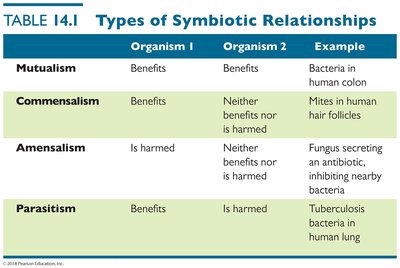
Humans maintain complex relationships with microorganisms, known as symbiosis. These relationships can be classified as:
Mutualism: Both organisms benefit (e.g., bacteria in the human colon).
Commensalism: One organism benefits, the other is neither harmed nor helped (e.g., mites in human hair follicles).
Amensalism: One organism is harmed, the other is unaffected (e.g., fungus secreting antibiotics inhibiting bacteria).
Parasitism: One organism benefits at the expense of the other (e.g., Mycobacterium tuberculosis in the human lung).
Normal Microbiota
The microbiome of humans consists of organisms that colonize the body’s surfaces without normally causing disease. These are also called normal microbiota or normal flora. There are two main types:
Resident microbiota: Present throughout life, mostly commensal.
Transient microbiota: Remain in the body for a short period and are eliminated by competition, body defenses, or changes in the body.
The microbiome is acquired during birth and the first months of life.
Opportunistic Pathogens
Normal microbiota can become opportunistic pathogens under certain conditions, such as immune suppression, introduction into unusual sites, or changes in the normal microbiota.
Reservoirs of Infectious Diseases
Types of Reservoirs
Pathogens are maintained in reservoirs—sites where they persist as a source of infection. The main types are:
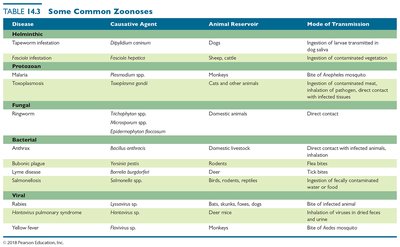
Animal reservoirs: Diseases that spread from animals to humans are called zoonoses. Transmission can occur via direct contact, consumption, or vectors.
Human carriers: Infected individuals who may not show symptoms but can transmit pathogens.
Nonliving reservoirs: Soil, water, and food contaminated by pathogens.
The Invasion and Establishment of Microbes in Hosts: Infection
Portals of Entry
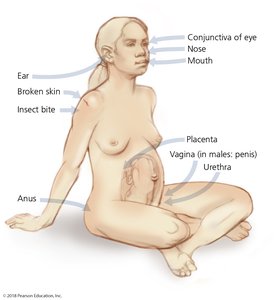
Pathogens enter the body through specific portals of entry:
Skin
Mucous membranes
Placenta
Parenteral route: Circumvents the usual portals by direct deposition into tissues (e.g., via punctures).
Pathogens Crossing the Placenta
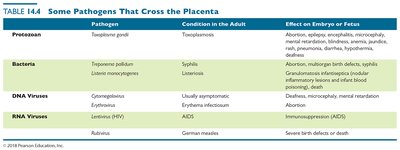
Certain pathogens can cross the placenta, causing severe effects on the embryo or fetus.
The Nature of Infectious Disease
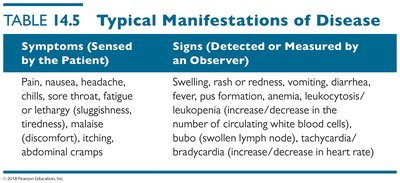
Manifestations of Disease
Disease manifestations are classified as:
Symptoms: Subjective characteristics felt only by the patient (e.g., pain, nausea).
Signs: Objective manifestations observed or measured by others (e.g., fever, rash).
Syndrome: A group of symptoms and signs that characterize a disease.
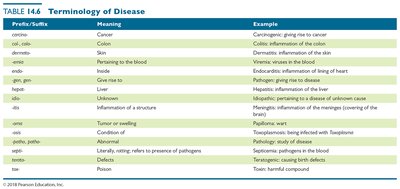
Terminology of Disease
Medical terminology uses specific prefixes and suffixes to describe diseases and their characteristics.
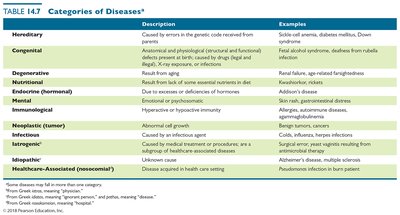
Categories of Diseases
Diseases can be classified based on their origin, such as hereditary, congenital, degenerative, nutritional, endocrine, mental, immunological, neoplastic, infectious, iatrogenic, idiopathic, and healthcare-associated (nosocomial).
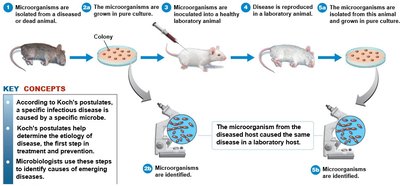
Etiology and Koch’s Postulates
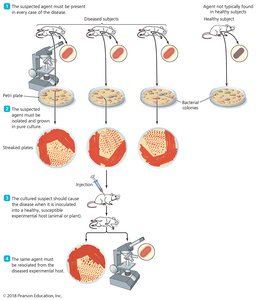
Etiology is the study of the cause of disease. Koch’s postulates are a set of criteria used to establish a causative relationship between a microbe and a disease:
The same pathogen must be present in every case of the disease.
The pathogen must be isolated and grown in pure culture.
The cultured pathogen must cause disease when introduced into a healthy host.
The pathogen must be re-isolated from the experimentally infected host.
Virulence Factors of Infectious Agents
Virulence is the degree of pathogenicity. Virulence factors include:
Adhesion factors
Biofilms
Extracellular enzymes
Toxins (exotoxins and endotoxins)
Antiphagocytic factors
Toxins
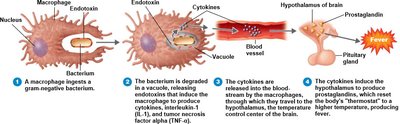
Toxins are chemicals that harm tissues or trigger damaging immune responses. Toxemia is the presence of toxins in the blood. There are two main types:
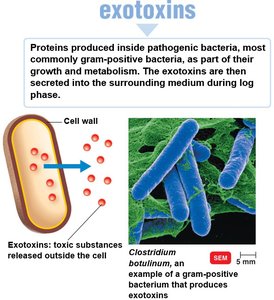
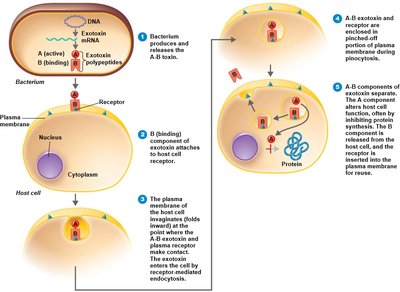
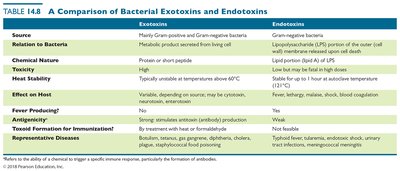
Exotoxins: Proteins secreted by bacteria, often highly toxic and immunogenic.
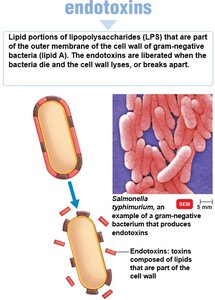
Endotoxins: Lipid A component of the LPS in Gram-negative bacteria, released upon cell death.
Comparison of Exotoxins and Endotoxins
Property | Exotoxins | Endotoxins |
|---|---|---|
Source | Mostly Gram-positive bacteria | Gram-negative bacteria |
Chemical Nature | Protein, usually with A-B structure | Lipid A of LPS |
Toxicity | High | Low |
Heat Stability | Unstable (destroyed at 60–80°C) | Stable (withstands autoclaving) |
Fever Producing | No | Yes |
Immunogenicity | Strong (can be neutralized by antitoxin) | Weak |
Representative Diseases | Tetanus, botulism, diphtheria | Typhoid fever, meningococcal meningitis |
Antiphagocytic Factors
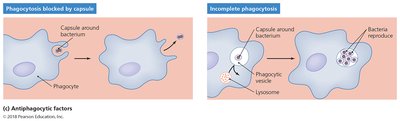
Some pathogens evade phagocytosis using capsules or chemicals that inhibit phagocytic cell function, allowing them to persist in the host.
The Stages of Infectious Disease
Progression of Disease
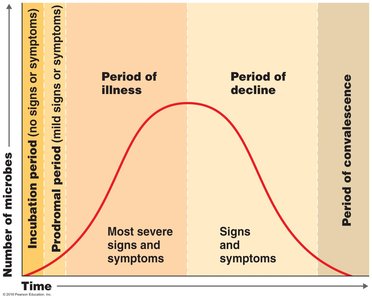
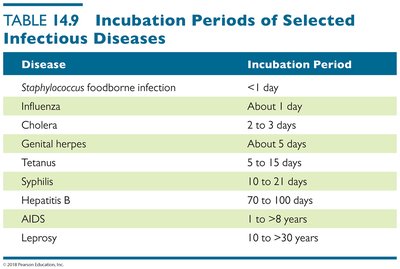
Infectious diseases typically progress through five stages:
Incubation period: No signs or symptoms.
Prodromal period: Mild symptoms.
Illness: Most severe signs and symptoms.
Decline: Signs and symptoms subside.
Convalescence: Recovery and return to normal function.
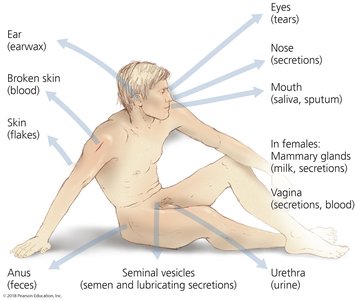
Movement of Pathogens Out of Hosts: Portals of Exit
Pathogens exit the host through various portals, often the same as portals of entry, such as the respiratory tract, gastrointestinal tract, urogenital tract, and skin.
Modes of Infectious Disease Transmission
Transmission Pathways
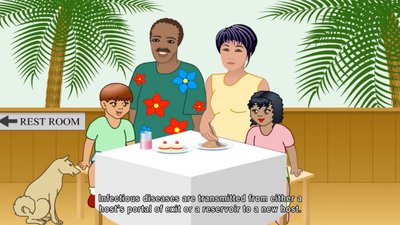
Transmission occurs from a reservoir or portal of exit to a new host’s portal of entry. The main modes are:
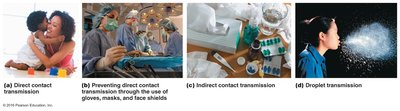
Contact transmission: Direct, indirect (via fomites), or droplet.
Vehicle transmission: Airborne, waterborne, foodborne, or via bodily fluids.
Vector transmission: Biological (e.g., mosquitoes) or mechanical (e.g., flies).
Epidemiology
Overview and Investigations
Epidemiology is the study of where and when diseases occur and how they are transmitted in populations. Epidemiologists determine etiology, identify factors in disease spread, and develop control methods. Types of epidemiologic investigations include:
Descriptive epidemiology: Collection and analysis of data (e.g., John Snow’s cholera map).
Analytical epidemiology: Determines probable cause, mode of transmission, and prevention methods.
Experimental epidemiology: Tests hypotheses using controlled experiments (e.g., Koch’s postulates).
Healthcare-Associated (Nosocomial) Infections
Types and Prevention
Healthcare-associated infections (HAIs) can be:
Exogenous: Acquired from the healthcare environment.
Endogenous: Arise from the patient’s own microbiota.
Iatrogenic: Result from medical procedures.
Superinfections: Occur when antimicrobial drugs disrupt normal microbiota.
Handwashing is the most effective way to reduce HAIs.
