 Back
BackInfection, Infectious Diseases, and Epidemiology: Core Concepts and Applications
Study Guide - Smart Notes
 Tailored notes based on your materials, expanded with key definitions, examples, and context.
Symbiotic Relationships Between Microbes and Their Hosts
Types of Symbiosis
Symbiosis refers to the close association between two different biological species. In microbiology, symbiotic relationships between microbes and their hosts are fundamental to understanding health and disease.
Mutualism: Both organisms benefit from the relationship.
Commensalism: One organism benefits, while the other is neither helped nor harmed.
Amensalism: One organism is harmed, and the other is unaffected.
Parasitism: One organism (the parasite) benefits at the expense of the other (the host).
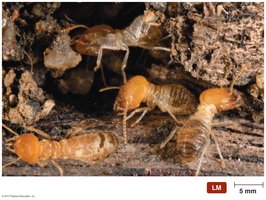
Example: Termites and their gut protozoa exhibit mutualism, where protozoa digest cellulose for the termite, and in return, receive shelter and nutrients.
Normal Microbiota in Hosts
Definition and Types
Normal microbiota (also called normal flora or indigenous microbiota) are microorganisms that colonize the body's surfaces without causing disease under normal conditions. They are essential for health, aiding in digestion, immunity, and protection against pathogens.
Resident microbiota: Remain a part of the normal microbiota throughout life and are mostly commensal.
Transient microbiota: Present temporarily; cannot persist due to competition, immune responses, or physical/chemical changes in the body.
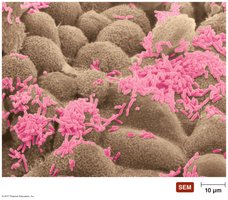
Distribution of Resident Microbiota
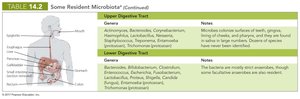
Resident microbiota are found in various body regions, each with characteristic genera and ecological notes.
Body Site | Genera | Notes |
|---|---|---|
Upper Digestive Tract | Actinomyces, Bacteroides, Corynebacterium, Haemophilus, Lactobacillus, Neisseria, Staphylococcus, Streptococcus, Treponema, Entamoeba, Trichomonas | Microbes colonize surfaces of teeth, gums, lining of cheeks, and throat; many species in saliva. |
Lower Digestive Tract | Bacteroides, Clostridium, Escherichia, Lactobacillus, Proteus, Shigella, Candida, Entamoeba, Trichomonas | Mostly strict anaerobes; some are facultative anaerobes. |
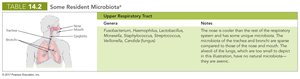
Body Site | Genera | Notes |
|---|---|---|
Upper Respiratory Tract | Fusobacterium, Haemophilus, Lactobacillus, Moraxella, Staphylococcus, Streptococcus, Candida | Microbiota in nose and mouth; lower respiratory tract is nearly sterile. |
Body Site | Genera | Notes |
|---|---|---|
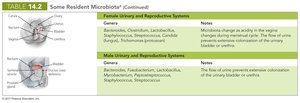
Female Urinary and Reproductive Systems | Bacteroides, Clostridium, Lactobacillus, Staphylococcus, Streptococcus, Candida | Microbiota change with menstrual cycle; urine is sterile except at distal end of urethra. |
Male Urinary and Reproductive Systems | Bacteroides, Lactobacillus, Mycobacterium, Staphylococcus, Streptococcus | Flow of urine prevents colonization except at distal end of urethra. |
Body Site | Genera | Notes |
|---|---|---|
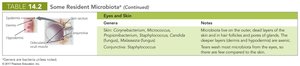
Eyes and Skin | Corynebacterium, Micrococcus, Propionibacterium, Staphylococcus, Candida, Malassezia | Microbes live on outer dead layers of skin and conjunctiva; tears wash most microbes from eyes. |
Acquisition of Normal Microbiota
Humans develop in a sterile environment in the womb. Microbiota begin to colonize the body during birth and are established in the first months of life.
Opportunistic Pathogens
Normal microbiota can become opportunistic pathogens under certain conditions, such as:
Introduction into unusual body sites
Immune suppression
Changes in abundance of normal microbiota
Stressful conditions
Reservoirs of Infectious Diseases of Humans
Types of Reservoirs
Reservoirs are sites where pathogens are maintained as sources of infection. They include:
Animal reservoirs: Zoonoses are diseases naturally spread from animals to humans via direct contact, consumption, or vectors.
Human carriers: Asymptomatic individuals can transmit pathogens.
Nonliving reservoirs: Soil, water, and food contaminated by feces or urine.
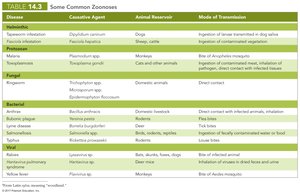
Common Zoonoses
Disease | Causative Agent | Animal Reservoir | Mode of Transmission |
|---|---|---|---|
Tapeworm infestation | Dipylidium caninum | Dogs | Ingestion of larvae in dog saliva |
Malaria | Plasmodium spp. | Monkeys | Bite of Anopheles mosquito |
Ringworm | Microsporum | Domestic animals | Direct contact |
Anthrax | Bacillus anthracis | Livestock | Direct contact, inhalation |
Rabies | Lyssavirus | Bats, dogs, foxes | Bite of infected animal |
The Invasion and Establishment of Microbes in Hosts: Infection
Exposure to Microbes: Contamination and Infection
Contamination: Presence of microbes on body surfaces.
Infection: Microbes evade defenses, multiply, and establish in the body.
Portals of Entry
Pathogens enter the body through specific sites:
Skin: Through cuts, openings, or by burrowing/digesting outer layers.
Mucous membranes: Respiratory tract (most common), gastrointestinal tract (must survive stomach acid).
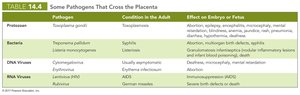
Placenta: Usually a barrier, but some pathogens can cross and infect the fetus.
Parenteral route: Circumvents usual portals; pathogens deposited directly into tissues.
Pathogen | Condition in Adult | Effect on Embryo or Fetus |
|---|---|---|
Toxoplasma gondii | Toxoplasmosis | Abortion, epilepsy, microcephaly, mental retardation, blindness |
Treponema pallidum | Syphilis | Abortion, birth defects, syphilis |
Listeria monocytogenes | Listeriosis | Granulomatosis infantiseptica, death |
Cytomegalovirus | Usually asymptomatic | Deafness, microcephaly, mental retardation |
Rubivirus | German measles | Severe birth defects, death |
The Role of Adhesion in Infection
Adhesion is the process by which microorganisms attach to host cells, a critical step for colonization and infection. Microbes use specialized structures or attachment molecules (adhesins/ligands) to bind to host cell receptors. Disruption of these interactions can prevent infection. Some bacteria form biofilms for enhanced attachment and survival.
The Nature of Infectious Disease
Manifestations of Disease
Symptoms: Subjective effects felt only by the patient (e.g., pain, fatigue).
Signs: Objective effects observed or measured by others (e.g., fever, rash).
Syndrome: A group of symptoms and signs that characterize a disease.
Asymptomatic (subclinical) infections: No symptoms, but signs may be present.
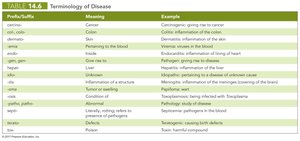
Terminology of Disease
Prefix/Suffix | Meaning | Example |
|---|---|---|
carcino- | Cancer | Carcinogenic: giving rise to cancer |
itis | Inflammation | Colitis: inflammation of the colon |
emia | Pertaining to the blood | Viremia: viruses in the blood |
oma | Tumor | Neoplasm: benign or malignant tumor |
patho- | Disease | Pathogenic: causing disease |
toxi- | Poison | Toxin: harmful compound |
Etiology and Koch’s Postulates
Etiology is the study of the cause of disease. Koch's postulates are criteria used to establish a causative relationship between a microbe and a disease:
The suspected agent must be present in every case of the disease.
The agent must be isolated and grown in pure culture.
The cultured agent must cause the disease when inoculated into a healthy host.
The same agent must be reisolated from the diseased experimental host.
Exceptions exist, such as pathogens that cannot be cultured, diseases with multiple causes, or ethical limitations.
Virulence Factors of Infectious Agents
Definitions
Pathogenicity: Ability of a microorganism to cause disease.
Virulence: Degree of pathogenicity, determined by virulence factors.
Virulence factors include adhesion factors, biofilms, extracellular enzymes, toxins, and antiphagocytic factors.
Extracellular Enzymes
Secreted by pathogens to dissolve host structural chemicals, aiding invasion and evasion of defenses. Mutants lacking these enzymes are often avirulent.
Toxins
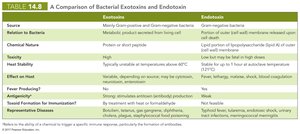
Toxins are chemicals that damage host tissues or trigger harmful immune responses. Toxemia is the presence of toxins in the bloodstream. There are two main types:
Exotoxins: Secreted proteins, highly toxic, specific effects.
Endotoxins: Lipid A component of Gram-negative bacteria outer membrane, released upon cell death, less specific effects.
Feature | Exotoxins | Endotoxins |
|---|---|---|
Source | Gram-positive and Gram-negative bacteria | Gram-negative bacteria |
Chemical Nature | Protein or short peptide | Lipid A of LPS |
Toxicity | High | Low |
Effect on Host | Variable, specific | Fever, shock, blood coagulation |
Antigenicity | Strong | Weak |
Antiphagocytic Factors
These factors help pathogens evade phagocytosis by host immune cells, allowing prolonged infection. Examples include bacterial capsules (which are not recognized as foreign and are slippery) and chemicals that prevent lysosome fusion or destroy phagocytes (leukocidins).
The Stages of Infectious Disease
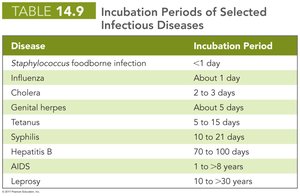
Infectious diseases typically progress through five stages:
Incubation period
Prodromal period
Illness
Decline
Convalescence
Disease | Incubation Period |
|---|---|
Staphylococcus foodborne infection | <1 day |
Influenza | About 1 day |
Cholera | 2 to 3 days |
Genital herpes | About 5 days |
Tetanus | 5 to 15 days |
Syphilis | 10 to 21 days |
Hepatitis B | 70 to 100 days |
AIDS | 1 to >8 years |
Leprosy | 10 to >30 years |
The Movement of Pathogens Out of Hosts: Portals of Exit
Pathogens exit the host through portals of exit, often the same as portals of entry, via secretions or excretions (e.g., respiratory droplets, feces, urine).
Transmission of Infectious Diseases
Contact Transmission
Direct contact: Physical interaction (e.g., touching, kissing).
Indirect contact: Via fomites (inanimate objects).
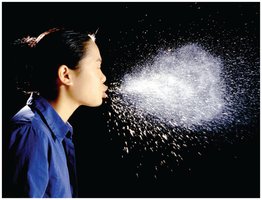
Droplet transmission: Via respiratory droplets over short distances.
Vehicle Transmission
Spread via air, water, or food.
Vector Transmission
Spread by living organisms (e.g., mosquitoes, ticks).
Classification of Infectious Diseases
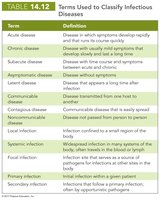
Diseases can be classified by body system affected, taxonomic category, longevity/severity, mode of transmission, or population effects.
Term | Definition |
|---|---|
Acute disease | Rapid onset, short duration |
Chronic disease | Slow onset, long duration |
Latent disease | Inactive for a time, then active |
Communicable disease | Spread from host to host |
Contagious disease | Easily spread |
Noncommunicable disease | Not spread from person to person |
Systemic infection | Widespread in body |
Focal infection | Confined, but can spread |
Primary infection | Initial infection |
Secondary infection | Follows a primary infection |
Epidemiology of Infectious Diseases
Definitions and Measures
Epidemiology is the study of when, where, and how diseases occur and are transmitted. Key measures include:
Incidence: Number of new cases in a given area and time period.
Prevalence: Total number of cases in a given area and time period.
Reporting and Data Representation
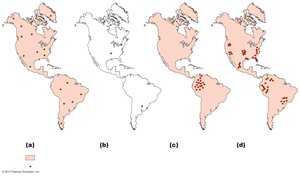
Epidemiologists use various graphical and tabular methods to report disease data, such as maps, curves, and bar charts.

Patterns of Disease Occurrence
Endemic: Disease normally present in a population.
Sporadic: Occasional cases.
Epidemic: Higher than normal frequency.
Pandemic: Epidemic on multiple continents.
Nationally Notifiable Infectious Diseases
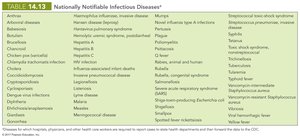
Certain diseases must be reported to public health authorities for monitoring and control.
Epidemiological Studies
Types of Studies
Descriptive epidemiology: Tabulation of data, identification of index case.
Analytical epidemiology: Determines cause, transmission, and prevention; often retrospective.
Hospital Epidemiology: Healthcare-Associated (Nosocomial) Infections
Types of Healthcare-Associated Infections
Exogenous: Acquired from healthcare environment.
Endogenous: Arise from patient's own microbiota.
Iatrogenic: Result from medical procedures.
Superinfections: Result from antimicrobial use disrupting normal microbiota.
Control: Aggressive measures, especially handwashing, are essential to reduce healthcare-associated infections.
Epidemiology and Public Health
Public health agencies at local, national, and global levels (e.g., CDC, WHO) coordinate efforts to monitor, report, and control infectious diseases.
