 Back
Infection, Infectious Diseases, and Epidemiology: Foundations of Microbiology
Study Guide - Smart Notes
 Tailored notes based on your materials, expanded with key definitions, examples, and context.
Introduction to Microbiology
Definition and Scope
Microbiology is the study of microorganisms—organisms invisible to the naked eye, including bacteria, viruses, fungi, and parasites. While most microorganisms are harmless or beneficial, a small proportion are pathogenic and can cause disease in humans, animals, and plants.
Microorganisms: Single-celled microscopic organisms, including bacteria, viruses, fungi, and parasites.
Pathogens: Microorganisms that cause disease.
Many microbes are essential for processes such as fermentation, decomposition, and maintaining health.

Basic Microbial Structures
Classification and Characteristics
Microorganisms vary in size, complexity, and growth requirements. Understanding their structure is fundamental to microbiology.
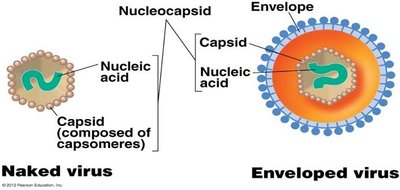
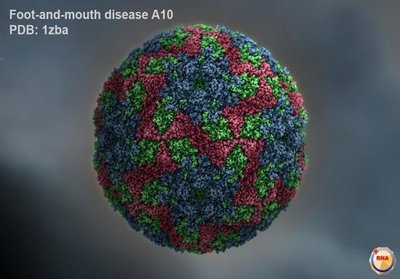
Viruses: Composed mainly of nucleic acids (DNA or RNA) and a protein shell (capsid). They require host cells for replication.
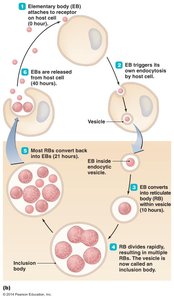
Chlamydia: Intracellular bacteria with a unique life cycle involving infectious elementary bodies and replicative reticulate bodies.
Mycoplasmas: The smallest self-replicating microbes, lacking a rigid cell wall, making them delicate and pleomorphic.
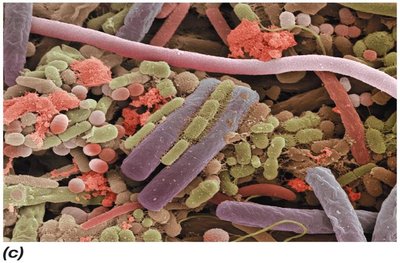
Bacteria: Prokaryotes with a rigid cell wall and circular chromosome. They lack membrane-bound organelles.
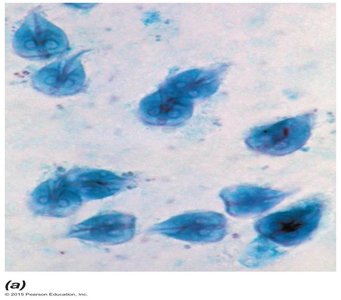
Eukaryotes: Organisms with a nucleus and membrane-bound organelles. Infectious eukaryotes include fungi, protists, and helminths (worms).
Symbiotic Relationships Between Microbes and Their Hosts
Types of Symbiosis
Symbiosis refers to the close association between different species. Humans have numerous symbiotic relationships with microorganisms.
Mutualism: Both organisms benefit (e.g., bacteria in the human colon).
Commensalism: One benefits, the other is unaffected (e.g., mites in hair follicles).
Amensalism: One is harmed, the other is unaffected (e.g., fungus secreting antibiotics).
Parasitism: One benefits at the expense of the other (e.g., Mycobacterium tuberculosis in human lungs).
The Human Microbiome
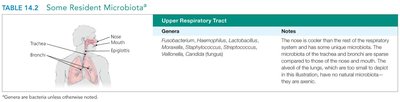
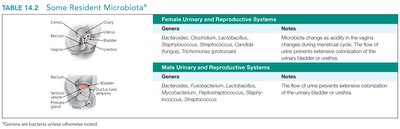
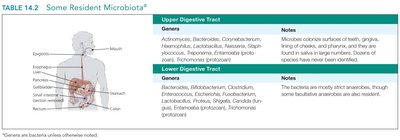
The human body is colonized by a vast array of microorganisms, collectively known as the microbiome. These organisms are typically harmless and may be beneficial.
Resident microbiota: Permanent inhabitants of the body, mostly commensal.
Transient microbiota: Temporary residents, unable to persist due to competition, immune responses, or environmental changes.
The microbiome begins to develop during birth and early life.

Opportunistic Pathogens
Normal microbiota can become opportunistic pathogens under certain conditions, such as immune suppression, introduction to unusual body sites, or changes in the normal microbiota.
Reservoirs of Infectious Diseases
Types of Reservoirs
Reservoirs are sites where pathogens are maintained as sources of infection.
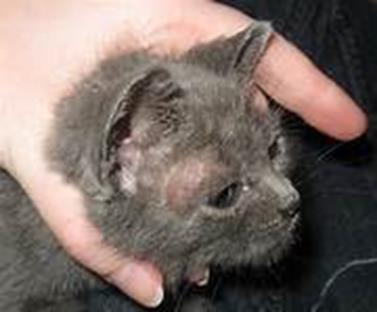
Animal reservoirs: Zoonoses are diseases naturally spread from animals to humans (e.g., rabies, malaria, ringworm).
Human carriers: Asymptomatic individuals who can transmit pathogens.
Nonliving reservoirs: Soil, water, and food contaminated with pathogens.
Infection: The Invasion and Establishment of Microbes in Hosts
Contamination vs. Infection
Contamination: Presence of microbes on or in the body.
Infection: Successful invasion, multiplication, and establishment of a microbe in the host.
Portals of Entry
Skin: Pathogens enter through cuts, abrasions, or by burrowing.
Mucous membranes: Respiratory and gastrointestinal tracts are common entry points.
Placenta: Some pathogens can cross and infect the fetus.
Parenteral route: Circumvents normal barriers (e.g., via punctures, injections).
Adhesion and Host Specificity
Adhesion is the process by which microorganisms attach to host cells, a critical step for colonization and infection. Specific interactions between microbial adhesins and host cell receptors determine host and tissue specificity.
Fimbriae and pili: Protein structures aiding in attachment.
Adhesins: Molecules on microbial surfaces that bind to host receptors.
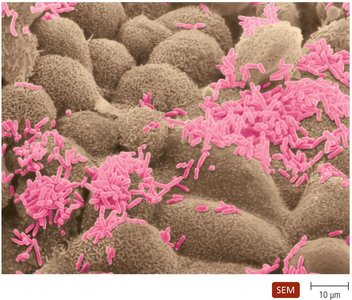
Biofilms: Communities of microbes attached to surfaces, often resistant to immune responses and antibiotics.
The Nature of Infectious Disease
Manifestations of Disease
Symptoms: Subjective effects felt by the patient (e.g., pain, fatigue).
Signs: Objective, measurable effects (e.g., fever, rash).
Syndrome: A group of symptoms and signs that characterize a disease.
Asymptomatic (subclinical) infections: Infections without noticeable symptoms.
Terminology of Disease
Prefix/Suffix | Meaning | Example |
|---|---|---|
-itis | Inflammation | Hepatitis (liver inflammation) |
-emia | In the blood | Bacteremia (bacteria in blood) |
-oma | Tumor or swelling | Papilloma (wart) |
-osis | Condition of | Toxoplasmosis |
-patho | Disease/abnormal | Pathology |
Etiology: Causation of Disease
Etiology: The study of the cause of disease.
Koch’s postulates: Criteria to establish a causative relationship between a microbe and a disease.
Virulence Factors
Virulence factors are microbial traits that contribute to pathogenicity and disease severity.
Adhesion factors: Enable attachment to host cells.
Biofilms: Protect microbes from host defenses.
Extracellular enzymes: Degrade host tissues and aid invasion.
Toxins: Harm host tissues or trigger damaging immune responses.
Antiphagocytic factors: Prevent destruction by host immune cells.
Stages of Infectious Disease
Progression of Disease
Infectious diseases typically progress through five stages:
Incubation period: Time between infection and appearance of symptoms.
Prodromal period: Early, mild symptoms.
Illness: Most severe signs and symptoms.
Decline: Symptoms subside as immune response or treatment takes effect.
Convalescence: Recovery and return to normal function.
Transmission of Infectious Diseases
Modes of Transmission
Contact transmission: Direct (person-to-person), indirect (via fomites), or droplet (short-range aerosols).
Vehicle transmission: Airborne (long-range aerosols), waterborne, foodborne, or via bodily fluids.
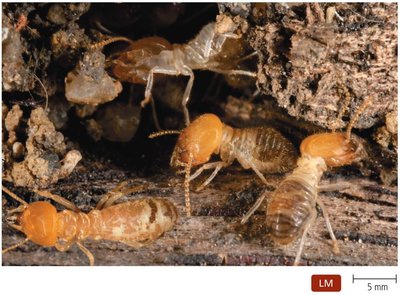
Vector transmission: Biological (e.g., mosquitoes, ticks) or mechanical (e.g., flies, cockroaches).
Horizontal vs. Vertical Transmission
Horizontal transmission: Between individuals of the same generation.
Vertical transmission: From parent to offspring.
Classification of Infectious Diseases
By Duration and Spread
Term | Definition |
|---|---|
Acute | Rapid onset, short duration |
Chronic | Slow onset, long duration |
Latent | Inactive for a period, then reactivates |
Communicable | Transmitted from host to host |
Noncommunicable | Not transmitted between hosts |
Local | Confined to one area |
Systemic | Spread throughout the body |
Epidemiology: The Study of Disease in Populations
Measuring Disease Frequency
Incidence: Number of new cases in a given time period.
Prevalence: Total number of cases at a given time.
Types of Epidemiological Studies
Descriptive epidemiology: Collects data on occurrence, location, and time.
Analytical epidemiology: Determines cause, transmission, and prevention.
Experimental epidemiology: Tests hypotheses about disease causation.
Nosocomial (Healthcare-Associated) Infections
Exogenous: Acquired from the healthcare environment.
Endogenous: Arise from the patient’s own microbiota.
Iatrogenic: Result from medical procedures.
Superinfections: Occur when antimicrobial therapy disrupts normal microbiota.
Prevention: Handwashing is the most effective measure.
Public Health and Disease Control
Public health agencies (e.g., WHO, CDC) monitor, report, and control infectious diseases.
Efforts include sanitation, immunization, vector control, and public education.
