 Back
BackChapter 14: Infection, Infectious Diseases, and Epidemiology
Study Guide - Smart Notes
 Tailored notes based on your materials, expanded with key definitions, examples, and context.
Infection, Infectious Diseases, and Epidemiology
Symbiotic Relationships Between Microbes and Their Hosts
Symbiosis refers to the close association between two different organisms living together. In microbiology, humans have various symbiotic relationships with microorganisms, which can be classified based on the effects on each partner.
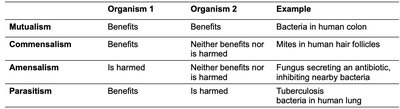
Mutualism: Both organisms benefit. Example: Bacteria in the human colon.
Commensalism: One organism benefits, the other is neither helped nor harmed. Example: Mites in human hair follicles.
Amensalism: One organism is harmed, the other is unaffected. Example: Fungus secreting an antibiotic, inhibiting nearby bacteria.
Parasitism: One organism benefits at the expense of the other. Example: Tuberculosis bacteria in human lung.
Organism 1 | Organism 2 | Example | |
|---|---|---|---|
Mutualism | Benefits | Benefits | Bacteria in human colon |
Commensalism | Benefits | Neither benefits nor is harmed | Mites in human hair follicles |
Amensalism | Is harmed | Neither benefits nor is harmed | Fungus secreting an antibiotic, inhibiting nearby bacteria |
Parasitism | Benefits | Is harmed | Tuberculosis bacteria in human lung |
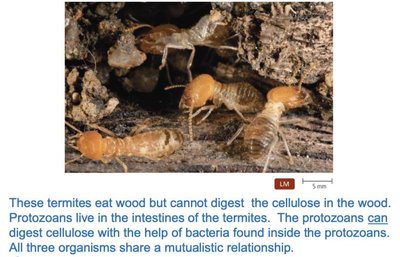
Example of Mutualism
Termites cannot digest cellulose in wood. Protozoans in their intestines digest cellulose with the help of bacteria inside the protozoans. All three organisms benefit, illustrating a mutualistic relationship.
The Human Microbiome
The human microbiome consists of all microorganisms that colonize the body's surfaces without causing disease. These are also called normal microbiota, normal flora, or indigenous microbiota. There are two main types:
Resident microbiota: Remain throughout life, mostly commensal, and found in specific body regions.
Transient microbiota: Present for short periods (hours to months), often eliminated by competition, body defenses, or changes in the body.
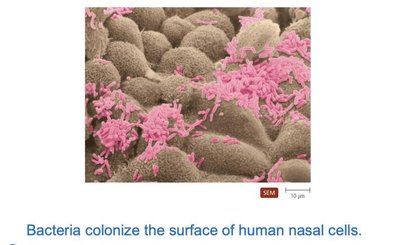
Example: Bacteria colonizing the surface of human nasal cells.
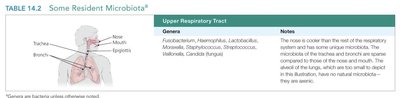
Resident Microbiota by Body Site
Upper Respiratory Tract: Genera include Staphylococcus, Streptococcus, Haemophilus, Neisseria, Candida (fungus). The nose is cooler and has unique microbiota compared to the lower respiratory tract.
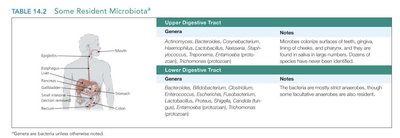
Upper Digestive Tract: Includes Actinomyces, Bacteroides, Corynebacterium, Lactobacillus, etc. Microbes colonize teeth, gums, and cheeks.
Lower Digestive Tract: Includes Bacteroides, Bifidobacterium, Clostridium, etc. Most are anaerobes.
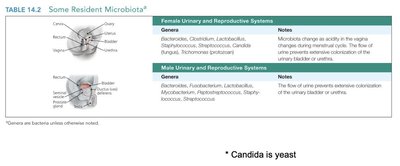
Urinary and Reproductive Systems: Female: Bacteroides, Clostridium, Lactobacillus, Candida (yeast). Male: Bacteroides, Lactobacillus, Mycobacterium, etc. Microbiota change with activity and urine flow.
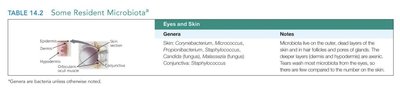
Eyes and Skin: Staphylococcus, Micrococcus, Propionibacterium, Candida (fungus). Microbes adhere to the outer dead layers of skin and hair follicles.
Development of the Microbiome
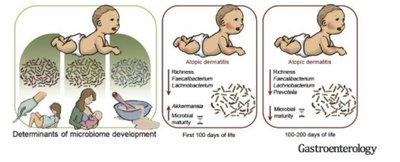
The human microbiome begins to develop during the birthing process. Babies born vaginally develop a healthier microbiome earlier. Diet and breastfeeding also influence microbiome development and are associated with reduced risk of atopic (allergic) disorders.
Opportunistic Pathogens
Normal microbiota can become opportunistic pathogens under certain conditions, such as:
Introduction into unusual body sites
Immune suppression
Changes in the normal microbiota (e.g., antibiotic use)
Stressful conditions
Reservoirs of Infectious Diseases
Reservoirs are sites where pathogens are maintained as sources of infection. There are three main types:
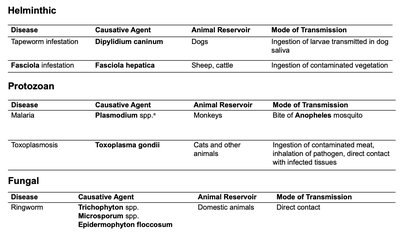
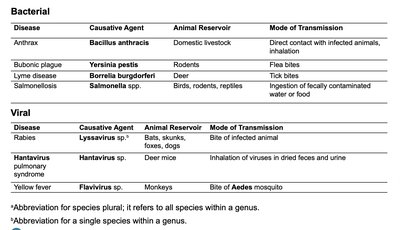
Animal reservoirs: Zoonoses are diseases that naturally spread from animals to humans (e.g., rabies, malaria, ringworm).
Human carriers: Asymptomatic individuals can transmit pathogens (e.g., tuberculosis, syphilis, AIDS).
Nonliving reservoirs: Soil, water, and food contaminated with pathogens (e.g., Clostridium in soil).
Disease | Causative Agent | Animal Reservoir | Mode of Transmission |
|---|---|---|---|
Tapeworm infestation | Dipylidium caninum | Dogs | Ingestion of larvae in dog saliva |
Malaria | Plasmodium spp. | Monkeys | Bite of Anopheles mosquito |
Ringworm | Trichophyton spp. | Domestic animals | Direct contact |
Anthrax | Bacillus anthracis | Domestic livestock | Contact/inhalation |
Rabies | Lyssavirus sp. | Bats, skunks, foxes, dogs | Bite of infected animal |
Invasion and Establishment of Microbes in Hosts: Infection
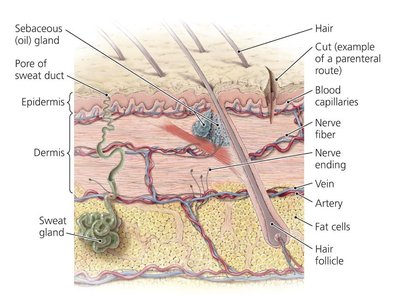
Infection occurs when an organism evades the body's external defenses, multiplies, and becomes established. Entry occurs through specific portals:
Skin: Barrier to most microbes; entry via cuts, hair follicles, or by burrowing/digesting outer layers.
Mucous membranes: Line body cavities open to the environment; respiratory tract is the most common site.
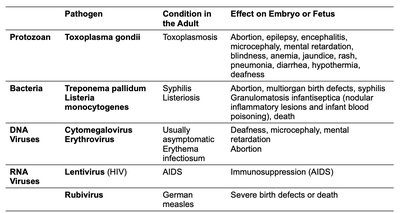
Placenta: Usually an effective barrier, but some pathogens can cross and infect the fetus.
Parenteral route: Pathogens deposited directly into tissues beneath the skin or mucous membranes (e.g., punctures).
Pathogen | Condition in the Adult | Effect on Embryo or Fetus |
|---|---|---|
Toxoplasma gondii | Toxoplasmosis | Abortion, epilepsy, encephalitis, microcephaly, mental retardation, blindness, anemia, etc. |
Treponema pallidum | Syphilis | Abortion, birth defects, syphilis |
Listeria monocytogenes | Listeriosis | Granulomatosis infantiseptica, infant blood poisoning |
Cytomegalovirus | Usually asymptomatic | Deafness, microcephaly, mental retardation |
Lentivirus (HIV) | AIDS | Immunosuppression (AIDS) |
Rubivirus | German measles | Severe birth defects or death |
The Nature of Infectious Disease
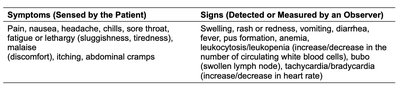
Infection is the invasion of the host by a pathogen. Disease (morbidity) results if the pathogen alters normal body functions. Manifestations of disease include:
Symptoms: Subjective characteristics felt only by the patient (e.g., pain, nausea, headache).
Signs: Objective manifestations observed or measured by others (e.g., swelling, rash, fever).
Syndrome: A group of symptoms and signs that characterize a disease.
Asymptomatic (subclinical): Infections without symptoms but with detectable signs.
Symptoms (Sensed by the Patient) | Signs (Detected or Measured by an Observer) |
|---|---|
Pain, nausea, headache, chills, sore throat, fatigue, malaise, itching, abdominal cramps | Swelling, rash, vomiting, diarrhea, fever, pus, anemia, leukocytosis/leukopenia, bubo, tachycardia/bradycardia |
Etiology: Causation of Disease
Etiology is the study of the cause of disease. Robert Koch developed postulates to prove that a specific pathogen causes a specific disease:
The suspected agent must be present in every case of the disease.
The agent must be isolated and grown in pure culture.
The cultured agent must cause the disease when inoculated into a healthy host.
The same agent must be reisolated from the diseased experimental host.
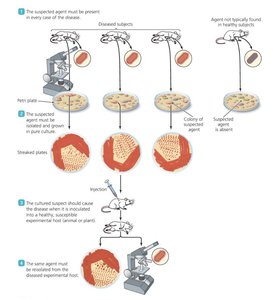
Exceptions include pathogens that cannot be cultured, diseases caused by multiple agents, and ethical limitations.
Categories of Diseases
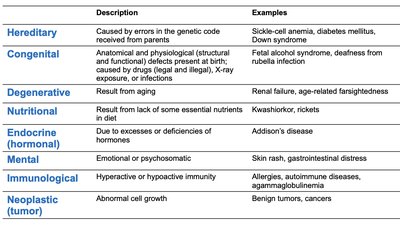
Description | Examples |
|---|---|
Hereditary | Sickle-cell anemia, diabetes mellitus |
Congenital | Fetal alcohol syndrome, deafness from rubella |
Degenerative | Renal failure, age-related farsightedness |
Nutritional | Kwashiorkor, rickets |
Endocrine (hormonal) | Addison's disease |
Mental | Skin rash, gastrointestinal distress |
Immunological | Allergies, autoimmune diseases |
Neoplastic (tumor) | Benign tumors, cancers |
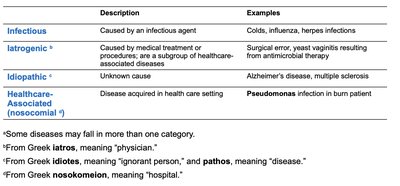
Infectious | Colds, influenza, herpes |
Iatrogenic | Surgical error, yeast vaginitis from therapy |
Idiopathic | Alzheimer's disease, multiple sclerosis |
Healthcare-Associated (nosocomial) | Pseudomonas infection in burn patient |
Virulence Factors of Infectious Agents
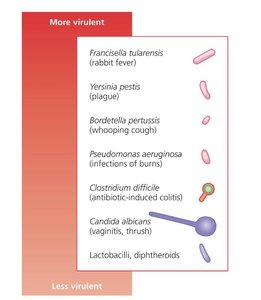
Virulence is the degree of pathogenicity. Virulence factors include:
Adhesion factors
Biofilms
Extracellular enzymes
Toxins
Antiphagocytic factors
Relative virulence varies among pathogens.
Extracellular Enzymes
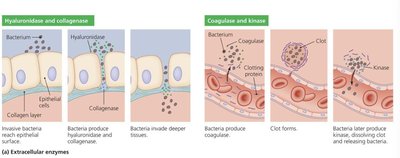
Pathogens secrete enzymes that dissolve structural chemicals in the body, aiding invasion and evasion of defenses. Mutants lacking these enzymes are often avirulent.
Toxins
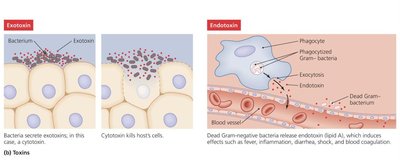
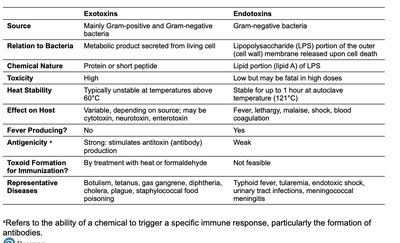
Toxins are chemicals that harm tissues or trigger damaging immune responses. Toxemia is the presence of toxins in the bloodstream. Two main types:
Exotoxins: Secreted by living bacteria; highly toxic.
Endotoxins: Released from dead Gram-negative bacteria (lipid A of LPS); can cause fever, shock.
Exotoxins | Endotoxins | |
|---|---|---|
Source | Mainly Gram-positive and Gram-negative bacteria | Gram-negative bacteria |
Nature | Protein or short peptide | Lipid portion (lipid A) of LPS |
Toxicity | High | Low but fatal in high doses |
Heat Stability | Unstable at 60°C | Stable at 121°C |
Effect on Host | Variable (neurotoxin, enterotoxin, cytotoxin) | Fever, malaise, shock, blood coagulation |
Antigenicity | Strong | Weak |
Toxoid Formation | Possible | Not feasible |
Representative Diseases | Tetanus, diphtheria, cholera | Typhoid fever, meningococcal meningitis |
Antiphagocytic Factors
These factors prevent phagocytosis by host cells, allowing pathogens to persist. Examples include bacterial capsules (not recognized as foreign, slippery) and chemicals that prevent lysosome fusion or destroy white blood cells.
Stages of Infectious Disease
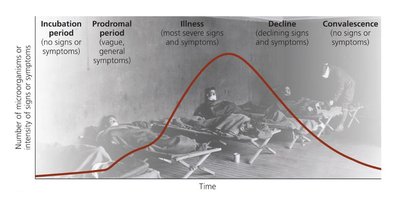
Infectious diseases typically progress through five stages:
Incubation period: No signs or symptoms.
Prodromal period: Vague, general symptoms.
Illness: Most severe signs and symptoms.
Decline: Declining signs and symptoms.
Convalescence: No signs or symptoms.
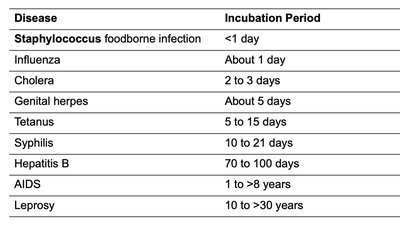
Disease | Incubation Period |
|---|---|
Staphylococcus foodborne infection | <1 day |
Influenza | About 1 day |
Cholera | 2 to 3 days |
Genital herpes | About 5 days |
Tetanus | 5 to 15 days |
Syphilis | 10 to 21 days |
Hepatitis B | 70 to 100 days |
AIDS | 1 to >8 years |
Leprosy | 10 to >30 years |
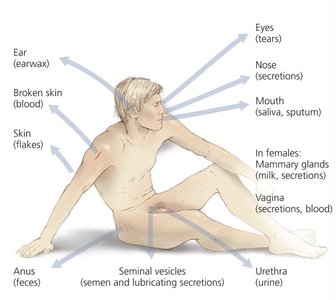
Portals of Exit
Pathogens leave the host through various portals, often the same as entry points, including secretions, excretions, and body fluids.
Modes of Infectious Disease Transmission
Transmission occurs from a reservoir or portal of exit to another host's portal of entry. Main modes include:
Contact transmission: Direct (body contact), indirect (fomites), droplet (mucus droplets <1 meter).
Vehicle transmission: Airborne (>1 meter via aerosols), waterborne (fecal-oral), foodborne, bodily fluids.
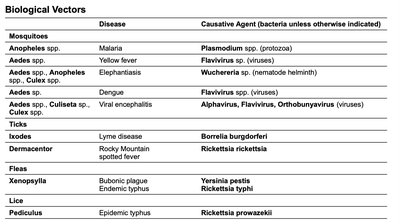
Vector transmission: Biological (arthropods as hosts), mechanical (passive transfer, e.g., houseflies).
Disease | Causative Agent | Vector |
|---|---|---|
Malaria | Plasmodium spp. | Anopheles mosquito |
Yellow fever | Flavivirus | Aedes mosquito |
Lyme disease | Borrelia burgdorferi | Ixodes tick |
Bubonic plague | Yersinia pestis | Xenopsylla flea |
Epidemic typhus | Rickettsia prowazekii | Pediculus louse |
Classification of Infectious Diseases
Diseases can be classified by taxonomic category, affected body system, longevity/severity, mode of transmission, or population effects.
Epidemiology of Infectious Diseases
Epidemiology studies the frequency, distribution, and control of diseases. Key measures include:
Incidence: Number of new cases in a given area during a given period.
Prevalence: Total number of cases in a given area during a given period.
Epidemiological studies include descriptive (tabulation of data), analytical (cause, transmission, prevention), and experimental (testing hypotheses).
Nosocomial (Healthcare-Associated) Infections
Types include:
Exogenous: Acquired from the healthcare environment.
Endogenous: Arise from normal microbiota within the patient.
Iatrogenic: Result from medical procedures.
Superinfections: Result from antimicrobial drugs inhibiting some microbiota, allowing others to thrive.
Public Health and Disease Control
Public health agencies (e.g., CDC, WHO) monitor and control disease transmission through:
Enforcing cleanliness of water and food
Reducing disease vectors and reservoirs
Immunization schedules
Isolation and quarantine measures
