 Back
BackInnate and Adaptive Immunity: Defenses of the Host
Study Guide - Smart Notes
 Tailored notes based on your materials, expanded with key definitions, examples, and context.
Innate and Adaptive Immunity: Defenses of the Host
Overview of Immunity
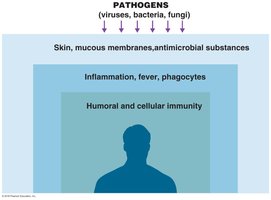
The immune system protects the body from pathogens through a complex network of cells, tissues, and molecules. Immunity is divided into two main types: innate (nonspecific) immunity and adaptive (specific) immunity. Innate immunity provides immediate, general defense, while adaptive immunity targets specific pathogens and develops memory for faster responses upon re-exposure.
Immune-Based Diseases
Immunodeficiency (hyporeactivity): The immune system is underactive, leading to increased susceptibility to infections.
Systemic autoimmunity (hyperreactivity): The immune system is overactive, attacking the body's own tissues.
Health: A balanced immune response is essential for maintaining health.
Innate Immunity
First Line of Defense: Physical and Chemical Barriers
The first line of defense includes physical and chemical barriers that prevent pathogen entry.
Skin and mucous membranes: Provide a physical barrier to infection.
Mechanical protection: Includes actions like coughing, sneezing, and the flow of tears or urine.
Chemical protection: Substances such as lysozyme (in tears and saliva), sebum, and acidic secretions inhibit microbial growth.
Normal microbiota: Compete with pathogens for nutrients and space.
Second Line of Defense: Internal Defenses
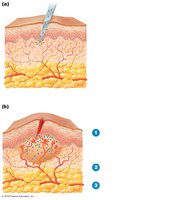
Inflammation: A localized response to infection or injury, characterized by redness, swelling, pain, and heat. It helps contain and eliminate pathogens and initiates tissue repair.
Natural killer (NK) cells and phagocytes: Destroy infected or abnormal cells.
Antimicrobial proteins: Such as complement proteins and interferons, which inhibit microbial growth and spread.
Fever: Elevated body temperature that enhances immune function and inhibits pathogen growth.
Inflammation: Process and Mediators
Inflammation is triggered by tissue damage and involves the release of chemical mediators that increase blood flow and vascular permeability.
Key mediators: Histamine, kinins, prostaglandins, leukotrienes, and cytokines.
Phases: Vasodilation, increased permeability, migration of phagocytes, and tissue repair.
Phagocytosis
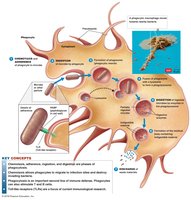
Phagocytosis is the process by which certain immune cells (e.g., neutrophils, macrophages) engulf and destroy pathogens. It involves several steps: chemotaxis, adherence, ingestion, digestion, and exocytosis.
Toll-like receptors (TLRs): Recognize pathogen-associated molecular patterns (PAMPs) and trigger cytokine release to regulate immune responses.
Antigen presentation: Phagocytes present pathogen fragments to the adaptive immune system, initiating a specific response.
The Complement System
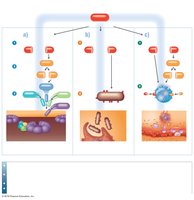
The complement system consists of over 30 proteins that enhance immune responses. It can be activated by pathogens or antibody-antigen complexes, leading to three main outcomes:
Cytolysis: Formation of membrane attack complexes that lyse pathogens.
Opsonization: Coating of microbes with C3b to enhance phagocytosis.
Inflammation: C3a and C5a promote inflammation by attracting immune cells and increasing vascular permeability.
Interferons
Interferons (IFNs) are cytokines that interfere with viral replication. Alpha and beta interferons are produced by virus-infected cells and induce neighboring cells to produce antiviral proteins (AVPs), which degrade viral mRNA and inhibit protein synthesis. Gamma interferon (IFN-γ) activates macrophages and neutrophils to kill bacteria.
Adaptive (Acquired) Immunity
General Features
Adaptive immunity is characterized by specificity for particular antigens and memory, allowing for a stronger and faster response upon re-exposure. It is acquired through infection or vaccination.
Primary response: The first encounter with an antigen.
Secondary response: Subsequent encounters, which are faster and more robust due to memory cells.
Dual Nature: Humoral and Cellular Immunity
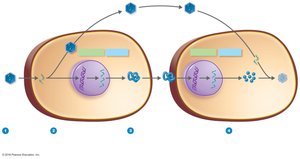
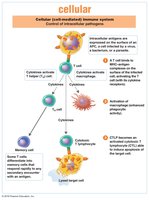
Cellular (cell-mediated) immunity: Involves T lymphocytes that recognize and destroy infected or abnormal cells. T cells mature in the thymus and recognize antigens presented by phagocytic cells.
Humoral immunity: Involves B lymphocytes that produce antibodies against extracellular pathogens and toxins. B cells mature in the bone marrow.
Antigens and Epitopes
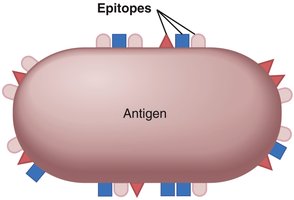
Antigens are substances that provoke an immune response, typically by inducing antibody production. Epitopes are specific regions on antigens recognized by antibodies or T cell receptors. The diversity of antigen receptors allows the immune system to recognize a vast array of pathogens.
Haptens
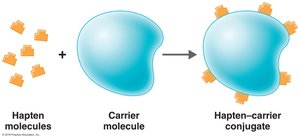
Haptens are small molecules that are not immunogenic by themselves but can elicit an immune response when attached to a larger carrier molecule. This concept is important in drug allergies, such as penicillin reactions.
Antigen-Presenting Cells (APCs)
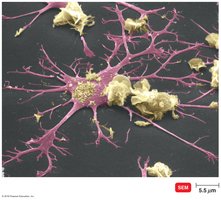
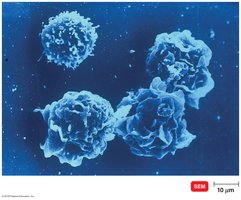
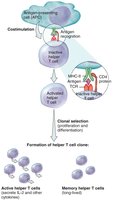
APCs such as dendritic cells and macrophages engulf pathogens, process them, and present antigen fragments on their surface to T cells. This is essential for initiating adaptive immune responses.
Antigen Processing and Presentation
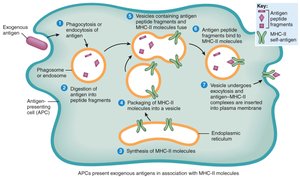
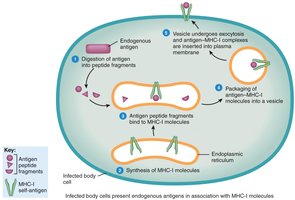
APCs process antigens and present them on major histocompatibility complex (MHC) molecules. Class I MHC presents endogenous antigens (from within the cell) to CD8+ T cells, while Class II MHC presents exogenous antigens (from outside the cell) to CD4+ T cells.
Major Histocompatibility Complex (MHC)
Class I MHC: Found on all nucleated cells; present endogenous antigens to CD8+ T cells.
Class II MHC: Found on APCs; present exogenous antigens to CD4+ T cells.
Self-tolerance: The immune system's ability to distinguish self from non-self, preventing autoimmunity.
Cytokines
Cytokines are signaling molecules that mediate and regulate immunity, inflammation, and hematopoiesis. Examples include interleukins, chemokines, interferons, tumor necrosis factor (TNF), and hematopoietic cytokines. Overproduction can lead to a cytokine storm, causing tissue damage.
Antibody-Mediated (Humoral) Immunity
Antibody Structure and Classes
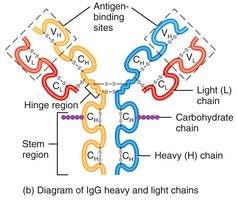
Antibodies, or immunoglobulins (Ig), are Y-shaped proteins composed of two heavy and two light chains. The variable regions bind specific epitopes, while the constant region determines the antibody class (IgG, IgM, IgA, IgD, IgE). Antibodies can neutralize pathogens, opsonize for phagocytosis, activate complement, and mediate cell cytotoxicity.
Activation of B Cells and Antibody Production
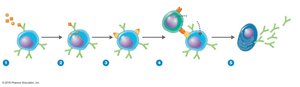
B cells recognize antigens via surface immunoglobulins. Upon antigen binding and with T helper cell assistance, B cells undergo clonal expansion, differentiating into plasma cells (which secrete antibodies) and memory cells (for long-term immunity).
Clonal Selection and Differentiation
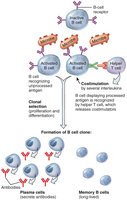
Clonal selection ensures that only B cells specific to an antigen proliferate. This process generates both antibody-secreting plasma cells and long-lived memory B cells.
Antigen–Antibody Binding and Its Results
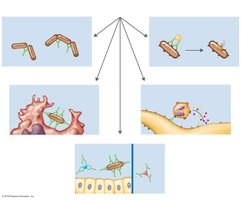
When antibodies bind antigens, they form antigen–antibody complexes that protect the host by:
Agglutination: Clumping pathogens for easier removal.
Opsonization: Enhancing phagocytosis.
Neutralization: Blocking pathogen attachment or toxin activity.
Activation of complement: Leading to cell lysis.
Antibody-dependent cell-mediated cytotoxicity (ADCC): Recruiting immune cells to destroy large pathogens.
Cell-Mediated Immunity
Types of T Cells
CD4+ T helper (TH) cells: Coordinate immune responses by signaling other cells; recognize antigens on MHC-II.
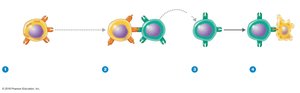
CD8+ cytotoxic T lymphocytes (CTLs): Kill infected or abnormal cells presenting antigens on MHC-I.
Memory T cells: Provide long-term immunity by responding rapidly to previously encountered antigens.
Activation and Function of Cytotoxic T Cells
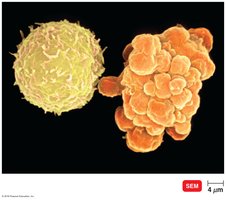
CD8+ T cells are activated by antigen presentation and costimulatory signals. Once activated, they induce apoptosis in infected or cancerous cells by releasing perforin and granzymes.
Natural Killer (NK) Cells and ADCC
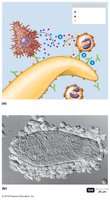
NK cells destroy cells lacking MHC-I, such as virus-infected or tumor cells, and participate in antibody-dependent cell-mediated cytotoxicity (ADCC) against large pathogens like helminths.
Immunological Memory and Vaccination
Primary and Secondary Immune Responses
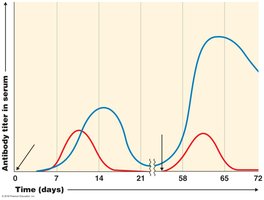
The primary response occurs upon first exposure to an antigen, with IgM produced first, followed by IgG. The secondary response is faster and stronger due to memory cells, with a rapid increase in IgG.
Types of Adaptive Immunity
Active | Passive | |
|---|---|---|
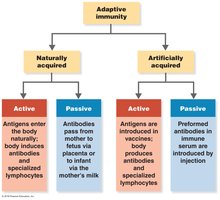
Naturally acquired | Antigens enter the body naturally; body induces antibodies and specialized lymphocytes | Antibodies pass from mother to fetus via placenta or to infant via mother’s milk |
Artificially acquired | Antigens are introduced in vaccines; body produces antibodies and specialized lymphocytes | Preformed antibodies in immune serum are introduced by injection |
Vaccines and Immunotherapy
Vaccines: Stimulate active immunity by exposing the immune system to antigens without causing disease. Types include killed/inactivated, live attenuated, subunit, and genetically engineered vaccines.
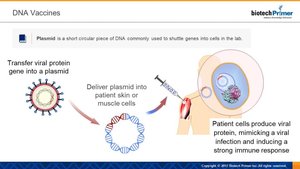
DNA/RNA vaccines: Use genetic material to induce host cells to produce antigenic proteins, stimulating immunity (e.g., mRNA COVID-19 vaccines).
Immunotherapy: Involves the transfer of antibodies from another individual for short-term protection (passive immunity).
Integration of Innate and Adaptive Immunity
Innate and adaptive immunity are interconnected, with innate responses providing the initial defense and activating adaptive responses. Communication between these systems ensures effective protection against infectious diseases.
