 Back
BackInnate and Adaptive Immunity: Host Defenses in Microbiology
Study Guide - Smart Notes
 Tailored notes based on your materials, expanded with key definitions, examples, and context.
Host Defenses: Immunity
Introduction to Immunity
Immunity refers to the ability of an organism to resist disease caused by pathogens and to protect against environmental agents such as pollen, chemicals, and animal dander. The immune system is a complex network of proteins, cells, tissues, and organs that work together to neutralize or destroy foreign substances. Immunology is the study of immune responses and their protective mechanisms. Susceptibility is the lack of immunity, making an individual vulnerable to infection.
Overview of the Immune System
Lines of Defense
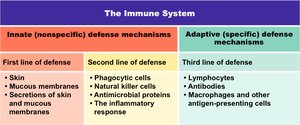
The immune system is organized into three lines of defense:
First line defenses: Keep pathogens out or neutralize them before infection begins.
Second line defenses: Slow or contain infections when first line defenses fail.
Third line defenses: Target specific pathogens for destruction when second line defenses are insufficient.
Innate vs. Adaptive Immunity
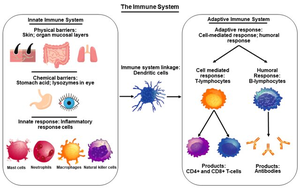
The immune system is divided into two main types:
Innate immunity: Present from birth, always available, rapid, nonspecific, and has no memory.
Adaptive immunity: Develops in response to specific pathogens, slower, highly specific, and has memory for future responses.
Innate Immunity
First Line Defenses
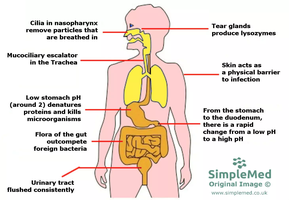
First line defenses are physical, chemical, and biological barriers that prevent pathogens from entering the body.
Physical barriers: Intact skin, mucous membranes, tears, saliva, mucous, mucociliary escalator, epiglottis, earwax, urination, vaginal secretions, peristalsis, defecation, vomiting, and diarrhea.
Chemical barriers: Low skin pH, high salt content, acidic gastric secretions, urine and vaginal secretions, lysozymes in saliva, tears, and breast milk, lactoferrin, defensins, and histatins.
Microbiome: Normal microbiota produce bacteriocins, compete with pathogens, and signal immune cells.
Physical Barriers
The skin acts as a mechanical barrier, with tightly packed epithelial cells and a protective protein called keratin. The top layer sheds periodically, removing microbes. Mucous membranes also provide a barrier, with mucus-secreting cells and ciliated cells that help trap and remove pathogens.
Skin: Dry environment inhibits microbial growth.
Mucous membranes: Mucociliary escalator moves trapped particles out of the respiratory tract.
Lacrimal apparatus: Produces and drains tears, containing lysozymes.
Salivary glands: Produce saliva with antimicrobial properties.
Epiglottis: Protects the lower respiratory tract.
Earwax: Protects the external ear canal.
Urine and vaginal secretions: Wash away microbes.
Peristalsis, vomiting, diarrhea: Remove pathogens from the gastrointestinal tract.
Chemical Barriers
Chemical barriers work alongside physical barriers to inhibit microbial growth and destroy pathogens.
Low skin pH and high salt: Inhibit bacterial growth.
Gastric secretions: Acidic environment and proteolytic enzymes destroy microbes.
Urine and vaginal secretions: Acidic pH inhibits pathogens.
Lysozymes: Enzymes in saliva, tears, and breast milk break down bacterial cell walls.
Lactoferrin: Sequesters iron, limiting microbial growth and preventing viral attachment.
Defensins and histatins: Damage bacterial cell membranes.
Microbiome
The normal microbiota play a crucial role in host defense by producing bacteriocins, competing with pathogens, and signaling immune cells.
Bacteriocins: Peptides produced by normal microbiota that help colonize beneficial bacteria, kill pathogenic species, and signal immune cells.
Colicins: Produced by E. coli, cause cell lysis in target bacteria.
Lantibiotics: Produced by Streptococcus, Bacillus, Lactococcus, and Staphylococcus, inhibit cell wall synthesis or form pores in membranes.
Innate Immunity: Second Line Defenses
Leukocytes
Leukocytes, or white blood cells, are formed from stem cells and are grouped based on the presence of granules in their cytoplasm. They play a key role in the second line of defense.
Eosinophils: Target parasites, release peroxide ions, and are phagocytic.
Basophils: Release histamine, heparin, and cytokines; facilitate inflammation.
Neutrophils: Most abundant, phagocytose pathogens and respond to tissue damage.
Mast cells: Release histamine and cytokines; found in connective tissue.
Monocytes: Differentiate into macrophages and dendritic cells in tissues.
Macrophages: Phagocytose pathogens, present antigens, produce cytokines, and repair tissue.
Dendritic cells: Identify and phagocytose threats, present antigens to adaptive immune cells.
Natural killer (NK) cells: Recognize and destroy infected or damaged cells using perforin.
Recognition of Threats
Immune cells recognize threats using molecular patterns:
Pathogen-associated molecular patterns (PAMPs): Molecules found on pathogens.
Damage-associated molecular patterns (DAMPs): Molecules released from damaged cells.
Pattern recognition receptors (PRRs): Bind PAMPs and DAMPs, triggering immune responses.
PRRs include C-type lectin receptors, Toll-like receptors (TLRs), NOD-like receptors, and RIG-I-like receptors. They are located in the plasma membrane and organelle membranes, allowing recognition of both intracellular and extracellular pathogens.
Cytokines and Chemokines
Signaling cascades initiated by PRRs result in the production of cytokines, which are immune messengers that activate other immune cells and initiate protective processes such as inflammation. Chemokines are a special class of cytokines that direct immune cells to sites of infection or tissue damage.
Summary Table: Innate vs. Adaptive Immunity
Feature | Innate Immunity | Adaptive Immunity |
|---|---|---|
Specificity | Nonspecific | Highly specific |
Response Time | Rapid (minutes to hours) | Slow (days to weeks) |
Memory | None | Present |
Main Components | Physical and chemical barriers, phagocytes, NK cells, inflammation | Lymphocytes (B and T cells), antibodies, antigen-presenting cells |
Key Terms and Definitions
Immunity: The ability to ward off disease and protect against harmful agents.
Innate immunity: Nonspecific, immediate defense present from birth.
Adaptive immunity: Specific, acquired defense with memory.
Pathogen: Disease-causing microbe.
Leukocyte: White blood cell involved in immune responses.
Cytokine: Immune messenger molecule.
Phagocytosis: Cellular process of engulfing and destroying pathogens.
Relevant Images
Additional info: Expanded explanations and context were added to ensure completeness and academic quality.
