 Back
BackInnate and Adaptive Immunity: Key Concepts and Mechanisms
Study Guide - Smart Notes
 Tailored notes based on your materials, expanded with key definitions, examples, and context.
Innate Immunity
Barriers to Infection
Innate immunity provides the first line of defense against pathogens through physical, chemical, and biological barriers. These barriers prevent the entry and establishment of infectious agents in the body.
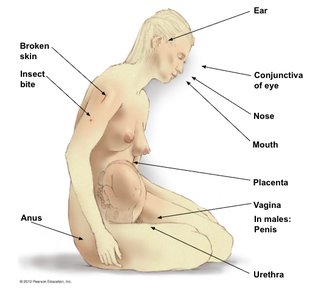
Physical barriers: Skin and mucous membranes act as physical shields against microbial invasion.
Chemical barriers: Secretions such as saliva, tears, and stomach acid contain antimicrobial substances.
Biological barriers: Normal microbiota compete with pathogens for resources and space.
Portal of entry: Pathogens can enter the body through various routes, including broken skin, mucous membranes, and the placenta.
Resistance of Microorganisms to Control Methods
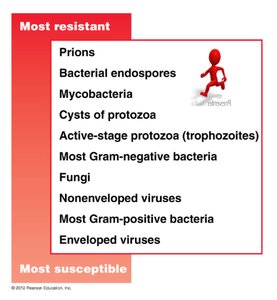
Microorganisms vary in their resistance to physical and chemical control methods. Understanding this hierarchy is crucial for effective sterilization and disinfection.
Most resistant: Prions, bacterial endospores, and mycobacteria are highly resistant to control methods.
Moderately resistant: Protozoan cysts, active-stage protozoa, and some bacteria and fungi.
Least resistant: Enveloped viruses are the most susceptible to control measures.
Formed Elements of Blood
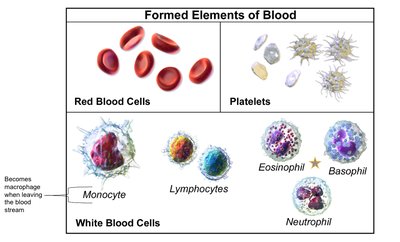
The blood contains various formed elements that play essential roles in immunity and homeostasis.
Red blood cells (erythrocytes): Transport oxygen and carbon dioxide.
Platelets: Involved in blood clotting and inflammation.
White blood cells (leukocytes): Key players in immune defense, including monocytes, lymphocytes, eosinophils, basophils, and neutrophils.
Hematopoiesis
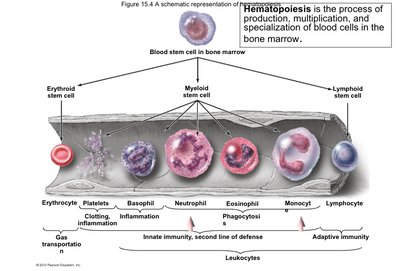
Hematopoiesis is the process by which all blood cells are produced, multiplied, and specialized in the bone marrow. This process gives rise to erythrocytes, leukocytes, and platelets.
Blood stem cells: Differentiate into erythroid, myeloid, and lymphoid lineages.
Leukocytes: Include cells involved in innate (e.g., neutrophils, monocytes) and adaptive (e.g., lymphocytes) immunity.
Phagocytosis
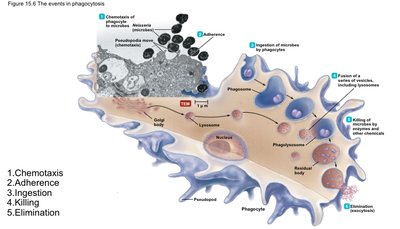
Phagocytosis is a critical process in innate immunity where specialized cells ingest and destroy pathogens. The process involves several steps:
Chemotaxis: Movement of phagocytes toward chemical signals from microbes.
Adherence: Attachment of phagocyte to the microbe.
Ingestion: Engulfment of the microbe into a phagosome.
Killing: Fusion with lysosomes and destruction of the microbe.
Elimination: Expulsion of digested microbial fragments.
Inflammation and Vascular Changes
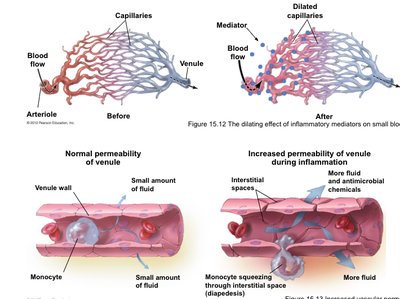
Inflammation is a protective response to infection or injury, characterized by increased blood flow and vascular permeability. This allows immune cells and antimicrobial chemicals to reach affected tissues more effectively.
Vasodilation: Mediators cause capillaries to dilate, increasing blood flow to the area.
Increased permeability: Venules become more permeable, allowing immune cells and fluid to enter tissues.
Interferons
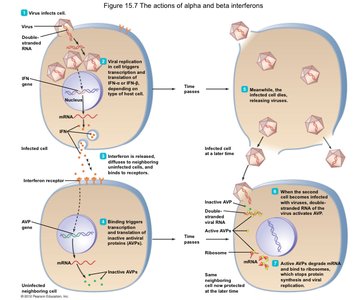
Alpha and beta interferons are cytokines produced by cells in response to viral infections. They help limit the spread of viruses by inducing antiviral states in neighboring cells.
Production: Infected cells release interferons upon detecting viral RNA.
Action: Interferons bind to receptors on neighboring cells, triggering the production of antiviral proteins (AVPs) that degrade viral RNA and inhibit protein synthesis.
Adaptive Immunity
Lymphoid Organs
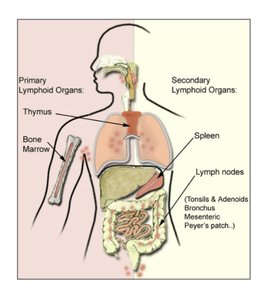
The organs of the lymphatic system are essential for the development and function of adaptive immunity. They are classified as primary or secondary lymphoid organs.
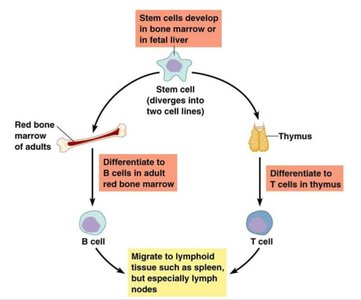
Primary lymphoid organs: Sites of lymphocyte development (bone marrow and thymus).
Secondary lymphoid organs: Sites where immune responses are initiated (spleen, lymph nodes, tonsils, Peyer's patches, etc.).
Lymphocyte Development and Differentiation
Lymphocytes originate from stem cells in the bone marrow and differentiate into B cells or T cells. B cells mature in the bone marrow, while T cells mature in the thymus. Both cell types migrate to secondary lymphoid organs to participate in immune responses.
B cells: Responsible for antibody-mediated (humoral) immunity.
T cells: Responsible for cell-mediated immunity.
Major Histocompatibility Complex (MHC)
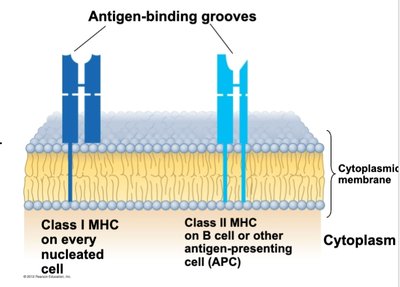
The MHC is a set of cell surface proteins essential for the recognition of foreign molecules by the immune system. There are two main classes:
Class I MHC: Found on all nucleated cells; present endogenous antigens to cytotoxic T cells.
Class II MHC: Found on antigen-presenting cells (APCs) such as B cells, macrophages, and dendritic cells; present exogenous antigens to helper T cells.
Additional info: These notes cover key aspects of innate and adaptive immunity, including barriers to infection, blood cell formation, phagocytosis, inflammation, interferons, lymphoid organs, lymphocyte development, and antigen presentation. These topics are foundational for understanding Chapters 15 and 16 of a college-level microbiology course.
