 Back
BackInnate Immune Barriers: Skin, Microbiome, and Interferons
Study Guide - Smart Notes
 Tailored notes based on your materials, expanded with key definitions, examples, and context.
Skin as a Barrier & Portal of Entry
Protective Functions of Skin
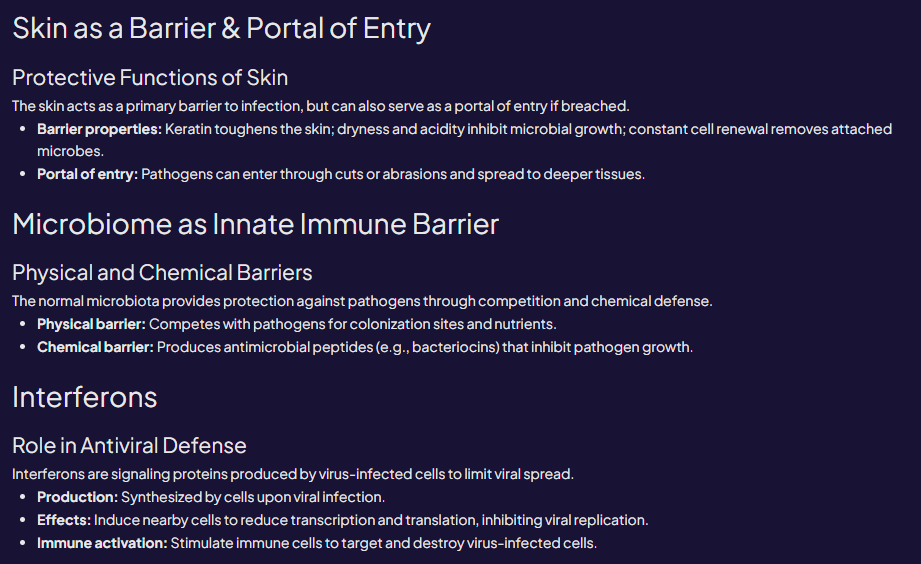
The skin serves as a primary physical barrier against infection, preventing the entry of pathogens into the body. However, if the skin is breached, it can also act as a portal of entry for infectious agents.
Barrier properties:
Keratin toughens the skin, making it resistant to microbial invasion.
Dryness and acidity of the skin inhibit microbial growth, creating an inhospitable environment for many pathogens.
Constant cell renewal removes attached microbes, reducing the risk of colonization.
Portal of entry:
Pathogens can enter through cuts or abrasions in the skin and spread to deeper tissues, potentially causing infection.
Microbiome as Innate Immune Barrier
Physical and Chemical Barriers
The normal microbiota, or microbiome, provides an additional layer of protection against pathogens through both physical and chemical mechanisms.
Physical barrier:
Normal microbiota compete with pathogens for colonization sites and nutrients, limiting the ability of harmful microbes to establish themselves.
Chemical barrier:
Microbiota produce antimicrobial peptides (such as bacteriocins) that inhibit the growth of pathogens.
Interferons
Role in Antiviral Defense
Interferons are signaling proteins produced by cells in response to viral infection. They play a crucial role in limiting the spread of viruses and activating immune responses.
Production:
Interferons are synthesized by cells upon viral infection.
Effects:
Interferons induce nearby cells to reduce transcription and translation, thereby inhibiting viral replication.
Immune activation:
Interferons stimulate immune cells to target and destroy virus-infected cells, enhancing antiviral defense.
Example: Interferon alpha and beta are used therapeutically to treat certain viral infections and cancers.
