 Back
BackInnate Immunity: Nonspecific Defenses of the Host
Study Guide - Smart Notes
 Tailored notes based on your materials, expanded with key definitions, examples, and context.
Innate Immunity: Nonspecific Defenses of the Host
Overview of Immunity
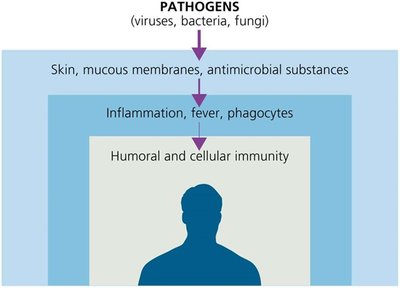
Immunity is the ability of an organism to resist infection or disease. It is divided into two main types: innate immunity (nonspecific, present at birth, rapid response) and adaptive immunity (specific, slower response, memory component). Innate immunity provides the first line of defense against pathogens and activates adaptive responses.
Immunity: Ability to ward off disease.
Susceptibility: Lack of resistance to disease.
Innate immunity: Defenses against any pathogen; rapid, present at birth.
Adaptive immunity: Immunity or resistance to a specific pathogen; slower to respond, has memory component.
Toll-like receptors (TLRs): Host cell receptors that recognize pathogen-associated molecular patterns (PAMPs) and trigger cytokine release.
Cytokines: Signaling proteins that regulate immune responses and recruit immune cells.
White Blood Cell Counts and Clinical Significance
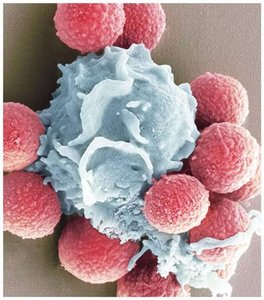
White blood cell (WBC) counts are used to assess immune status. Differential counts indicate the relative numbers of each type of leukocyte. Abnormal counts can signal infection, autoimmune disease, or other health issues.
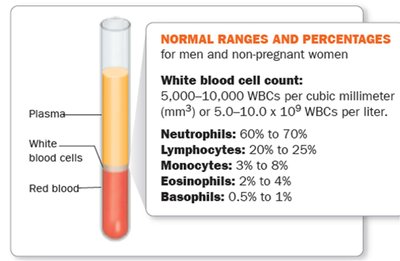
Normal WBC count: 4000–11,000/μL
High WBC count: May indicate bacterial infection, autoimmune disease, or medication side effects.
Low WBC count: May indicate viral infection, pneumonia, severe bacterial infection, medication side effects, or cancer.
Physical Barriers of Innate Immunity
Skin
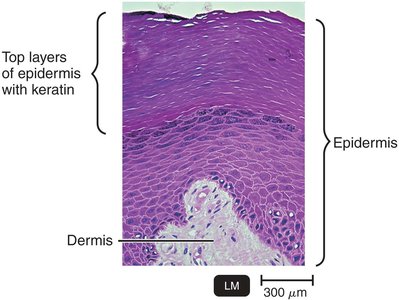
The skin acts as a formidable barrier to microbial invasion. Its structure includes the dermis (connective tissue) and epidermis (tightly packed epithelial cells containing keratin). Shedding and dryness inhibit microbial growth.
Keratin: Protective protein in the epidermis.
Shedding: Removes microbes from the skin surface.
Dryness: Inhibits microbial growth.
Mucous Membranes
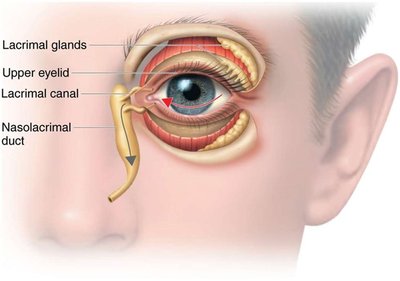
Mucous membranes line the gastrointestinal, respiratory, and genitourinary tracts. Mucus traps microbes and prevents drying. The lacrimal apparatus washes the eye with tears.
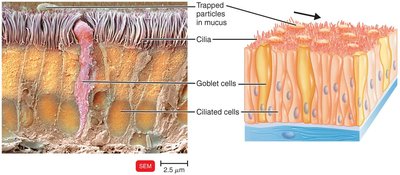
Mucus: Viscous glycoproteins that trap microbes.
Lacrimal apparatus: Drains tears and washes the eye.
Other Physical Factors
Additional physical mechanisms help remove microbes from the body.
Ciliary escalator: Transports microbes trapped in mucus away from the lungs.
Epiglottis: Prevents microorganisms from entering the lower respiratory tract.
Earwax: Prevents microbes from entering the ear.
Urine: Cleans the urethra via flow.
Vaginal secretions: Move microorganisms out of the vaginal tract.
Peristalsis, defecation, vomiting, diarrhea: Expel microbes from the gastrointestinal tract.
Chemical Barriers of Innate Immunity
Chemical Factors
Chemical barriers include substances that inhibit or destroy pathogens.
Sebum: Forms a protective film and lowers skin pH (3–5).
Lysozyme: Enzyme in perspiration, tears, saliva, and urine that destroys bacterial cell walls.
Gastric juice: Low pH (1.2–3.0) destroys most bacteria and toxins.
Vaginal secretions: Low pH (3–5) inhibits microbes.
Normal Microbiota and Innate Immunity
Role of Normal Microbiota
Normal microbiota compete with pathogens for space and nutrients, produce substances harmful to pathogens, and alter conditions affecting pathogen survival. They play a crucial role in immune system development.
Microbial antagonism: Competitive exclusion of pathogens.
Commensalism: One organism benefits, the host is unharmed.
Opportunistic pathogens: Normal microbiota that can cause disease under certain conditions (e.g., E. coli, S. aureus).
Probiotics: Live microbial cultures administered for beneficial effects.
Prebiotics: Chemicals that selectively promote growth of beneficial bacteria.
Formed Elements in Blood
Blood Cells and Hematopoiesis
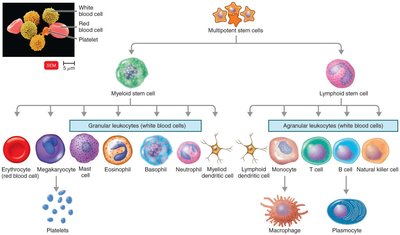
Blood contains cells and cell fragments suspended in plasma. These include erythrocytes (red blood cells), leukocytes (white blood cells), and platelets. All are produced in red bone marrow via hematopoiesis.
Erythrocytes: Red blood cells, transport oxygen.
Leukocytes: White blood cells, involved in immunity.
Platelets: Cell fragments involved in clotting.
Hematopoiesis: Formation of blood cells from stem cells in bone marrow.
Leukocyte Classification
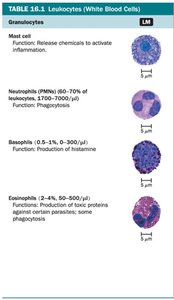
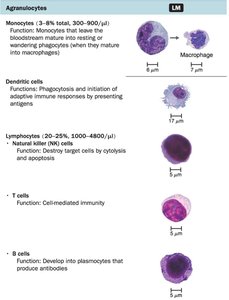
Leukocytes are classified as granulocytes (with visible granules) or agranulocytes (without visible granules).
Granulocytes: Neutrophils, basophils, eosinophils.
Agranulocytes: Monocytes (mature into macrophages), dendritic cells, lymphocytes (T cells, B cells, NK cells).
Leukocyte Functions
Each leukocyte type has specialized functions in immunity.
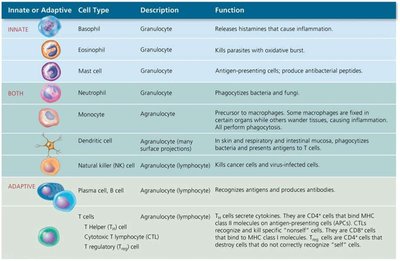
Cell Type | Description | Function |
|---|---|---|
Basophil | Granulocyte | Releases histamines that cause inflammation |
Eosinophil | Granulocyte | Kills parasites with oxidative burst |
Mast cell | Granulocyte | Antigen-presenting cell; produces antibacterial peptides |
Neutrophil | Granulocyte | Phagocytoses bacteria and fungi |
Monocyte | Agranulocyte | Precursor to macrophages; phagocytic |
Dendritic cell | Agranulocyte | Phagocytosis; initiates adaptive immune responses |
Natural killer (NK) cell | Agranulocyte | Kills cancer cells and virus-infected cells |
Plasma cell, B cell | Agranulocyte | Recognizes antigens and produces antibodies |
T cells | Agranulocyte | Cell-mediated immunity |
The Lymphoid System
Structure and Function
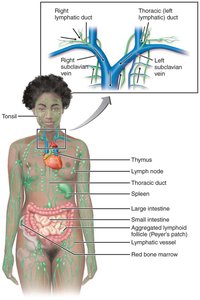
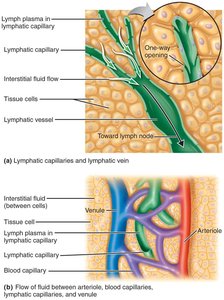
The lymphoid system consists of lymph plasma, lymphatic vessels, lymphoid tissues, and red bone marrow. Lymphoid tissue contains lymphocytes and phagocytic cells. Lymph transports microbes to lymph nodes, where immune cells encounter and destroy pathogens.
Lymph: Fluid that carries microbes and immune cells.
Lymphatic vessels: Transport lymph throughout the body.
Lymphoid organs: Include lymph nodes, spleen, thymus, tonsils, and bone marrow.
Summary Table: Leukocytes (White Blood Cells)
Type | Function | Normal Range |
|---|---|---|
Neutrophils | Phagocytosis | 60–70% |
Lymphocytes | Adaptive immunity | 20–25% |
Monocytes | Phagocytosis (as macrophages) | 3–8% |
Eosinophils | Defense against parasites | 2–4% |
Basophils | Release histamine | 0.5–1% |
Key Equations
White blood cell count calculation:
Conclusion
Innate immunity provides the first line of defense against pathogens through physical and chemical barriers, normal microbiota, and specialized blood cells. The lymphoid system coordinates immune responses, ensuring rapid and effective protection against disease.
