 Back
BackInnate Immunity: The Body’s First and Second Lines of Defense
Study Guide - Smart Notes
 Tailored notes based on your materials, expanded with key definitions, examples, and context.
Innate Immunity: Overview
The Concept of Immunity
Immunity is the ability of an organism to resist infection or disease. The immune system is divided into innate (nonspecific) and adaptive (specific) immunity. Innate immunity is present at birth and provides immediate, general protection against pathogens, while adaptive immunity develops more slowly and targets specific invaders.
Immunity (resistance): The ability to ward off disease.
Susceptibility: Lack of resistance to a disease.
Innate immunity: Defenses against any pathogen; rapid, present at birth, no memory, not specific.
Adaptive immunity: Immunity or resistance to a specific pathogen; slower to respond, has memory component.
Lines of Defense
Three Lines of Defense
The immune system protects the body through three lines of defense. The first line prevents entry of pathogens, the second line responds rapidly if pathogens breach the first, and the third line (adaptive immunity) provides a slower, targeted response.
First line of defense: Physical and chemical barriers to keep microbes out.
Second line of defense: Rapid cellular and molecular responses (e.g., phagocytes, inflammation, fever, antimicrobial substances).
Third line of defense: Adaptive immunity (B and T cells), slower but specific and has memory.
If the second line is successful, the host recovers quickly. If not, the third line is activated for a more specific response.
First Line of Defense: Physical and Chemical Barriers
Physical Factors
Physical barriers are the body’s initial means of preventing pathogen entry. These include the skin, mucous membranes, and various secretions.
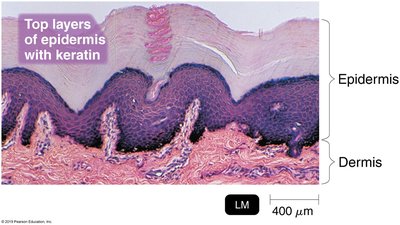
Skin: Acts as a tough, dry, salty, and acidic barrier; normal flora and exfoliation help prevent colonization.
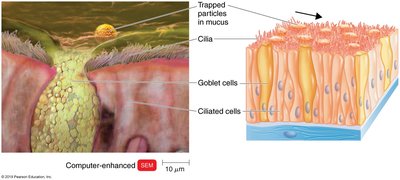
Mucous membranes: Line the GI, respiratory, and genitourinary tracts; secrete mucus to trap microbes and prevent drying.
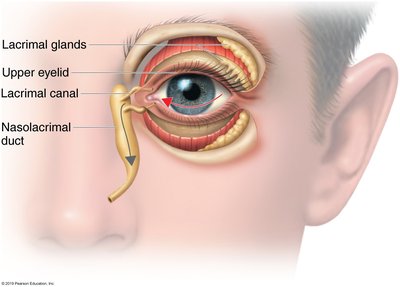
Lacrimal apparatus: Secretes and drains tears, washing the eye and containing IgA antibodies.
Saliva: Contains lysozyme and IgA, helping to wash microbes from the mouth.
Mucociliary escalator: Moves trapped microbes away from the lungs via cilia and mucus.
Cerumen (earwax): Prevents microbial entry into the ear.
Urine and vaginal secretions: Physically flush microbes from the urinary and reproductive tracts.
Other mechanisms: Peristalsis, defecation, vomiting, and diarrhea expel pathogens from the body.
Chemical Factors
Chemical barriers enhance the effectiveness of physical barriers by creating hostile environments for pathogens.
Sebum: Forms a protective film and lowers skin pH (3–5), inhibiting microbial growth.
Lysozyme: Enzyme in perspiration, tears, saliva, and urine that destroys bacterial cell walls by breaking peptidoglycan bonds.
Gastric juice: Very low pH (1.2–3.0) destroys most bacteria and toxins in the stomach.
Vaginal secretions: Low pH (3–5) inhibits microbial growth.
Normal Microbiota and Innate Immunity
Normal microbiota (resident microbes) play a crucial role in defending against pathogens through microbial antagonism and competitive exclusion.
Microbial antagonism: Normal microbiota produce substances harmful to pathogens (e.g., bacteriocins).
Competitive exclusion: Compete with pathogens for nutrients and space.
Alteration of environment: Change pH and oxygen levels to inhibit pathogen survival.
Probiotics: Live microbial cultures that confer health benefits to the host.
Prebiotics: Substances that promote the growth of beneficial bacteria.

Second Line of Defense: Cellular and Molecular Responses
Cells of the Immune System
The second line of defense involves various white blood cells (WBCs) and immune proteins that act rapidly to contain and eliminate pathogens that breach the first line.
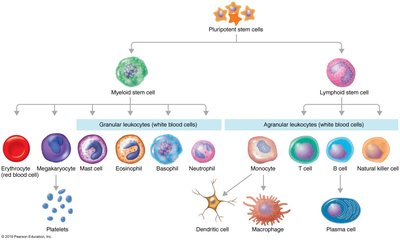
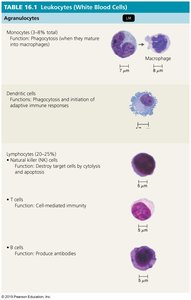
Granulocytes: Leukocytes with visible granules in their cytoplasm.
Neutrophils: Phagocytic; first responders to infection.
Basophils: Release histamine; involved in allergic responses.
Eosinophils: Phagocytic (to a degree); toxic to parasites and helminths; increase in allergic and parasitic infections.
Agranulocytes: Leukocytes with non-visible granules.
Monocytes: Mature into macrophages in tissues; phagocytic.
Dendritic cells: Found in skin, mucous membranes, and thymus; phagocytic and initiate adaptive immune responses.
Lymphocytes: T cells, B cells, and NK cells; key players in adaptive immunity.
The Lymphatic System
The lymphatic system is a network of vessels, tissues, and organs that filter lymph (fluid) and return it to the circulatory system. Lymph nodes contain lymphocytes and macrophages that destroy pathogens carried in the lymph.
Phagocytes and Phagocytosis
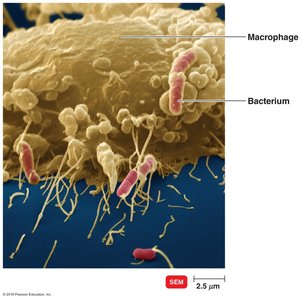
Phagocytes are cells that ingest and destroy microbes and debris. Macrophages and dendritic cells are the main phagocytes in tissues.
Fixed macrophages: Reside in specific tissues (e.g., Kupffer’s cells in liver, microglial cells in brain).
Free (wandering) macrophages: Move throughout tissues and gather at infection sites.
The Mechanism of Phagocytosis
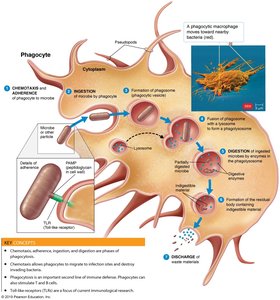
Phagocytosis involves several steps to ensure effective destruction of pathogens:
Chemotaxis: Phagocytes are attracted to infection sites by chemical signals (e.g., microbial products, cytokines, complement proteins).
Adherence: Phagocyte attaches to the microbe, often via Toll-like receptors (TLRs) binding to pathogen-associated molecular patterns (PAMPs).
Ingestion: Microbe is engulfed by pseudopods, forming a phagosome. Opsonization (coating with serum proteins) enhances ingestion.
Digestion: Phagosome fuses with lysosome to form a phagolysosome, where the microbe is digested.
Microbial Evasion of Phagocytosis
Some pathogens have evolved mechanisms to evade destruction by phagocytes:
Mechanism | Example Organisms |
|---|---|
Inhibit adherence (e.g., M protein, capsules) | Streptococcus pyogenes, S. pneumoniae |
Kill phagocytes (leukocidins) | Staphylococcus aureus |
Lyse phagocytes (membrane attack complex) | Listeria monocytogenes |
Escape phagosome | Shigella, Rickettsia |
Prevent phagosome–lysosome fusion | HIV, Mycobacterium tuberculosis |
Survive in phagolysosome | Coxiella burnetii |
Cytokines
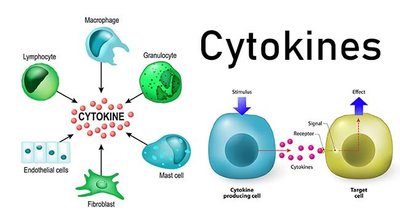
Cytokines are immune proteins that regulate the intensity and duration of immune responses. They recruit other white blood cells, activate B and T cells, and coordinate the immune response.
Inflammation
Inflammation is a protective response to infection or injury, characterized by redness, swelling (edema), pain, and heat. Its main functions are to destroy or contain injurious agents, wall off affected areas, and repair damaged tissue.
Acute inflammation: Short-term, beneficial response.
Chronic inflammation: Long-term, may cause tissue damage.
