 Back
BackInnate Immunity: The Body’s First and Second Lines of Defense
Study Guide - Smart Notes
 Tailored notes based on your materials, expanded with key definitions, examples, and context.
Innate Immunity
Overview of Host Defenses
Innate immunity refers to the nonspecific defense mechanisms that come into play immediately or within hours of an antigen's appearance in the body. These defenses include physical barriers, cellular responses, and chemical mediators that prevent infection and eliminate pathogens.
The Body’s First Line of Defense
Physical and Chemical Barriers
The first line of defense consists of structures, chemicals, and processes that prevent pathogens from entering the body. The primary components are the skin and mucous membranes of the respiratory, digestive, urinary, and reproductive systems.
Skin: Composed of the epidermis (multiple layers of tightly packed cells, with outer layers dead and continually shed) and the dermis (contains collagen fibers for resistance to abrasions).
Chemical Defenses of Skin: Perspiration (contains salt, antimicrobial peptides, and lysozyme) and sebum (keeps skin pliable and lowers pH).
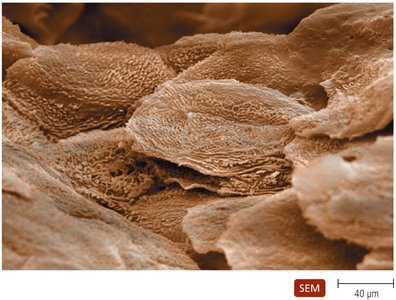
Mucous Membranes: Line all body cavities open to the environment. Consist of a thin epithelium (living, tightly packed cells, continually shed) and a deeper connective tissue layer. Goblet and ciliated columnar cells help remove invaders.
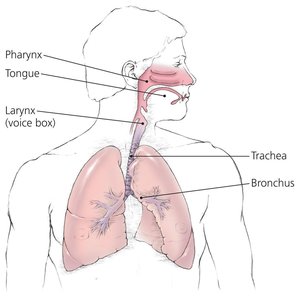
Comparison of Skin and Mucous Membranes
Feature | Skin | Mucous Membrane |
|---|---|---|
Number of Cell Layers | Many | One to a few |
Cells Tightly Packed? | Yes | Yes |
Cells Dead or Alive? | Outer: dead; Inner: alive | Alive |
Mucus Present? | No | Yes |
Lysozyme Present? | Yes | With some |
Sebum Present? | Yes | No |
Cilia Present? | No | Trachea, uterine tubes |
Constant Shedding? | Yes | Yes |
Lacrimal Apparatus
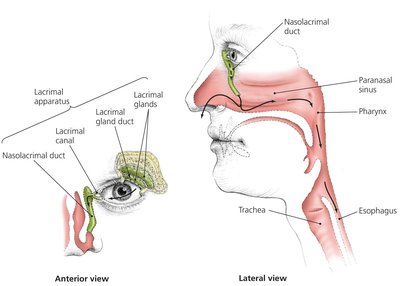
The lacrimal apparatus produces and drains tears, which contain lysozyme that destroys bacteria. Blinking spreads tears and washes the surface of the eye.
The Role of the Microbiome
The normal microbiome provides microbial antagonism, competing with potential pathogens by consuming nutrients, creating unfavorable environments, preventing attachment, stimulating the second line of defense, generating antimicrobial compounds, and providing vitamins.
Other First-Line Defenses
Antimicrobial peptides: Present in skin, mucous membranes, and neutrophils; act against a variety of microbes.
Secretions and Activities: Various organs secrete chemicals with antimicrobial properties (e.g., saliva, stomach acid, bile, urine, vaginal secretions, blood flow, coagulation).
The Body’s Second Line of Defense
Defense Components of Blood
When pathogens penetrate the first line of defense, the second line operates, involving cells, antimicrobial chemicals, and processes, many of which are found in the blood.
Plasma: Contains water, electrolytes, dissolved gases, nutrients, proteins (including complement proteins and antibodies), and iron-binding compounds.
Formed Elements: Erythrocytes (oxygen and CO2 transport), platelets (clotting), and leukocytes (defense).
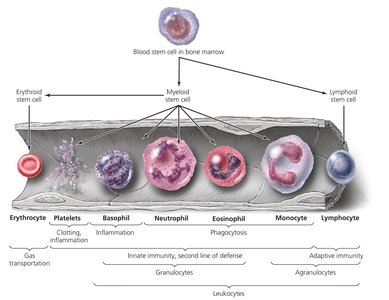
Leukocytes
Granulocytes: Basophils (inflammation), eosinophils (phagocytosis, helminth defense), neutrophils (phagocytosis, diapedesis).
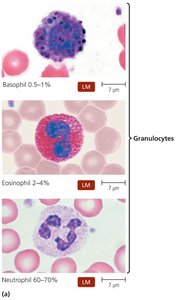
Agranulocytes: Lymphocytes (adaptive immunity, NK cells), monocytes (mature into macrophages, phagocytic).
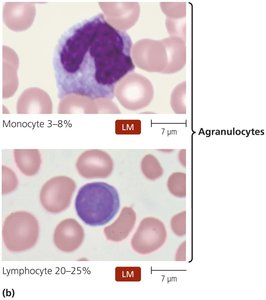
Lab Analysis: Differential white blood cell counts can indicate disease (e.g., increased eosinophils in allergies or parasitic infection, increased neutrophils in bacterial infection, increased lymphocytes in viral infection).
Phagocytosis
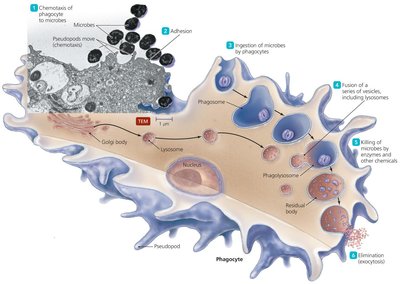
Phagocytosis is the process by which phagocytes ingest and destroy pathogens. It involves six stages: chemotaxis, adhesion, ingestion, maturation, killing, and elimination.
Nonphagocytic Killing
Eosinophils: Attack helminths by secreting toxins; can also kill some bacteria with mitochondrial DNA and proteins.
Natural Killer (NK) Cells: Secrete toxins onto virally infected cells and tumors, sparing normal cells.
Neutrophils: Produce chemicals and extracellular traps (NETs) to kill microbes without phagocytosis.
Nonspecific Chemical Defenses
Toll-like Receptors (TLRs): Integral membrane proteins on phagocytes that bind pathogen-associated molecular patterns (PAMPs) and initiate defensive responses (e.g., inflammation, apoptosis).
NOD Proteins: Cytosolic proteins that bind PAMPs and trigger inflammation and apoptosis.
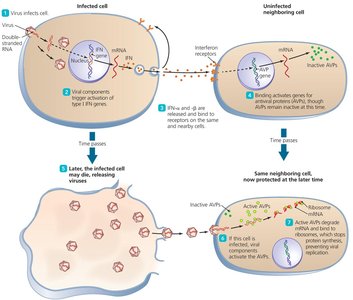
Interferons: Proteins released by host cells to inhibit viral spread; include Type I (alpha, beta) and Type II (gamma) interferons.
Complement System
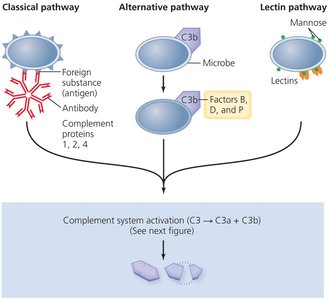
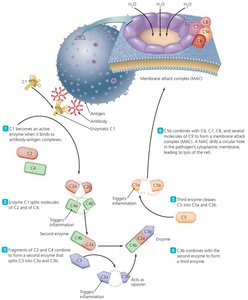
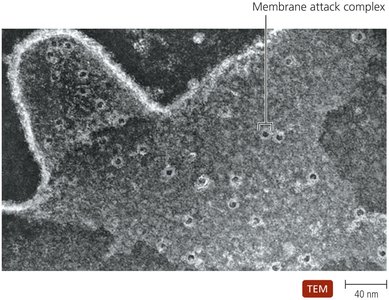
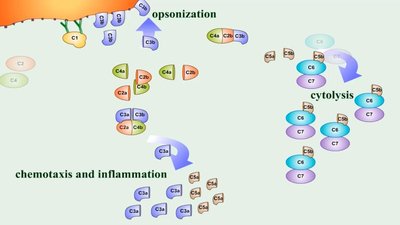
The complement system is a set of serum proteins that, when activated, result in lysis of foreign cells, inflammation, and opsonization. Activation occurs via the classical, alternative, or lectin pathways.
Inflammation
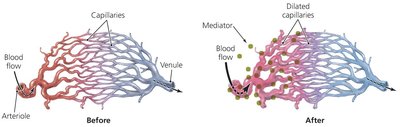
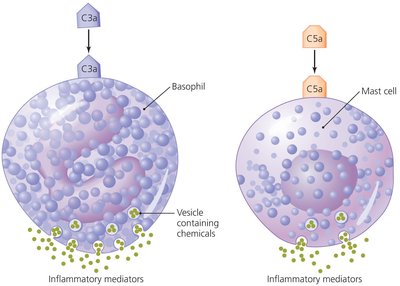
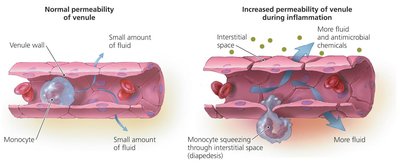
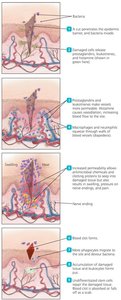
Inflammation is a nonspecific response to tissue damage, characterized by redness, heat, swelling, and pain. It can be acute (short-lived, beneficial) or chronic (long-lasting, potentially damaging).
Acute Inflammation: Involves vasodilation, increased permeability, migration of phagocytes, and tissue repair.
Chronic Inflammation: Can cause tissue damage and disease.
Fever
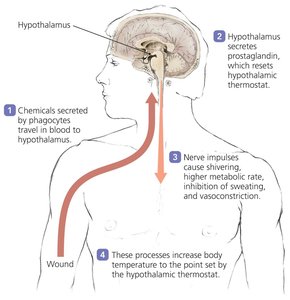
Fever is a body temperature above 37°C, triggered by pyrogens that act on the hypothalamus. It enhances interferon effects, inhibits some microbes, and may enhance phagocyte activity and tissue repair.
Summary Table: Nonspecific Components of Innate Immunity
First Line | Second Line |
|---|---|
Barriers and chemicals (skin, mucous membranes, sweat, acid, lysozyme, mucus) | Phagocytes (macrophages, neutrophils, eosinophils) |
Extracellular killing (eosinophils, NK cells, neutrophils) | Complement (attracts phagocytes, stimulates inflammation, attacks membranes) |
Interferons (increase resistance to viral infection) | |
Antimicrobial peptides (disrupt membranes, signaling, metabolism) | |
Inflammation (increases blood flow, capillary permeability, leukocyte migration) | |
Fever (mobilizes defenses, accelerates repair, inhibits pathogens) |
Key Terms
Innate Immunity: Nonspecific defense mechanisms present from birth.
Phagocytosis: Cellular process of engulfing and destroying pathogens.
Complement System: Group of serum proteins that enhance immune responses.
Inflammation: Localized response to injury or infection.
Fever: Elevated body temperature as a systemic response to infection.
