 Back
BackInnate Immunity: The First Line of Defense in the Human Body
Study Guide - Smart Notes
 Tailored notes based on your materials, expanded with key definitions, examples, and context.
Innate Immunity
Overview of Innate Immunity
Innate immunity refers to the non-specific defense mechanisms that are present in the body from birth. These defenses act against a wide range of microbes in the same way, without the ability to remember previous encounters. The innate immune system is always active, responds rapidly to infections, and includes physical and chemical barriers, cellular defenses, inflammation, fever, and molecular defenses.
Non-specific: Acts against most microbes similarly.
No memory: Cannot recall previous infections.
Always present: Functions before and during infection.
Physical Barriers
Skin
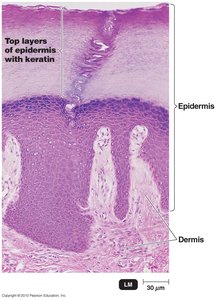
The skin is the body's largest organ and serves as a primary physical barrier to infection. Its outer surface consists of dead cells and the protein keratin, which provides toughness and water-resistance. The skin is dry, which inhibits microbial growth, and its outer layers are frequently shed, removing attached microbes. Most infections occur only when the skin is broken, although some fungi can grow on the surface by consuming dead skin cells.
Keratinized epidermis is rarely penetrated by microbes.
Moist areas are more susceptible to infection.
Microbes that consume dead skin and oils can cause body odor.
Mucous Membranes
Mucous membranes line body tracts such as the digestive, respiratory, and reproductive systems. They secrete mucus, a glycoprotein that keeps membranes moist and traps microbes. Cilia on these membranes help move mucus and trapped microbes out of the body.
Offer less protection than skin but are important in fluid exchange areas.
Mucus traps microbes; cilia move them away.
Fluid Flow
Secretions such as saliva, tears, urine, and vaginal fluids help flush microbes out of the body, reducing the risk of infection.
Chemical Barriers
Acidity of Body Fluids and Skin
Many body sites are protected by acidic environments that inhibit microbial growth.
Stomach acid (pH ~2) destroys many bacteria and toxins.
Skin acids (fatty acids and lactic acid, pH 3-5) prevent microbial growth.
Lysozyme
Lysozyme is an enzyme found in sweat, tears, saliva, and nasal secretions. It degrades peptidoglycan in bacterial cell walls, leading to cell lysis.
Normal Microflora
The normal microflora are beneficial microbes acquired shortly after birth. They prevent the growth of pathogens through competitive exclusion and microbial antagonism.
Cellular Defenses
Leukocytes (White Blood Cells)
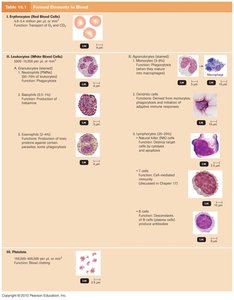
Leukocytes are the main cellular components of the innate immune system. They are divided into two main groups: granulocytes and agranulocytes.
Phagocytes: White blood cells that ingest and destroy microbes.
Granulocytes
Basophils: Weak phagocytes; release histamine, causing allergies and inflammation.
Eosinophils: Attack large pathogens (e.g., worms) with extracellular digestive enzymes.
Neutrophils: Strong phagocytes; can leave blood and enter tissues to destroy microbes.
Agranulocytes
Monocytes: Not initially phagocytic; become macrophages in tissues, which are strong phagocytes.
Lymphocytes:
Natural Killer (NK) Cells: Kill infected or abnormal body cells.
T and B Lymphocytes: Part of adaptive immunity (covered in later chapters).
Phagocytosis
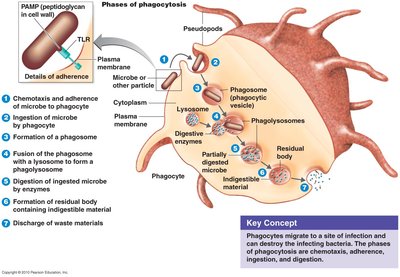
Phagocytosis is the process by which phagocytes ingest and destroy microbes. It occurs in four main phases:
Chemotaxis: Phagocytes are attracted to infection sites by chemical signals.
Adherence: Phagocyte attaches to the microbe.
Ingestion: Pseudopods engulf the microbe, forming a phagosome.
Digestion: Lysosomes fuse with the phagosome, releasing enzymes that digest the microbe.
Inflammation
Signs, Symptoms, and Functions
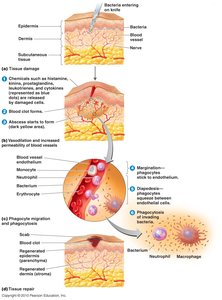
Inflammation is a localized response to tissue damage or infection. Its main signs are pain, redness, heat, swelling, and loss of function. Inflammation helps destroy and contain injurious agents and initiates tissue repair.
Prevents spread of infection.
Promotes healing by bringing nutrients and immune cells to the site.
Stages of Inflammation
Tissue Damage: Initial injury or infection.
Vasodilation: Blood vessels dilate, increasing blood flow, redness, and swelling.
Phagocytosis: Phagocytes migrate to the area and destroy microbes.
Tissue Repair: New cells are produced to replace damaged tissue.
Fever
Mechanism and Effects
Fever is an increase in body temperature controlled by the hypothalamus. It is triggered by microbial toxins, lipopolysaccharides (LPS), and immune chemicals. Fever enhances immune responses, speeds up metabolism, and inhibits the growth of some microbes. However, very high fevers can be dangerous.
Promotes faster phagocytosis and healing.
Slows growth of heat-sensitive microbes (e.g., E. coli grows slower above 37°C).
Fever above 43°C can be fatal.
Molecular Defenses
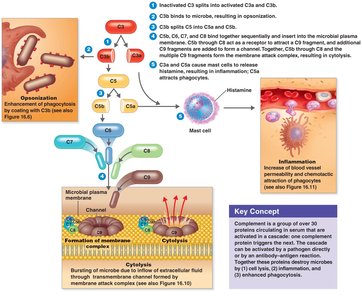
The Complement System
The complement system is a group of about 30 proteins circulating in the blood. They act in a cascade, where the activation of one protein triggers the next. Complement can be activated by microbial surface molecules such as LPS.
Opsonization: Complement proteins coat microbes, making them easier for phagocytes to recognize and ingest.
Enhanced Inflammation: Increases blood vessel permeability and attracts phagocytes.
Cytolysis: Formation of the membrane attack complex (MAC) that creates pores in microbial membranes, leading to cell lysis.
Interferons (IFN)
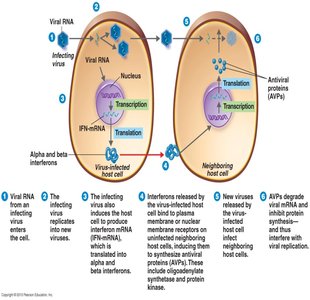
Interferons are proteins produced by cells in response to viral infection. They interfere with viral replication by signaling neighboring cells to produce antiviral proteins. Interferons are only effective for short periods and can have side effects such as nausea, fatigue, and fever.
Warn neighboring cells to prepare defenses.
Do not help already infected cells.
Can be toxic in high amounts.
Transferrins
Transferrins are iron-binding proteins found in blood, milk, saliva, and tears. By sequestering iron, they limit its availability to bacteria, thereby slowing bacterial growth.
