 Back
BackInteractions Between Microbes and Humans: Pathogenesis, Transmission, and Epidemiology
Study Guide - Smart Notes
 Tailored notes based on your materials, expanded with key definitions, examples, and context.
Interactions Between Microbes and Humans
The Human Microbiome
The human microbiome refers to the collective genomes of the microorganisms (bacteria, viruses, fungi, and protozoa) that live on and inside the human body. These microbes are essential for normal physiological processes and play a critical role in health and disease.
Colonization: The long-term presence of resident microbiota on body surfaces without causing disease.
Infection: Occurs when microbes invade host tissues and multiply, potentially overcoming host defenses.
Disease: A deviation from health resulting from infection that damages or disrupts tissues and organs.
Infectious Disease: A disease state caused directly by microorganisms or their products.
Key Sites of Normal Microbiota: Skin, mucous membranes, upper respiratory tract, gastrointestinal tract, urethra, external genitalia, vagina, external ear canal, and conjunctiva. Recent research has identified additional sites, such as the lungs, bladder, breast milk, and even the amniotic fluid and fetus, as harboring microbiota or their DNA.
Human Microbiome Project (HMP): An ongoing global research initiative to characterize the human microbiome in health and disease, utilizing genome sequencing and big data analysis.
Acquisition of the Microbiome
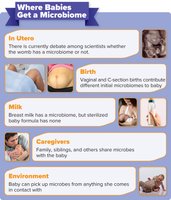
Babies acquire their microbiome from multiple sources: in utero (debated), during birth (vaginal or C-section), through breast milk, from caregivers, and from the environment.
Microbial antagonism: Resident biota prevent colonization by pathogens through competition for attachment sites and by creating a hostile environment for invaders.
Pathogenesis: How Microbes Cause Disease
Pathogenesis is the process by which microbes cause disease in a host. The ability of a microbe to cause disease is determined by its pathogenicity and virulence.
Pathogenicity: The potential of a microbe to cause disease.
Virulence: The degree of pathogenicity, often measured by the severity of disease and the infectious dose required.
Virulence Factors: Characteristics or structures that enable a microbe to establish itself in the host and cause damage (e.g., toxins, enzymes, capsules).
Steps in Microbial Pathogenesis
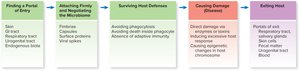
Finding a Portal of Entry: Common portals include the skin, gastrointestinal tract, respiratory tract, urogenital tract, and endogenous biota.
Attaching Firmly and Negotiating the Microbiome: Microbes use fimbriae, capsules, surface proteins, or viral spikes to adhere to host cells.
Surviving Host Defenses: Pathogens may avoid phagocytosis, survive inside phagocytes, or evade specific immunity.
Causing Damage (Disease): Direct damage via enzymes or toxins, inducing excessive host response, or causing epigenetic changes in host chromosomes.
Exiting Host: Pathogens leave the host via portals such as the respiratory tract, salivary glands, skin, fecal matter, urogenital tract, or blood.
Mechanisms of Host Damage
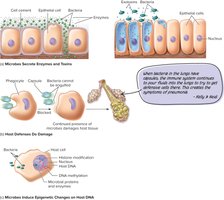
Direct Damage: Microbes secrete enzymes and toxins that damage host tissues.
Indirect Damage: Host immune responses may cause tissue damage.
Epigenetic Changes: Microbes can induce changes in host DNA expression, affecting cell function.
Bacterial Toxins
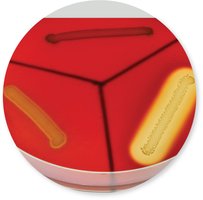
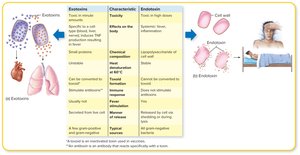
Exotoxins: Secreted proteins that target specific cell types (e.g., neurotoxins, enterotoxins, hemotoxins). Hemolysins are exotoxins that lyse red blood cells.
Endotoxins: Lipopolysaccharide (LPS) components of the outer membrane of Gram-negative bacteria, released upon cell lysis, causing systemic effects such as fever and inflammation.
Will Disease Result?
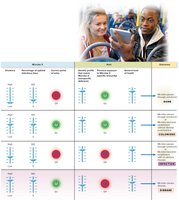
The outcome of microbial exposure depends on the virulence of the microbe, the infectious dose, the portal of entry, and the host's immune status and general health.
Portals of Exit
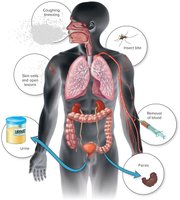
Pathogens exit the host through specific portals, which are often the same as the portals of entry. These include respiratory secretions, skin, blood, urine, and feces. The number of microbes shed influences the likelihood of transmission to new hosts.
Course of an Infectious Disease
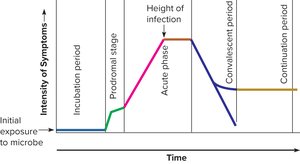
Incubation Period: Time between initial contact and appearance of symptoms.
Prodromal Stage: Early, nonspecific symptoms appear.
Acute Phase: Pathogen multiplies rapidly, symptoms are most severe.
Convalescent Period: Symptoms decline as the host recovers.
Continuation Phase: In some cases, the pathogen or symptoms persist after recovery.
Reservoirs and Transmission of Infectious Agents
Reservoirs
A reservoir is the primary habitat where a pathogen originates. Reservoirs can be living (humans, animals) or nonliving (soil, water, air). The transmitter is the individual or object from which an infection is acquired.
Modes of Transmission
Direct Contact: Physical interaction between infected and susceptible individuals.
Indirect Transmission: Involves fomites (inanimate objects), food, water, or biological vectors (arthropods).
Vector Transmission: Arthropods such as mosquitoes and ticks transfer pathogens.
Vertical Transmission: From parent to offspring via ovum, sperm, placenta, or milk.
Epidemiology: The Study of Disease in Populations
Key Concepts in Epidemiology
Incidence: Number of new cases in a specific time period per population unit.
Prevalence: Total number of existing cases in a population at a given time.
Mortality Rate: Number of deaths due to a disease in a population.
Notifiable/Reportable Diseases: Diseases that must be reported to public health authorities for monitoring and control.
Epidemic Patterns
Common-Source Epidemic: Results from exposure to a single source over time.
Point-Source Epidemic: All cases arise from a single, brief exposure.
Propagated Epidemic: Spread from person to person, sustained over time.
Herd Immunity
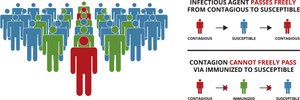
Herd immunity occurs when a significant portion of a population is immune to an infectious disease, reducing its spread and protecting susceptible individuals. Vaccination is a key strategy for achieving herd immunity.
Summary Table: Comparison of Exotoxins and Endotoxins
Feature | Exotoxins | Endotoxins |
|---|---|---|
Toxicity | Toxic in minute amounts | Toxic in high doses |
Effects on Body | Specific to cell type (blood, liver, nerve) | Systemic: fever, inflammation |
Chemical Composition | Small proteins | Lipopolysaccharide of cell wall |
Heat Denaturation | Unstable at 60°C | Stable |
Toxoid Formation | Can be converted to toxoid | Cannot be converted to toxoid |
Immune Response | Stimulate antitoxins | Does not stimulate antitoxins |
Fever Stimulation | Usually no | Yes |
Manner of Release | Secreted from live cell | Released by cell via shedding or lysis |
Typical Sources | Few Gram-positive and Gram-negative | All Gram-negative bacteria |
