 Back
BackIntroduction to Eukaryotes in Microbiology
Study Guide - Smart Notes
 Tailored notes based on your materials, expanded with key definitions, examples, and context.
Introduction to Eukaryotes of Microbiology
Overview and General Characteristics
Eukaryotes are one of the three domains of life, distinguished by their complex cellular organization. They include both unicellular and multicellular organisms and are characterized by the presence of a true nucleus and membrane-bound organelles. Eukaryotes are structurally and functionally more complex than prokaryotes, with larger genomes and the ability to reproduce sexually and asexually.
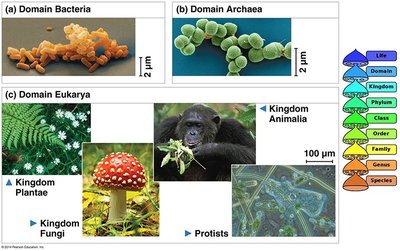
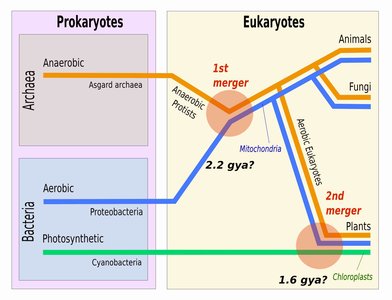
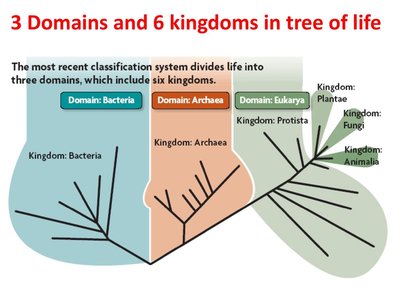
Domain Eukarya: Branched off from Archaea approximately 2.2 billion years ago. Includes animals, plants, fungi, and protists.
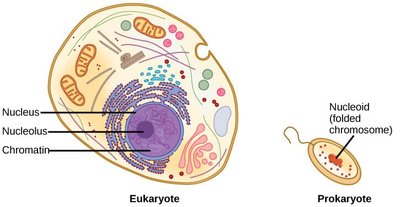
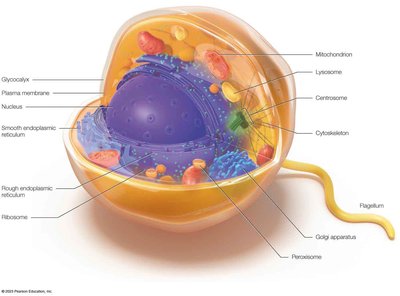
Cell Structure: Defined nucleus, multiple linear chromosomes, membrane-bound organelles (e.g., mitochondria, endoplasmic reticulum).
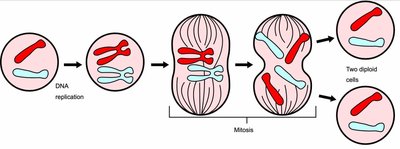
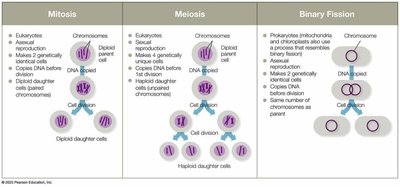
Reproduction: Both sexual (meiosis) and asexual (mitosis) reproduction are observed.
Size: Generally larger than prokaryotes, contributing significantly to global biomass despite being less numerous.
Endosymbiotic Theory
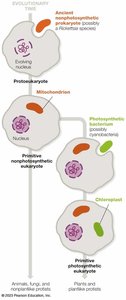
The endosymbiotic theory explains the origin of eukaryotic organelles such as mitochondria and chloroplasts. It proposes that these organelles originated from free-living bacteria that were engulfed by ancestral eukaryotic cells, forming a symbiotic relationship.
Mitochondria: Originated from engulfed non-photosynthetic bacteria.
Chloroplasts: Originated from engulfed photosynthetic bacteria.
Supporting Evidence: Mitochondria and chloroplasts have their own circular DNA, 70S ribosomes, double membranes, and replicate independently by a process similar to binary fission.
Classification of Eukaryotes
Eukaryotes are classified into four main kingdoms, each with unique characteristics relevant to microbiology:
Kingdom Plantae: Multicellular, cellulose cell wall, chloroplasts, photosynthetic, no known human pathogens.
Kingdom Fungi: Unicellular or multicellular, chitin and glucan cell wall, can be pathogenic, reproduce by spores.
Kingdom Protista: Mostly unicellular, highly diverse, includes algae (photosynthetic) and protozoans (non-photosynthetic), some are pathogenic.
Kingdom Animalia: Multicellular, lack cell wall, motile, some are pathogenic (e.g., helminths).
Internal Eukaryotic Cell Structures
Non-membrane Enclosed Structures
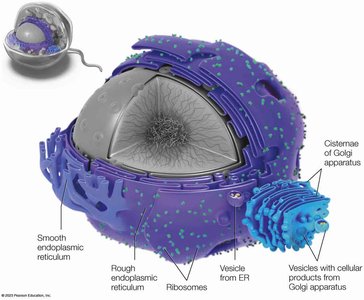
Ribosomes: Sites of protein synthesis. Eukaryotic cytoplasmic ribosomes are 80S, while mitochondria and chloroplasts contain 70S ribosomes.
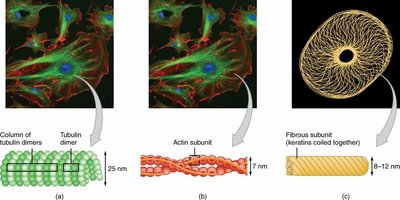
Cytoskeleton: Network of protein fibers (microtubules, microfilaments, intermediate filaments) that maintain cell shape, facilitate movement, and organize intracellular transport.
Membrane-bound Organelles
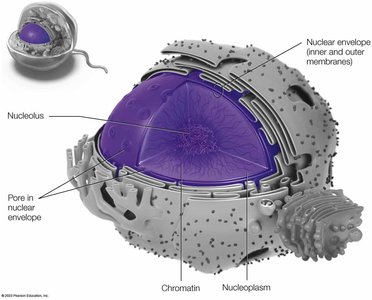
Nucleus: Contains the cell's genetic material, surrounded by a double membrane with nuclear pores. The nucleolus is the site of rRNA synthesis and ribosome assembly.
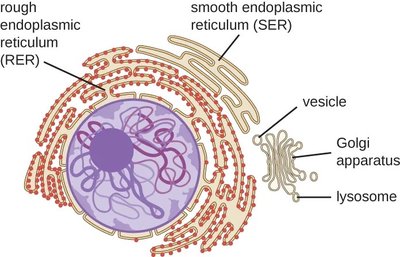
Endoplasmic Reticulum (ER): Rough ER (with ribosomes) synthesizes and modifies proteins; Smooth ER is involved in lipid synthesis and detoxification.
Golgi Apparatus: Modifies, sorts, and packages proteins and lipids for secretion or delivery to other organelles.
Vesicles and Vacuoles: Membrane-bound sacs for transport, storage, and digestion. Lysosomes contain digestive enzymes; peroxisomes degrade fatty acids and toxins.
Mitochondria: Site of ATP production, contain their own DNA and ribosomes, central to energy metabolism and apoptosis.
External Eukaryotic Cell Structures
Plasma Membrane
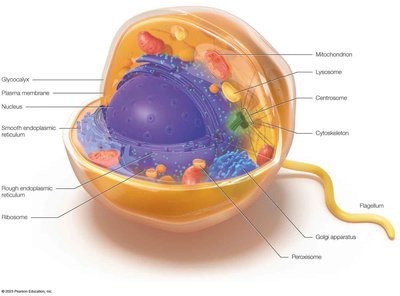
The plasma membrane is a phospholipid bilayer with embedded proteins, acting as a selective barrier. Eukaryotic membranes contain sterols (e.g., cholesterol) for stability.
Membrane Transport Mechanisms
Simple Diffusion, Facilitated Diffusion, Active Transport: Common to all cells.
Endocytosis and Exocytosis: Unique to eukaryotes, allowing bulk import/export of materials via vesicles.
Glycocalyx and Extracellular Matrix (ECM)
Glycocalyx: Sticky, polysaccharide-rich layer on the cell surface, important for cell protection, adhesion, and communication.
Extracellular Matrix (ECM): Network of proteins and carbohydrates outside animal cells, providing structural support and mediating cell interactions.
Cell Wall
Present in fungi, plants, and some protists, the cell wall provides rigidity and protection. Fungal cell walls contain chitin, glucans, and proteins; plant cell walls contain cellulose.
Motility Structures: Cilia and Flagella
Flagella: Long, whip-like structures for cell movement; fewer in number.
Cilia: Short, numerous projections for movement or moving substances across cell surfaces.
Eukaryotes of Microbial Relevance
Kingdoms and Microbial Diversity
Protists: Diverse group, includes pathogenic protozoans (e.g., Giardia, Plasmodium).
Fungi: Includes yeasts (unicellular), molds (multicellular, hyphae), and dimorphic fungi. Important for human disease (mycoses) and biotechnology.
Animals: Includes helminths (parasitic worms) and arthropod vectors (e.g., mosquitoes, ticks).
Protozoans
Classified by motility and morphology: amoeboids, flagellates, ciliates, and sporozoans (apicomplexans).
Many have complex life cycles with trophozoite (active) and cyst (dormant) stages.
Helminths
Flatworms (Platyhelminths): Includes segmented cestodes (tapeworms) and unsegmented trematodes (flukes).
Roundworms (Nematodes): Non-segmented, includes intestinal and tissue parasites.
Fungi
Hyphae: Filamentous structures forming mycelium in molds; can be septate or nonseptate.
Yeasts: Unicellular, reproduce by budding; can form pseudohyphae.
Dimorphic Fungi: Switch between yeast and mold forms depending on environmental conditions.
Mycoses: Fungal diseases, ranging from superficial (skin, nails) to systemic (internal organs).
Comparison: Eukaryotic vs. Prokaryotic Cells
Characteristic | Eukaryotes | Prokaryotes (Bacteria) |
|---|---|---|
Organisms | Unicellular (protists, yeast), multicellular (animals, plants, fungi) | Unicellular |
Size | 5–20 μm (larger) | 0.5–2 μm (smaller) |
Cell Division | Mitosis (asexual), meiosis (sexual) | Binary fission (asexual) |
Plasma Membrane | Contains sterols | Typically lacks sterols |
Cell Wall | Plants, fungi, some protists (cellulose, chitin, etc.) | Most have peptidoglycan (except Mycoplasma) |
Nucleus | Present | Absent |
Ribosomes | 80S (cytoplasm, ER), 70S (mitochondria, chloroplasts) | 70S only |
Genetic Material | Multiple linear chromosomes | Single circular chromosome |
Membrane-bound Organelles | Present | Absent |
Motility Structures | Flagella/cilia (microtubules, flexible, wave-like) | Flagella (flagellin, rigid, rotary) |
Summary
Eukaryotes are a diverse domain of life with complex cellular structures and functions. Their study is essential in microbiology due to their roles as pathogens, model organisms, and contributors to ecological and medical processes. Understanding their unique features, such as membrane-bound organelles, complex life cycles, and structural adaptations, is crucial for advancing knowledge in infectious disease, biotechnology, and cell biology.
