 Back
BackIntroduction to Eukaryotic Cells: Structure, Function, and Diversity
Study Guide - Smart Notes
 Tailored notes based on your materials, expanded with key definitions, examples, and context.
Overview of Eukaryotes
Endosymbiotic Theory and Evolution of Eukaryotes
The endosymbiotic theory explains the origin of eukaryotic cells as a result of symbiotic relationships between ancestral prokaryotes. This theory is supported by the presence of mitochondria and chloroplasts in eukaryotic cells, which share several features with bacteria.
Endosymbiotic Theory: Proposes that mitochondria evolved from engulfed nonphotosynthetic prokaryotes, and chloroplasts from engulfed photosynthetic prokaryotes (e.g., cyanobacteria).
Evidence: Mitochondria and chloroplasts have their own circular DNA, 70S ribosomes, double membranes, similar size to bacteria, and replicate independently by binary fission.
Key Contributors: Konstantin Mereschkowski (early 1900s) and Dr. Lynn Margulis (1967) advanced and substantiated the theory.
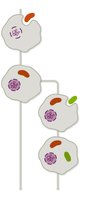
Additional info: The endosymbiotic theory is fundamental to understanding the evolutionary leap from prokaryotic to eukaryotic life, explaining the presence of complex organelles in modern eukaryotes.
Basic Features of Eukaryotic Cells
Definition: Eukaryotic cells possess a true nucleus and membrane-bound organelles.
Kingdoms: Plants, animals, fungi, and protists.
Genome: Larger genomes with multiple linear chromosomes compared to prokaryotes.
Size and Complexity: Eukaryotic cells are generally larger and more complex than prokaryotic cells.
Comparison of Eukaryotic and Prokaryotic Cells
Feature | Eukaryotic Cells | Prokaryotic Cells |
|---|---|---|
Nucleus | Present | Absent |
Membrane-bound Organelles | Present | Absent |
Chromosomes | Multiple, linear | Single, circular |
Ribosomes | 80S (cytoplasm), 70S (mitochondria/chloroplasts) | 70S |
Cell Division | Mitosis and meiosis | Binary fission |
Eukaryotic Cell Division
Mitosis
Mitosis is the process by which eukaryotic cells divide to produce two genetically identical daughter cells, maintaining the chromosome number of the parent cell.
Purpose: Growth, repair, and asexual reproduction.
Outcome: Two diploid cells, genetically identical to the parent.
Meiosis
Meiosis is a specialized form of cell division involved in sexual reproduction, resulting in four genetically diverse haploid gametes. Note: Detailed discussion of meiosis is beyond the scope of this class.
Purpose: Sexual reproduction, genetic diversity.
Outcome: Four haploid cells with genetic variation due to crossing over.
Eukaryotic Cell Transport Mechanisms
Endocytosis and Exocytosis
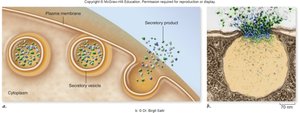
Eukaryotic cells use specialized transport mechanisms to move substances across their plasma membranes, in addition to diffusion and active transport.
Endocytosis: Import of substances into the cell via vesicle formation.
Exocytosis: Export of substances out of the cell via vesicle fusion with the plasma membrane.
Types of Endocytosis
Pinocytosis: "Cell drinking"; uptake of dissolved substances in small vesicles.
Phagocytosis: "Cell eating"; uptake of large, undissolved particles or cells. Specialized immune cells (phagocytes) engulf targets, forming a phagosome that fuses with a lysosome to digest the contents.
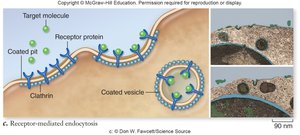
Receptor-mediated Endocytosis: Specific uptake of molecules via receptor-ligand interactions, often involving clathrin-coated vesicles.
Classification of Eukaryotes
The Four Kingdoms of Eukaryotes
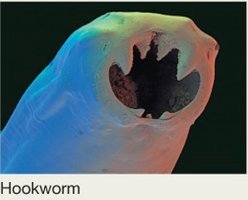
Animals: Multicellular, heterotrophic, include parasitic helminths and arthropods.
Plants: Multicellular, autotrophic, perform photosynthesis using chloroplasts.
Fungi: Mostly multicellular (except yeasts), absorb nutrients, include pathogens and saprobes.
Protists: Diverse group, unicellular or multicellular, autotrophic or heterotrophic, includes algae, slime molds, and protozoans.
Parasitic Helminths
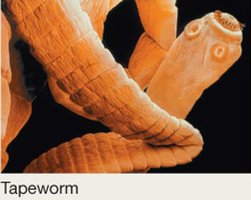
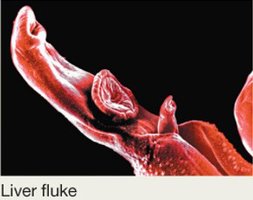
Definition: Parasitic worms, including roundworms (nematodes) and flatworms (cestodes and trematodes).
Transmission: Usually spread in microscopic form; complex life cycles.
Fungi
Structure: Most grow as hyphae (septate or aseptate); yeasts are unicellular.
Dimorphic Fungi: Can switch between yeast-like and hyphal forms.
Spores: Main reproductive units; classified as asexual (conidiospores, sporangiospores) or sexual (zygospores, ascospores, basidiospores).
Diseases: Mycoses (fungal diseases) affect immunocompromised individuals and can include true pathogens (e.g., Histoplasma, Coccidioides), dermatophytes (cause "tinea" infections), and toxin producers (e.g., aflatoxin, ergot toxin).
Protists and Protozoans
Protists: "Catchall" kingdom; includes algae, slime molds, and protozoans.
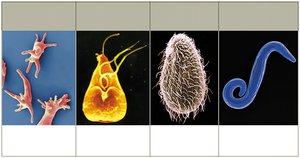
Protozoans: Classified by motility: amoeboid (pseudopods), flagellated (flagella), ciliated (cilia), and spore-forming (gliding).
Examples: Entamoeba histolytica (amoeboid), Giardia lamblia (flagellated), Balantidium coli (ciliated), Plasmodium spp. (spore-forming, malaria).
Extracellular Structure of Eukaryotic Cells
Plasma Membrane
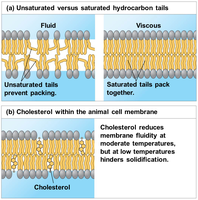
The plasma membrane is a phospholipid bilayer that serves as a selective barrier. Eukaryotic membranes contain sterols (e.g., cholesterol) that modulate fluidity.
Fluidity: Influenced by the saturation of fatty acids and cholesterol content.
Cell Walls
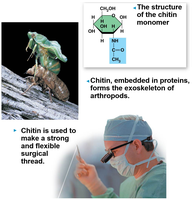
Presence: Found in fungi (chitin), plants (cellulose), and some protists (various materials).
Function: Maintains cell shape, protects against mechanical and osmotic stress.
Difference from Bacteria: Eukaryotic cell walls lack peptidoglycan.
Glycocalyx
Definition: Sticky extracellular layer composed of carbohydrates, glycoproteins, and glycolipids.
Function: Protection, adhesion, and cell recognition.
Flagella and Cilia
Flagella: Long, tail-like structures for motility; composed of tubulin in a 9+2 arrangement, surrounded by the plasma membrane.
Cilia: Shorter, more numerous structures with similar internal structure to flagella; used for movement and feeding.
Intracellular Structures of Eukaryotic Cells
Ribosomes
Structure: 80S ribosomes (40S + 60S subunits) in cytoplasm; 70S ribosomes in mitochondria and chloroplasts.
Function: Protein synthesis; free ribosomes produce cytosolic proteins, bound ribosomes produce secreted or membrane proteins.
Cytoskeleton
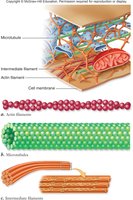
Components: Microtubules (tubulin), intermediate filaments, microfilaments (actin).
Functions: Maintains cell shape, facilitates movement, anchors organelles, and directs intracellular transport.
Nucleus
Structure: Surrounded by a double-membrane nuclear envelope with nuclear pores.
Contents: Contains DNA (as chromatin) and nucleolus (site of ribosome assembly).
Endoplasmic Reticulum (ER)
Rough ER: Studded with ribosomes; synthesizes and modifies proteins.
Smooth ER: Lacks ribosomes; synthesizes lipids, detoxifies substances, and stores calcium ions.
Golgi Apparatus
Structure: Series of flattened sacs (cisternae).
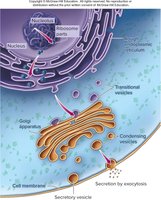
Function: Modifies, sorts, and packages proteins and lipids for transport.
Vesicles and Vacuoles
Vesicles: Small membrane-bound sacs for transport, secretion, and digestion (e.g., lysosomes, peroxisomes).
Vacuoles: Large storage organelles, especially prominent in plants and fungi.
Mitochondria
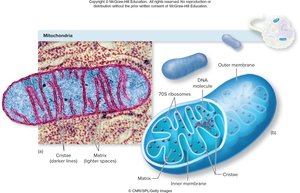
Function: ATP production, amino acid and vitamin synthesis, regulation of cell division and apoptosis.
Structure: Double membrane, inner membrane with cristae, matrix containing DNA and 70S ribosomes.
Unique Features: Divide independently, contain their own DNA, similar to bacteria.
Chloroplasts
Function: Photosynthesis; convert light energy into chemical energy, produce organic nutrients and oxygen.
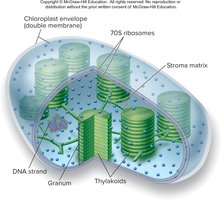
Structure: Double membrane, thylakoids stacked into grana, stroma matrix, contain DNA and 70S ribosomes.
Clinical Case Application
Case Study: Yeast and Protozoan Infection
Scenario: A 25-year-old female developed vulvovaginal candidiasis (yeast infection by Candida albicans) and trichomoniasis (by Trichomonas vaginalis) following antibiotic therapy.
Diagnosis: Wet mount microscopy confirmed both infections.
Treatment: Fluconazole for yeast infection; metronidazole for trichomoniasis.
Key Concepts: Antibiotics can disrupt normal microbiota, leading to fungal overgrowth. T. vaginalis is a flagellated protozoan; C. albicans is a yeast (fungus).
Additional info: Differentiation between bacteria and yeast in wet mounts is based on size, shape, and budding patterns of yeast cells versus bacterial rods or cocci.
