 Back
BackIntroduction to Microbiology and Microbial Genetics: Structure and Replication of DNA
Study Guide - Smart Notes
 Tailored notes based on your materials, expanded with key definitions, examples, and context.
Introduction to Microbiology
Definition and Scope
Microbiology is the branch of science that deals with organisms too small to be seen by the naked eye, known as microorganisms or microbes. These include bacteria, viruses, fungi, protozoa, and algae. Microbiology explores their structure, function, genetics, and roles in health, disease, and the environment.
Microorganisms are found everywhere: in the air, water, food, on our skin, and inside our bodies.
They play essential roles in nutrient cycling, food production, and maintaining atmospheric balance.
Some microbes are pathogenic, causing diseases, while others are beneficial, aiding in digestion and vitamin synthesis.
Examples of Microorganisms in Daily Life
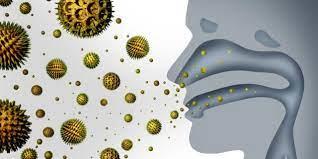
Air: Microbes are present in the air and can be inhaled, affecting respiratory health.
Water: Drinking water can contain bacteria and other microbes, some of which are essential, while others may be harmful.
Food: Microbes are found on food surfaces and play roles in spoilage and fermentation.
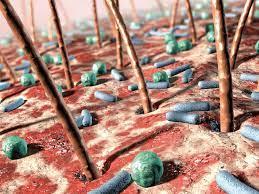
Skin: The skin hosts a diverse microbiota that protects against pathogens.
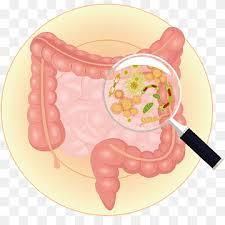
Body: The human gut contains trillions of microbes crucial for digestion and immunity.
Microbial Genetics
Overview and Importance
Microbial genetics is the study of how microorganisms inherit traits, how their genetic material is structured, and how it is transferred and expressed. Understanding microbial genetics is fundamental for biotechnology, medicine, and understanding microbial evolution.
Genetics is the science of DNA and its role in heritable cellular features, activities, and variations.
Microbial genetics covers DNA, RNA, protein structure, gene transfer, gene expression, and regulation.
Structure of DNA
Discovery and Historical Experiments
The structure and function of DNA were elucidated through key experiments and discoveries:
Griffith's Experiment (1928): Demonstrated transformation in bacteria, suggesting genetic information could be transferred between cells.
Rosalind Franklin (1952): Used X-ray diffraction to reveal the helical structure of DNA.
Watson and Crick (1953): Described the double helix structure of DNA, using Franklin's data.


Chemical Structure of DNA
DNA (Deoxyribonucleic Acid) is a double-stranded helix composed of nucleotides. Each nucleotide consists of a deoxyribose sugar, a phosphate group, and a nitrogenous base.
Nitrogenous Bases: Adenine (A), Thymine (T), Cytosine (C), Guanine (G)
Base Pairing: A pairs with T (via 2 hydrogen bonds), C pairs with G (via 3 hydrogen bonds)
Backbone: Alternating sugar and phosphate groups form the backbone, connected by phosphodiester bonds.
Antiparallel Strands: The two DNA strands run in opposite directions (5' to 3' and 3' to 5').
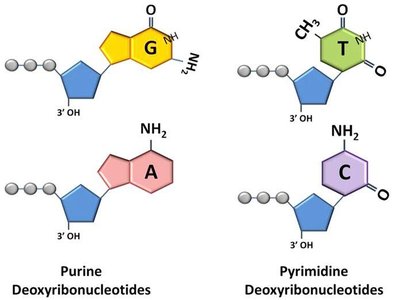
Table: DNA Components and Base Pairing
Nitrogenous Base | Type | Pairs With | Number of H-Bonds |
|---|---|---|---|
Adenine (A) | Purin | Thymine (T) | 2 |
Thymine (T) | Pyrimidine | Adenine (A) | 2 |
Cytosine (C) | Pyrimidine | Guanine (G) | 3 |
Guanine (G) | Purin | Cytosine (C) | 3 |
DNA Supercoiling
DNA supercoiling refers to the over- or under-winding of the DNA double helix. This is essential for compacting DNA into the limited space of the cell. Enzymes called topoisomerases (e.g., DNA gyrase) introduce or remove supercoils.
Central Dogma of Molecular Biology
Flow of Genetic Information
The central dogma describes the flow of genetic information within a biological system:
Replication: DNA makes an identical copy of itself.
Transcription: DNA is used as a template to synthesize RNA.
Translation: mRNA directs the synthesis of proteins.
DNA Replication
Overview and Features
DNA replication is the process by which a cell duplicates its DNA before cell division. It is semi-conservative, meaning each new DNA molecule consists of one old and one new strand.
Replication starts at specific sites called origins of replication.
It proceeds in the 5' to 3' direction.
Replication is bidirectional and semi-conservative.
Steps of DNA Replication
Initiation: Begins at origins of replication. DNA helicase unwinds the double helix, and DNA primase synthesizes RNA primers to initiate synthesis.
Elongation: DNA polymerase adds nucleotides to the 3' end of the primer. The leading strand is synthesized continuously, while the lagging strand is synthesized in short fragments (Okazaki fragments).
Termination: Replication ends when the entire DNA molecule is copied. RNA primers are removed, and DNA ligase joins Okazaki fragments on the lagging strand.
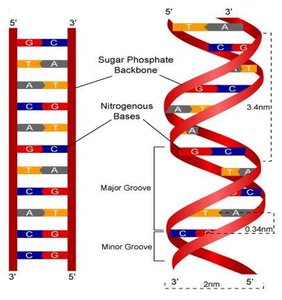
Table: Key Enzymes in DNA Replication
Enzyme | Function |
|---|---|
DNA Helicase | Unwinds the DNA double helix |
DNA Primase | Synthesizes RNA primers |
DNA Polymerase | Adds nucleotides to the growing DNA strand |
RNAase H | Removes RNA primers |
DNA Ligase | Joins Okazaki fragments |
Topoisomerase (Gyrase) | Relieves supercoiling tension |
Leading vs. Lagging Strand
Leading Strand: Synthesized continuously in the direction of the replication fork.
Lagging Strand: Synthesized discontinuously in short Okazaki fragments, later joined by DNA ligase.
Summary of DNA Replication Directionality
New DNA is always synthesized in the 5' to 3' direction.
The template strand is read in the 3' to 5' direction.
Key Equations
Phosphodiester Bond Formation:
Base Pairing:
Additional info: This guide covers foundational concepts in microbiology and microbial genetics, focusing on DNA structure and replication, which are essential for understanding microbial function, heredity, and biotechnology applications.
