 Back
Introduction to Microbiology: Basic Principles and Historical Foundations
Study Guide - Smart Notes
 Tailored notes based on your materials, expanded with key definitions, examples, and context.
Introduction to Microbiology
Definition and Scope
Microbiology is the scientific study of microorganisms, or microbes, which are typically too small to be seen with the naked eye. This field encompasses a wide range of organisms and entities, both living and nonliving, and plays a crucial role in healthcare, agriculture, industry, and environmental sciences.
Microorganisms (Microbes): Include bacteria, archaea, fungi, protists, helminths, viruses, and prions.
Applications: Microbes are essential for food production, medication synthesis, and environmental remediation.
Types of Microbes
Microbes can be classified based on their cellular structure and life cycle. The following table summarizes the main groups studied in microbiology:
Microbe | Cell Type | Notes |
|---|---|---|
Bacteria | Prokaryotic | Unicellular; pathogenic and nonpathogenic |
Archaea | Prokaryotic | Unicellular; nonpathogenic; extremophiles |
Protists | Eukaryotic | Unicellular/multicellular; pathogenic and nonpathogenic |
Fungi | Eukaryotic | Unicellular/multicellular; pathogenic and nonpathogenic |
Helminths | Eukaryotic | Multicellular; parasitic worms |
Viruses | Non-cellular | Infect animal, plant, or bacterial cells; DNA or RNA genome |
Prions | Non-cellular | Infectious proteins; cause neurodegenerative diseases |
Cellular Organization
Prokaryotic cells: Lack a nucleus; include bacteria and archaea; earliest life forms (~3.5 billion years ago).
Eukaryotic cells: Have a nucleus; include all multicellular organisms and some unicellular microbes (e.g., amoebae, yeast).
Endosymbiotic theory: Explains the origin of eukaryotic organelles from prokaryotic ancestors.
Microbes and Disease
Pathogens and Opportunistic Pathogens
Pathogens are microbes that cause disease in humans. However, less than 1% of all microbes are pathogenic. Some pathogens always cause disease, while opportunistic pathogens only cause disease in weakened hosts.
Historical Foundations of Microbiology
Golden Age of Microbiology (1850–1920)
This era saw major advances in microscopy, microbial isolation, and the development of techniques for growing and studying microbes.
Key figures: Robert Hooke, Antonie van Leeuwenhoek, Louis Pasteur, Robert Koch, Ignaz Semmelweis, Joseph Lister, Florence Nightingale.

Spontaneous Generation vs. Biogenesis
Early scientists debated whether life arose spontaneously from nonliving matter (spontaneous generation) or from existing life (biogenesis).
Francesco Redi: Demonstrated that maggots on meat came from flies, not spontaneous generation.
Louis Pasteur: Used S-necked flasks to show that microbes in the air, not spontaneous generation, caused broth to spoil. Developed pasteurization and vaccines for anthrax and rabies.

Germ Theory of Disease
The germ theory states that specific microbes cause specific infectious diseases. Robert Koch developed methods to identify the causative agents of diseases.
Koch's Postulates:
The same organism must be present in every case of the disease.
The organism must be isolated and grown as a pure culture.
The isolated organism should cause the same disease in a susceptible host.
The organism must be re-isolated from the inoculated, diseased host.

Aseptic Techniques in Healthcare
Aseptic techniques are procedures that prevent contamination by unwanted microbes, reducing healthcare-associated infections (HAIs).
Ignaz Semmelweis: Advocated handwashing to prevent childbed fever.
Joseph Lister: Introduced sterilization of instruments and antiseptics in surgery.
Florence Nightingale: Established aseptic practices in nursing.
Common aseptic techniques: Handwashing, wearing gloves, sterilizing instruments, decontaminating surfaces.
The Scientific Method in Microbiology
Steps of the Scientific Method
Start with a researchable question.
Formulate a hypothesis.
Collect and analyze data (observations).
Draw a conclusion based on the data.
Observation vs. Conclusion: Observations are data collected via senses or instruments; conclusions interpret these observations. Accurate conclusions require multiple observations.
Law vs. Theory: A law predicts what happens (often mathematically), while a theory explains how and why something happens, supported by extensive evidence.
Classifying Microbes and Their Interactions
Taxonomic Hierarchy
Taxonomy is the science of classifying organisms based on shared characteristics. The taxonomic hierarchy, from broadest to most specific, is:
Domain
Kingdom
Phylum
Class
Order
Family
Genus
Species
Three domains: Bacteria, Archaea, Eukarya. Kingdoms include Animalia, Plantae, Fungi, Protists, Archaea, and Bacteria.
Kingdom | Domain | Example |
|---|---|---|
Archaea | Archaea |
|
Bacteria | Bacteria |
|
Fungi | Eukarya |
|
Plantae | Eukarya |
|
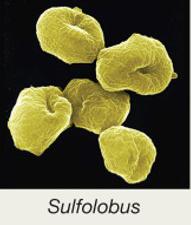
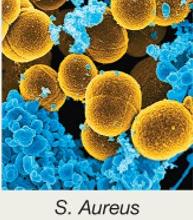
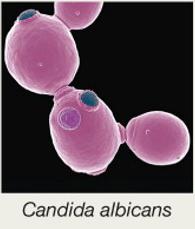
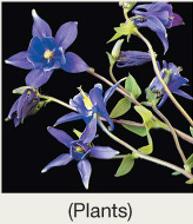
Additional info: Kingdom Protista is a miscellaneous group for organisms not classified as plants, animals, or fungi. Modern genetics shows protists are diverse and not a true kingdom.
Binomial Nomenclature
Scientific names use a two-name system (Genus species), established by Carl Linnaeus. The genus is capitalized, the species is lowercase, and both are italicized (e.g., Escherichia coli).
Normal Microbiota and the Human Microbiome
The human body hosts a vast array of microbes, collectively known as the human microbiome. These microbes are found on the skin, in the mouth, gut, nose, and urogenital tract.
Normal microbiota (flora): Includes bacteria, archaea, and eukaryotic microbes that live in and on the human body.
Functions: Train the immune system, produce vitamins, aid digestion, and may influence mood and brain function.
Establishment: Babies acquire microbiota during birth and early life; influenced by delivery method and feeding.
Disruptions: Antibiotic therapy can disturb normal microbiota, allowing opportunistic pathogens to cause infections (e.g., Candida albicans overgrowth, antibiotic-associated diarrhea).
Transient microbiota: Temporary microbes acquired from the environment, removed by hygiene practices.
