 Back
BackIntroduction to Microbiology: Foundations, Diversity, and Importance
Study Guide - Smart Notes
 Tailored notes based on your materials, expanded with key definitions, examples, and context.
Introduction to Microbiology
Definition and Scope
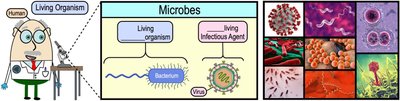
Microbiology is the scientific study of microbes, which includes both living organisms and infectious agents that are too small to be seen by the naked eye. The field encompasses a wide variety of life forms and acellular entities, making it foundational to understanding biology, health, and disease.
Microorganisms: Living organisms too small to be seen without a microscope. They can be unicellular or multicellular.
Microbes: Includes both microorganisms and non-living infectious agents (such as viruses) that are microscopic.
Cell: The smallest, most basic unit of life.
Organism: Any individual form of life, which may be unicellular or multicellular.
Discovery of Microorganisms
Historical Milestones
The existence of microorganisms was first revealed in the 17th century through the development of early microscopes. Two key figures in this discovery were Robert Hooke and Antonie van Leeuwenhoek.
Robert Hooke (1665): First to visualize and depict a microorganism (bread mold Mucor), describing it as a "microscopical mushroom."
Antonie van Leeuwenhoek (1674): Used a microscope to observe and describe protozoa and bacteria, which he called "animalicules."
Both scientists contributed to the foundation of microbiology by revealing the microbial world.

Taxonomy: Classification of Life
Principles of Taxonomy
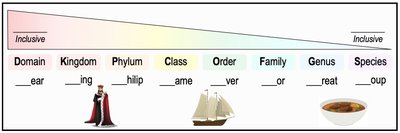
Taxonomy is the branch of science concerned with classifying, identifying, and naming organisms. It organizes life into hierarchical categories, from the most inclusive (domain) to the most specific (species).
Taxonomic Categories: Domain, Kingdom, Phylum, Class, Order, Family, Genus, Species.
Each level represents a degree of relatedness among organisms.
The Three Domains of Life
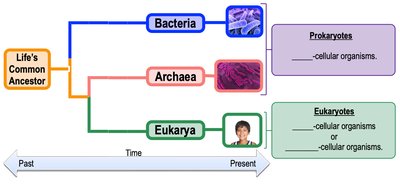
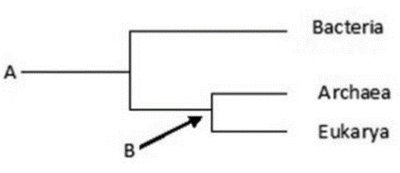
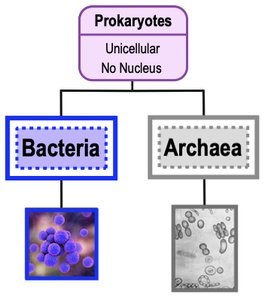
All life is classified into three domains: Bacteria, Archaea, and Eukarya. These domains represent the broadest divisions based on cellular organization and genetic differences.
Bacteria: Prokaryotic, unicellular organisms without a nucleus.
Archaea: Prokaryotic, unicellular organisms distinct from bacteria, often found in extreme environments.
Eukarya: Organisms with eukaryotic cells (contain a nucleus), can be unicellular or multicellular.
Kingdoms of the Eukarya Domain
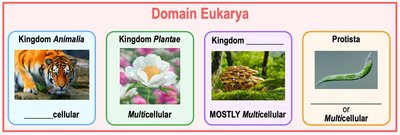
Within the domain Eukarya, organisms are further divided into kingdoms: Animalia, Plantae, Fungi, and Protista. Each kingdom is characterized by unique features such as cell structure, mode of nutrition, and reproduction.
Animalia: Multicellular, heterotrophic organisms.
Plantae: Multicellular, autotrophic organisms (photosynthetic).
Fungi: Mostly multicellular (except yeasts), absorb nutrients from organic material.
Protista: Unicellular or multicellular, diverse group including algae and protozoa.
Categorizing Life by Energy Acquisition
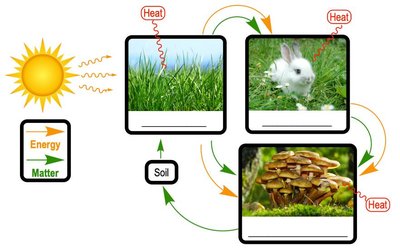
Organisms are also classified based on how they acquire energy:
Autotrophs (Producers): Make their own food, usually via photosynthesis.
Heterotrophs (Consumers): Obtain energy by consuming other organisms.
Decomposers: Obtain energy from dead organisms and waste products.
Most energy utilized by life originates from the sun, and energy transfer is always accompanied by some loss as heat.
Scientific Naming of Organisms
Binomial Nomenclature
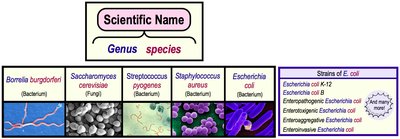
Carl Linnaeus developed a two-part (binomial) naming system for organisms, which is still used today in scientific classification.
The first part is the genus (capitalized), and the second part is the species (not capitalized).
Both parts are italicized or underlined.
Strains: Genetic variants within a species, often indicated with a strain designation.
Diversity of the Microbial World
Overview of Microbial Diversity
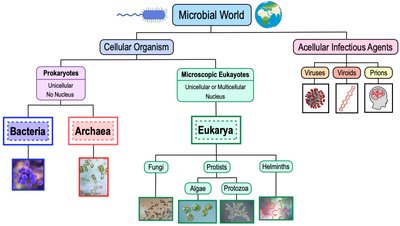
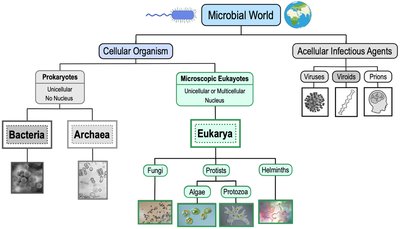
The microbial world includes a vast diversity of life forms, both cellular and acellular. Microbes can be classified as prokaryotic (bacteria and archaea), eukaryotic (fungi, algae, protozoa, helminths), or acellular infectious agents (viruses, viroids, prions).
Prokaryotes: Unicellular organisms without a nucleus (Bacteria and Archaea).
Eukaryotes: Organisms with a nucleus, can be unicellular or multicellular (Fungi, Protists, Helminths).
Acellular Infectious Agents: Non-cellular entities such as viruses, viroids, and prions.
Bacteria
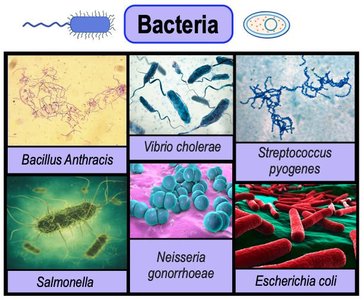
Bacteria are unicellular, prokaryotic organisms that lack a nucleus. They are among the most primitive and diverse life forms, inhabiting a wide range of environments, including the human body.
Shapes vary (cocci, bacilli, spirilla, etc.), and sizes range from 0.5 to 10 μm.
Reproduce by binary fission and have cell walls made of peptidoglycan.
Form the human microbiome, playing essential roles in health and disease.
Archaea
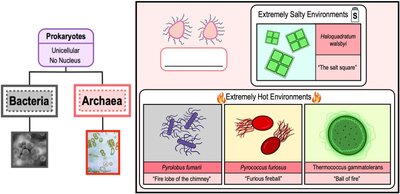
Archaea are prokaryotic, unicellular organisms that differ from bacteria in their genetic sequences and cell wall composition. Many archaea are extremophiles, thriving in environments with extreme temperature, salinity, or pH.
Unique ribosomal RNA (rRNA) sequences.
Cell walls lack peptidoglycan.
Can be found in moderate environments as well as extreme ones (e.g., hot springs, salt lakes).
Eukarya
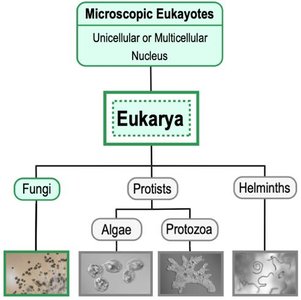
Eukaryotes are organisms whose cells contain a membrane-bound nucleus. This domain includes plants, animals, fungi, and protists. Microbiologists focus on microscopic eukaryotes such as fungi, algae, protozoa, and helminths.
Can be unicellular or multicellular.
Includes four main kingdoms: Plantae, Animalia, Fungi, Protista.
Fungi
Fungi are a diverse group of eukaryotes, ranging from unicellular yeasts to multicellular molds and mushrooms. They do not perform photosynthesis and have cell walls made of chitin.
Harvest energy from organic materials.
Include important decomposers and pathogens.
Algae
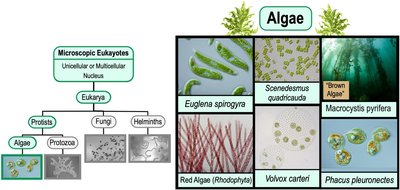
Algae are photosynthetic eukaryotes, often referred to as "plant-like protists." They can be unicellular or multicellular and have cell walls made of cellulose.
Found in aquatic and moist terrestrial environments.
Play a key role in oxygen production and as the base of aquatic food webs.
Protozoa
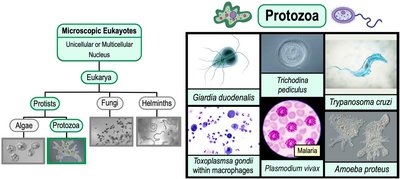
Protozoa are a diverse group of unicellular, usually motile eukaryotes. They ingest organic material and lack cell walls.
Reproduce sexually or asexually.
Many are free-living, while others are parasitic.
Helminths
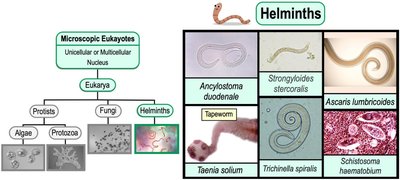
Helminths are eukaryotic parasitic worms, including flatworms, roundworms, and tapeworms. While adult helminths are often macroscopic, their eggs and larvae are microscopic and studied in microbiology.
Cause a variety of diseases in humans and animals.
Acellular Infectious Agents: Viruses, Viroids, and Prions
Viruses
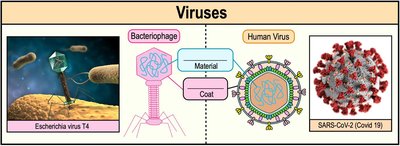
Viruses are acellular, obligate intracellular parasites composed of DNA or RNA enclosed in a protein coat, and sometimes a lipid envelope. They can infect all forms of life and require host cells for replication.
Frequently kill host cells or remain dormant within them.
Viroids
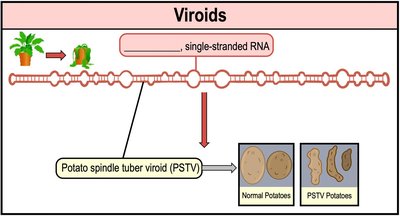
Viroids are the smallest infectious pathogens, consisting solely of a short strand of circular, single-stranded RNA. They infect plants and cause various plant diseases.
Lack a protein coat.
Mechanisms of disease causation are not fully understood.
Prions
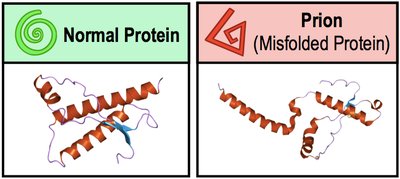
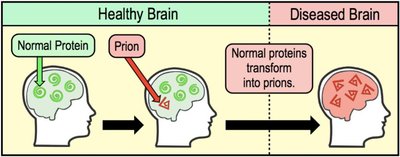
Prions are infectious proteins that cause normal proteins to misfold, leading to neurodegenerative diseases in humans and animals (e.g., Creutzfeldt-Jakob disease, mad cow disease).
Contain no nucleic acids.
Cause slow, progressive, and fatal diseases.
Importance of Microorganisms
Commercial Benefits
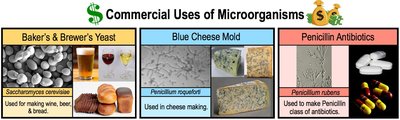
Microorganisms are used in the production of food, beverages, antibiotics, dietary supplements, biofuels, and other valuable products.
Examples include baker's yeast for bread and beer, molds for cheese and antibiotics.
Environmental Benefits
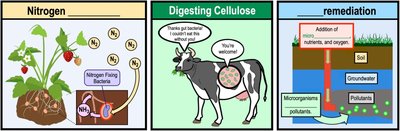
Microorganisms play essential roles in nutrient cycling, nitrogen fixation, cellulose degradation, and bioremediation (degradation of pollutants).
Support plant growth and ecosystem health.
Microorganisms as Research Tools
Microorganisms share fundamental metabolic and genetic features with complex organisms, making them valuable model organisms for research. They are inexpensive and grow rapidly, facilitating studies in genetics, metabolism, and biotechnology.
Microorganisms in Health and Disease
The human body hosts trillions of microorganisms (normal microbiota or flora) that play crucial roles in health by competing with pathogens and aiding in digestion and immunity. However, some microbes are pathogenic and cause disease.
The Scientific Method in Microbiology
Overview
The scientific method is a systematic approach to investigating questions, testing ideas, and building scientific knowledge. It involves observation, hypothesis formation, experimentation, data analysis, and drawing conclusions.
Hypothesis: A testable explanation for an observation.
Prediction: An expected outcome based on the hypothesis.
Theory: A well-supported, testable explanation for a broad range of observations.
Experimental Design
Experiments are designed to test hypotheses by manipulating variables and using control groups to prevent false positives and negatives. Variables include independent (manipulated) and dependent (measured) variables.
Negative Control: Group where no effect is expected.
Positive Control: Group where a known effect is expected.
Summary Table: Major Groups of Microbes
Group | Cell Type | Example(s) | Key Features |
|---|---|---|---|
Bacteria | Prokaryotic | Escherichia coli, Bacillus anthracis | Unicellular, peptidoglycan cell wall, diverse metabolism |
Archaea | Prokaryotic | Halophiles, Thermophiles | Unicellular, no peptidoglycan, extremophiles |
Fungi | Eukaryotic | Yeasts, Molds, Mushrooms | Chitin cell wall, absorb nutrients |
Algae | Eukaryotic | Green algae, Brown algae | Photosynthetic, cellulose cell wall |
Protozoa | Eukaryotic | Amoeba, Paramecium | Unicellular, motile, ingest food |
Helminths | Eukaryotic | Tapeworms, Roundworms | Parasitic worms, microscopic eggs/larvae |
Viruses | Acellular | SARS-CoV-2, Bacteriophage | DNA/RNA in protein coat, obligate intracellular |
Viroids | Acellular | PSTV | Single-stranded RNA, infect plants |
Prions | Acellular | PrPSc | Misfolded proteins, cause neurodegenerative diseases |
