 Back
BackIntroduction to Microbiology: History, Classification, and Microbe–Host Interactions
Study Guide - Smart Notes
 Tailored notes based on your materials, expanded with key definitions, examples, and context.
Introduction to Microbiology
Definition and Scope
Microbiology is the study of microscopic organisms, including bacteria, archaea, fungi, protozoa, algae, viruses, and prions. It encompasses both living (cellular) and nonliving (acellular) entities, and explores their roles in health, disease, industry, and the environment.
Microbes include bacteria, archaea, fungi, protists, helminths, viruses, and prions.
Microbiology impacts healthcare, agriculture, industry, and environmental sciences.
Humans rely on microbes for food production, medication synthesis, and environmental detoxification.
The Early Years of Microbiology
Discovery of Microbial Life
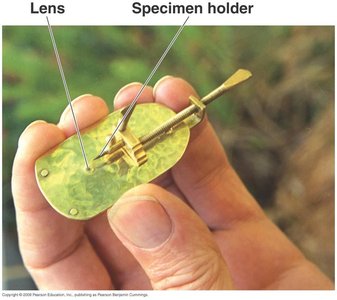
The first observations of microorganisms were made by Antoni van Leeuwenhoek, who developed simple microscopes and described 'animalcules' in water samples.
Leeuwenhoek's work led to the recognition of microbes as distinct life forms.
By the late 19th century, these organisms were termed microorganisms or microbes.

Classification of Microbes
Carolus Linnaeus developed a taxonomic system for naming and grouping organisms. Leeuwenhoek's microorganisms were classified into six categories: fungi, protozoa, algae, bacteria, archaea, and small animals. Viruses were not observed due to their small size and limitations of early microscopy.
Cell Types and Evolution
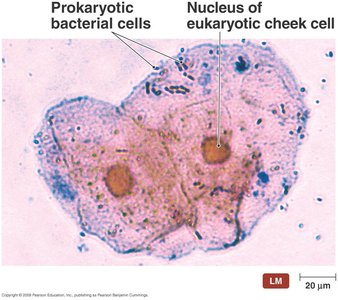
Prokaryotic cells: Unicellular organisms lacking a nucleus (bacteria and archaea).
Eukaryotic cells: Organisms with a membrane-bound nucleus (fungi, protists, helminths, plants, animals).
Endosymbiotic theory: Mitochondria and chloroplasts originated as free-living bacteria engulfed by ancestral eukaryotic cells.
Major Groups of Microbes
Fungi
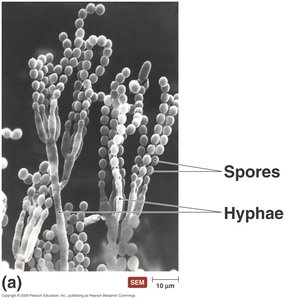
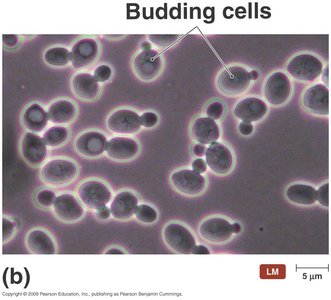
Fungi are eukaryotic organisms that obtain nutrients from other organisms and possess cell walls. They are classified as molds (multicellular, with hyphae and spores) or yeasts (unicellular, reproduce by budding).
Protozoa
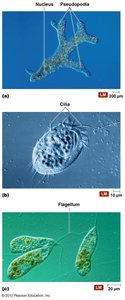
Protozoa are single-celled eukaryotes with animal-like characteristics. They may be free-living or parasitic, and are classified by their modes of locomotion: pseudopodia, cilia, or flagella.
Example: Plasmodium (causes malaria)
Algae
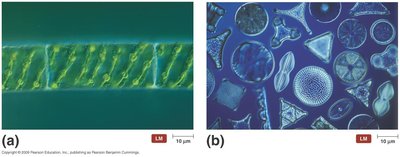
Algae are photosynthetic eukaryotes, unicellular or multicellular, that produce oxygen and serve as food sources in aquatic environments. They are categorized by pigmentation, storage products, and cell wall composition.
Bacteria and Archaea
Bacteria and archaea are prokaryotic, unicellular organisms. Bacteria can be pathogenic or nonpathogenic, while archaea are mostly nonpathogenic and often inhabit extreme environments.
Viruses and Prions
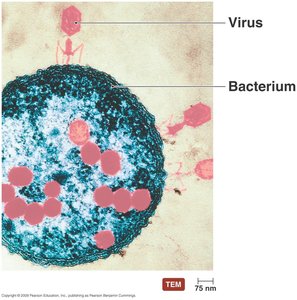
Viruses are acellular, nonliving entities that infect cells and contain either DNA or RNA. Prions are infectious proteins that cause neurodegenerative diseases.
Disproving Spontaneous Generation
Historical Debate
The theory of spontaneous generation (abiogenesis) proposed that living organisms could arise from nonliving matter. This idea was challenged and ultimately disproven through a series of experiments.
Redi's Experiment
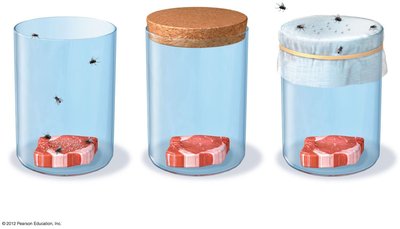
Francesco Redi showed that maggots only appeared on meat when flies could lay eggs, refuting spontaneous generation for larger organisms.
Needham vs. Spallanzani
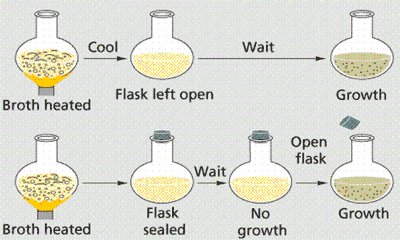
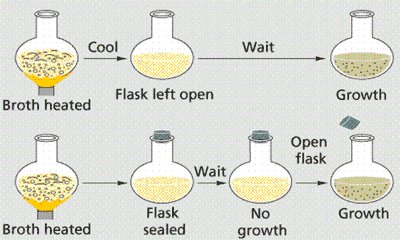
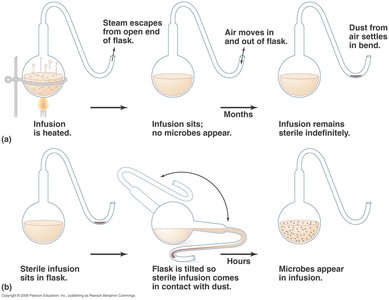
John Needham claimed that boiled broths still produced microbes, supporting spontaneous generation.
Lazzaro Spallanzani improved the experiment by sealing flasks and boiling longer, preventing microbial growth unless exposed to air.
Pasteur's Swan-Neck Flask Experiment
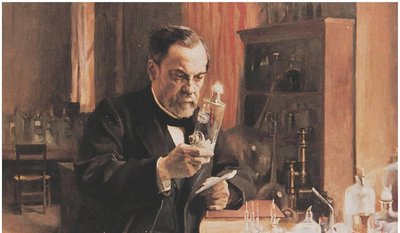
Louis Pasteur definitively disproved spontaneous generation by showing that sterilized broth in swan-neck flasks remained free of microbes unless exposed to dust.
The Scientific Method
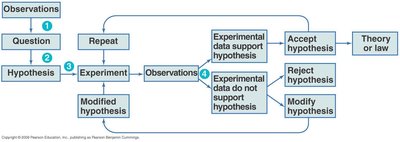
The scientific method involves observation, hypothesis formation, experimentation, and conclusion. It is the foundation of modern scientific inquiry.
Microbial Metabolism and Industrial Applications
Fermentation
Pasteur demonstrated that fermentation is caused by living organisms (yeasts and bacteria), not by air or spontaneous processes. Yeasts ferment sugars to alcohol, while bacteria produce acids.
Pasteurization
Pasteurization is the process of heating liquids to kill harmful microbes without altering the product's qualities. It is widely used in food and beverage industries.
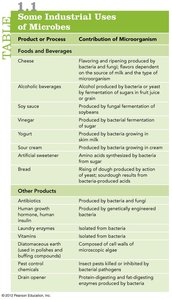
Industrial Uses of Microbes
Product or Process | Contribution of Microorganism |
|---|---|
Cheese | Flavoring and ripening by bacteria and fungi |
Alcoholic beverages | Fermentation by yeast or bacteria |
Soy sauce | Fungal fermentation of soybeans |
Vinegar | Bacterial fermentation |
Antibiotics | Produced by bacteria and fungi |
Human growth hormone | Produced by genetically engineered bacteria |
Insulin | Produced by genetically engineered bacteria |
Other enzymes | Isolated from bacteria |
Drain opener | Protein-digesting and fat-digesting enzymes produced by bacteria |
Germ Theory of Disease and Koch's Postulates
Germ Theory
Pasteur proposed that specific diseases are caused by specific microbes (germs). Robert Koch further developed this theory and established experimental criteria for linking microbes to diseases.
Koch's Postulates
The suspected pathogen must be present in every case of the disease and absent from healthy hosts.
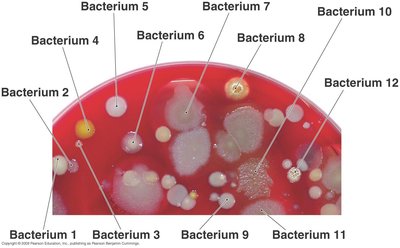
The pathogen must be isolated and grown in pure culture.
The cultured pathogen must cause disease when introduced into a healthy host.
The same pathogen must be re-isolated from the experimentally infected host.
Advances in Microbiology: Staining and Aseptic Techniques
Gram Staining
Hans Christian Gram developed a differential staining technique that distinguishes bacteria as Gram-positive (purple) or Gram-negative (pink), aiding in identification and classification.
Aseptic Techniques
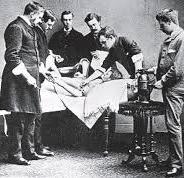
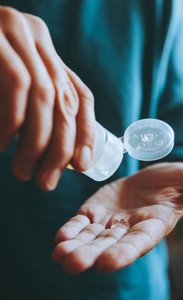
Ignaz Semmelweis, Joseph Lister, Florence Nightingale, and others emphasized hand hygiene and antiseptic procedures to prevent healthcare-associated infections (HAIs).
Hand washing, sterilizing instruments, and decontaminating surfaces are essential practices.
Classification and Taxonomy of Microbes
Taxonomic Hierarchy
Taxonomy is the science of classifying organisms. The hierarchy includes domain, kingdom, phylum, class, order, family, genus, and species. Carl Linnaeus introduced binomial nomenclature (Genus species).
Three domains: Bacteria, Archaea, Eukarya
Six-kingdom system: Archaea, Bacteria, Fungi, Plantae, Animalia, Protists
Strains are genetic variants within a species (e.g., E. coli K-12)
Host–Microbe Interactions
Symbiosis
Microbes and hosts can have various relationships:
Parasitism: Microbe harms the host (e.g., pathogens)
Mutualism: Both benefit (e.g., gut bacteria synthesizing vitamins)
Commensalism: One benefits, the other is unaffected
Normal Microbiota and the Human Microbiome
The normal microbiota (flora) consists of bacteria, archaea, and eukaryotic microbes that inhabit various body sites. They train the immune system, aid digestion, and protect against pathogens.
Disruptions (e.g., antibiotics) can lead to opportunistic infections (e.g., Candida overgrowth).
Transient microbiota are temporary and removed by hygiene.
Biofilms
Formation and Significance
Biofilms are structured communities of microbes attached to surfaces and embedded in a self-produced matrix. They are highly resistant to antibiotics and immune responses, and are implicated in many chronic infections.
Biofilms form on teeth, medical devices, water systems, and more.
Cells within biofilms can detach and spread, causing new infections.
Conclusion
Microbiology is a foundational science that explores the diversity, classification, and roles of microbes in health, disease, and the environment. The field continues to evolve, driven by the scientific method and technological advances.
