 Back
BackIntroduction to Microbiology: History, Types of Microbes, and Key Discoveries
Study Guide - Smart Notes
 Tailored notes based on your materials, expanded with key definitions, examples, and context.
Introduction to Microbiology
Definition and Scope
Microbiology is the scientific study of microbes, which includes both living organisms and infectious agents too small to be seen by the naked eye. This field encompasses a wide variety of entities, from bacteria and fungi to viruses and parasitic worms. - Microbes: Includes microorganisms (living) and non-living infectious agents (such as viruses). - Organism: Any individual form of life, either unicellular or multicellular. - Cell: The smallest, most basic unit of life. 
Discovery of Microorganisms
Historical Figures and Milestones
The discovery of microorganisms began in the mid-17th century, with key contributions from several scientists: - Robert Hooke (1665): First to visualize and depict a microorganism (bread mold). - Antonie van Leeuwenhoek (1674): Created a simple microscope and described protozoa and bacteria, calling them "animalicules". - Carolus Linnaeus: Developed the taxonomic system for naming and grouping organisms.
Categories of Microbes
Leeuwenhoek described six basic categories of microorganisms: 1. Bacteria 2. Archaea 3. Fungi 4. Protozoa 5. Algae 6. Small Multicellular Animals
Bacteria and Archaea
Characteristics
Bacteria and Archaea are prokaryotic microorganisms, meaning their cells lack a nucleus. - Bacteria: Cell walls composed of peptidoglycan; reproduce asexually; found in various environments. - Archaea: Cell walls lack peptidoglycan; discovered in extreme environments; no known human diseases. - Prokaryotic: Cells without a membrane-bound nucleus.
Fungi
Types and Reproduction
Fungi are eukaryotic organisms, including molds and yeasts. - Molds: Multicellular, form long intertwining filaments, reproduce by spores. - Yeasts: Unicellular, reproduce asexually by budding. - Cell walls: Typically made of polysaccharides. 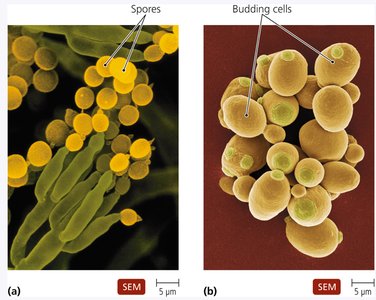 - Example: Penicillium chrysogenum produces penicillin; Saccharomyces cerevisiae used in bread and alcohol production; Candida albicans causes yeast infections.
Protozoa
Structure and Locomotion
Protozoa are single-celled eukaryotes, often categorized by their locomotive structures: - Pseudopods: Extensions that flow in the direction of travel. 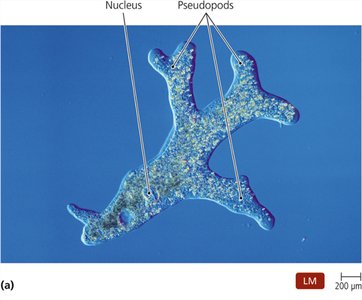 - Cilia: Short protrusions that beat rhythmically to propel the organism.
 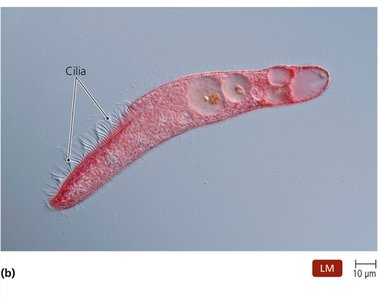 - Flagella: Long, whiplike extensions used for movement.
 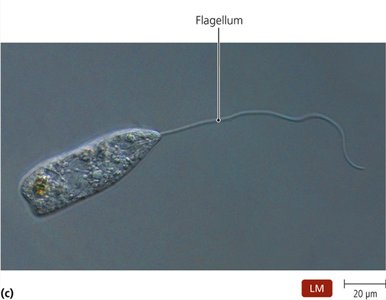 - Example: Plasmodium causes malaria.
Algae
Types and Importance
Algae are unicellular or multicellular photosynthetic eukaryotes. - Large Algae: Seaweeds and kelps. - Unicellular Algae: Found in freshwater and oceans. - Cell walls: Composed of gelatinous chemicals, used as thickeners and emulsifiers. - Example: Diatoms have glasslike cell walls; Spirogyra forms chains of photosynthetic cells. 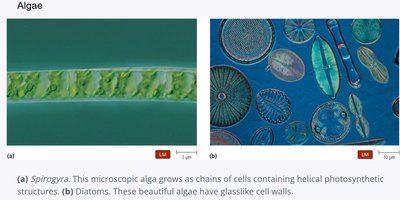
Other Important Organisms
Parasitic Worms
Parasitic worms (helminths) can cause disease and are diagnosed by their eggs or immature stages in specimens. 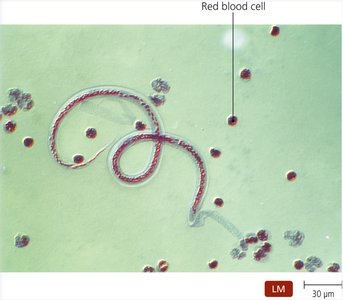
Viruses
Viruses are acellular, obligatory intracellular parasites, much smaller than prokaryotes. - Composed of genetic material (DNA or RNA) surrounded by a protein coat. - Require electron microscopy for visualization. 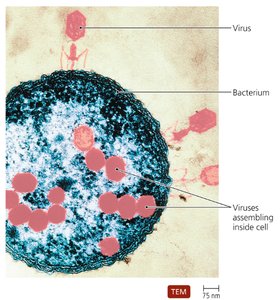
The Golden Age of Microbiology
Spontaneous Generation Debate
The question of whether microbial life arises spontaneously was addressed by several experiments: - Abiogenesis: Hypothesis that life arises from non-living matter. - Biogenesis: Hypothesis that life comes only from other living things. - Francesco Redi: Demonstrated that maggots arise from flies, not spontaneously. 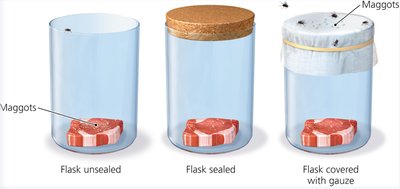 - Lazzaro Spallanzani: Showed that microorganisms do not spontaneously generate in boiled, sealed infusions. - Louis Pasteur: Used S-shaped flasks to disprove spontaneous generation.
Fermentation and Disease
- Pasteur's Experiments: Demonstrated yeast ferment sugar to alcohol; bacteria ferment sugar to acids. - Buchner's Experiments: Showed fermentation can occur with enzymes, not just living cells. - Germ Theory of Disease: Proposed by Pasteur, stating microorganisms cause infectious diseases.
Koch's Postulates
Steps to prove a specific microbe causes a specific disease: 1. The suspected agent must be found in every case of the disease and absent from healthy hosts. 2. The agent must be isolated and grown outside the host. 3. When introduced to a healthy host, the host should develop the disease. 4. The same agent must be found in the diseased experimental host.
Gram Stain and Microbial Classification
Gram Staining Technique
Developed by Hans Christian Gram, this technique differentiates bacteria: - Gram-positive: Stain purple. - Gram-negative: Stain pink.
Prevention of Infection and Disease
Key Figures and Techniques
- Florence Nightingale: Pioneered epidemiology and antiseptic techniques. - Ignaz Semmelweis: Introduced handwashing to reduce puerperal fever. - Joseph Lister: Developed antiseptic surgery using phenol. - John Snow: Linked cholera to contaminated water, founding infection control and epidemiology. - Edward Jenner: Developed the smallpox vaccine, founding immunology.
Modern Age of Microbiology
Biochemistry and Genetics
- Biochemistry: Study of metabolism and chemical reactions in organisms. - Genetics: Study of inheritance and gene function. - Recombinant DNA Technology: Manipulation of genes for practical applications, such as gene therapy.
Environmental Microbiology
- Microbes play roles in nutrient cycling, bioremediation, and production of vitamins.
Key Discoveries in Infectious Disease
Notable Scientists and Their Contributions
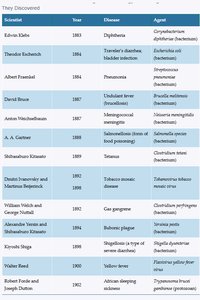
The following table summarizes major discoveries in infectious disease:
Scientist | Year | Disease | Agent |
|---|---|---|---|
Edwin Klebs | 1883 | Diphtheria | Corynebacterium diphtheriae (bacterium) |
Theodore Escherich | 1884 | Traveler's diarrhea, bladder infection | Escherichia coli (bacterium) |
Albert Fraenkel | 1884 | Pneumonia | Streptococcus pneumoniae (bacterium) |
Davit Bruce | 1887 | Undulant fever (brucellosis) | Brucella melitensis (bacterium) |
Anton Weichselbaum | 1887 | Meningococcus meningitis | Neisseria meningitidis (bacterium) |
A. A. Gieter | 1889 | Bacterial pneumonia | Klebsiella pneumoniae (bacterium) |
Shibasaburo Kitasato | 1889 | Tetanus | Clostridium tetani (bacterium) |
Duanet Ivanovsky and Martinus Beijerinck | 1892 | Tobacco mosaic disease | Tobacco mosaic virus |
William Welch and Frederick Rogers | 1892 | Gas gangrene | Clostridium perfringens (bacterium) |
Kiyoshi Shiga | 1898 | Shigellosis (type of dysentery) | Shigella dysenteriae (bacterium) |
Walter Reed | 1900 | Yellow fever | Yellow fever virus |
Robert Forde and Joseph Dutton | 1902 | African sleeping sickness | Trypanosoma gambiense (protozoan) |
Summary
Microbiology is a foundational science that explores the diversity, structure, and function of microbes, their role in disease, and their applications in biotechnology and environmental science. Understanding the history, classification, and key discoveries in microbiology is essential for students preparing for advanced study and careers in health and research.
