 Back
BackIntroduction to Microbiology: Key Concepts and Historical Foundations
Study Guide - Smart Notes
 Tailored notes based on your materials, expanded with key definitions, examples, and context.
Introduction to Microbiology
Definition and Scope
Microbiology is a branch of biology that focuses on the study of microscopic organisms, including bacteria, archaea, fungi, protozoa, and viruses. These organisms are too small to be seen with the naked eye and require specialized techniques and equipment for observation and analysis.
Microorganisms are found in virtually every environment on Earth, from soil and water to extreme environments such as hot springs and deep-sea vents.
Microbiology is essential for understanding disease, biotechnology, environmental science, and food production.
Types of Microorganisms
Bacteria
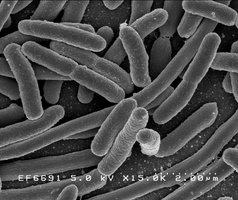
Bacteria are single-celled prokaryotic organisms that exhibit a wide range of shapes and metabolic capabilities. They play crucial roles in ecosystems, human health, and industry.
Prokaryotic: Lack a true nucleus and membrane-bound organelles.
Reproduce by binary fission.
Can be beneficial (e.g., gut flora, nitrogen fixation) or pathogenic (e.g., Escherichia coli).
Archaea
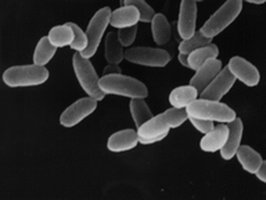
Archaea are prokaryotic microorganisms distinct from bacteria, often found in extreme environments such as hot springs, salt lakes, and anaerobic environments.
Cell walls lack peptidoglycan.
Unique membrane lipids and genetic sequences.
Not known to cause disease in humans.
Fungi
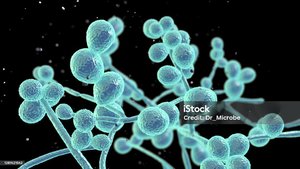
Fungi are eukaryotic organisms that include yeasts, molds, and mushrooms. They play important roles in decomposition, nutrient cycling, and as pathogens.
Eukaryotic: Possess a true nucleus and membrane-bound organelles.
Cell walls contain chitin.
Can be unicellular (yeasts) or multicellular (molds, mushrooms).
Protozoa
Protozoa are single-celled eukaryotic organisms that often exhibit complex life cycles and motility. Many are free-living, while others are parasitic.
Move using cilia, flagella, or pseudopodia.
Some cause diseases such as malaria and amoebic dysentery.

Viruses
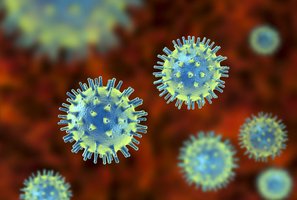
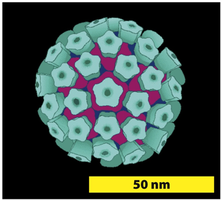
Viruses are noncellular infectious agents composed of genetic material (DNA or RNA) surrounded by a protein coat. They require host cells to replicate and are responsible for a wide range of diseases.
Nonmetabolic and unable to reproduce independently.
Invade host cells to produce new virus particles.
Three Domains of Life
Bacteria, Archaea, and Eukarya
All living organisms are classified into three domains based on genetic and biochemical differences: Bacteria, Archaea, and Eukarya. This classification reflects evolutionary relationships and fundamental cellular differences.
Bacteria: Prokaryotic, diverse metabolic pathways.
Archaea: Prokaryotic, often extremophiles, unique membrane lipids.
Eukarya: Eukaryotic, includes fungi, protozoa, plants, and animals.
Prokaryotic versus Eukaryotic Cells
Cellular Organization
Prokaryotic and eukaryotic cells differ in their structural organization, genetic material, and complexity.
Prokaryotic cells: Lack a nucleus, have circular DNA, and no membrane-bound organelles (e.g., bacteria, archaea).
Eukaryotic cells: Have a true nucleus, linear DNA, and membrane-bound organelles (e.g., fungi, protozoa).
The Impact of Microorganisms on Humans
Beneficial Effects
Most microorganisms are beneficial and essential for human life and industry.
Bread, alcohol, yogurt, and cheese production (fermentation).
Source of pharmaceuticals (e.g., antibiotics).
Bioremediation: Cleaning up environmental contamination.
Mining precious metals.
Harmful Effects
Some microorganisms, known as pathogens, cause infectious diseases in humans, animals, and plants.
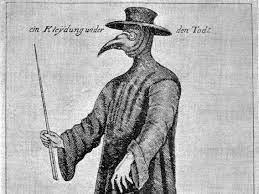
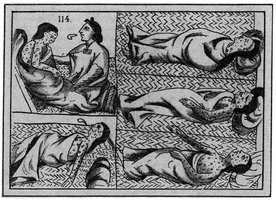
Historical pandemics: Black Death (plague), smallpox, HIV/AIDS.
Emerging infectious diseases: Diseases that suddenly become prevalent.

Trends in Infectious Disease
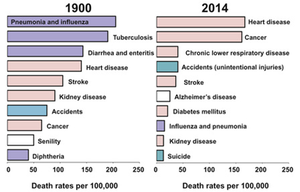
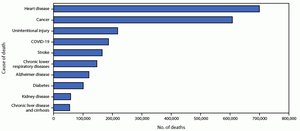
The leading causes of death have shifted over time, with infectious diseases being more prominent in the past and chronic diseases dominating in recent years.
Year | Leading Causes of Death |
|---|---|
1900 | Pneumonia, Influenza, Tuberculosis, Diarrhea, Heart Disease |
2014 | Heart Disease, Cancer, Chronic Lower Respiratory Disease, Accidents |
History of Microbiology
Early Microscopy and Discovery
Robert Hooke (1635–1703): Built the first microscope and was the first to describe fungi.
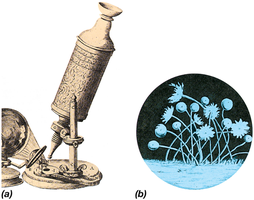

Antoni van Leeuwenhoek (1632–1723): First to describe bacteria using handcrafted microscopes.

Disproving Spontaneous Generation
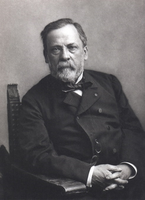
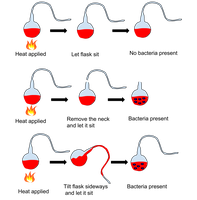
Louis Pasteur (1822–1895): Demonstrated that fermentation was a biological process, disproved spontaneous generation with the swan-neck flask experiment, developed aseptic techniques, and created vaccines for anthrax, fowl cholera, and rabies.

Establishing Germ Theory
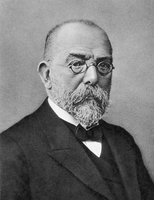
Robert Koch (1843–1910): Demonstrated the link between microbes and infectious diseases, identified causative agents of anthrax and tuberculosis, formulated Koch’s postulates, and developed pure culture techniques.
Infection Control and Antisepsis
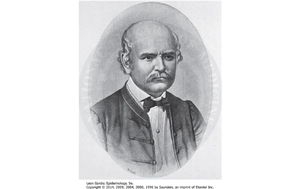
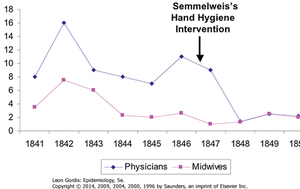
Ignaz Semmelweis: Advocated handwashing to prevent puerperal fever transmission in hospitals.
Joseph Lister: Introduced chemical disinfectants to prevent surgical wound infections (not shown in images).
Scientific Names
Binomial Nomenclature
Scientific names of organisms are composed of two parts: the genus and species. The genus is capitalized, and the species is lowercase. Names are italicized in print and underlined when handwritten.
When abbreviated, the genus is shortened to the first initial followed by a period (e.g., E. coli).
